

-
Latham Hi‑Tech Seeds
Looking through Latham’s Lens
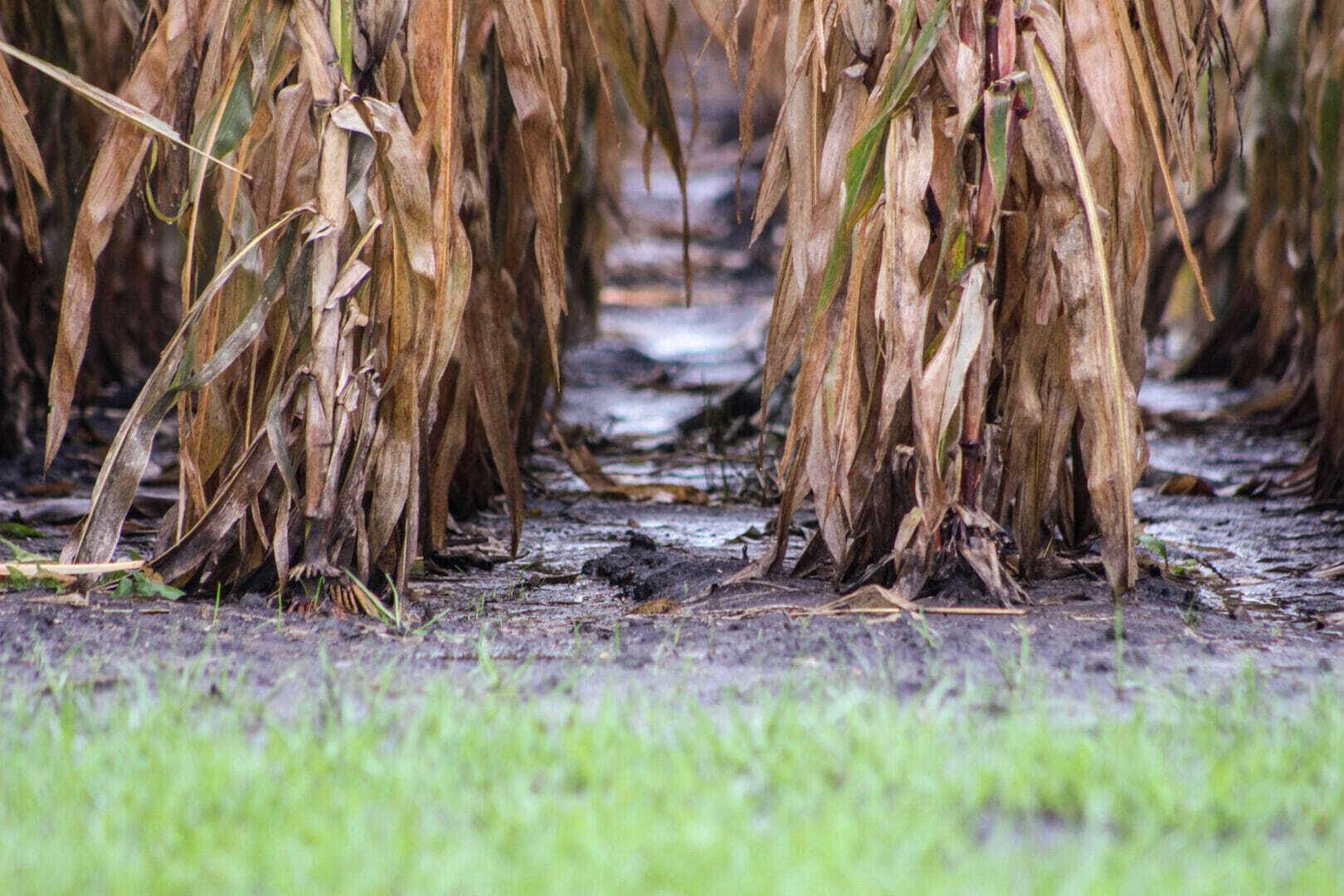
The 2019 crop season has been a year of testing limits. Hoping for consistent harvest weather as we head into the week. -
Latham Hi‑Tech Seeds
Looking through Latham’s Lens
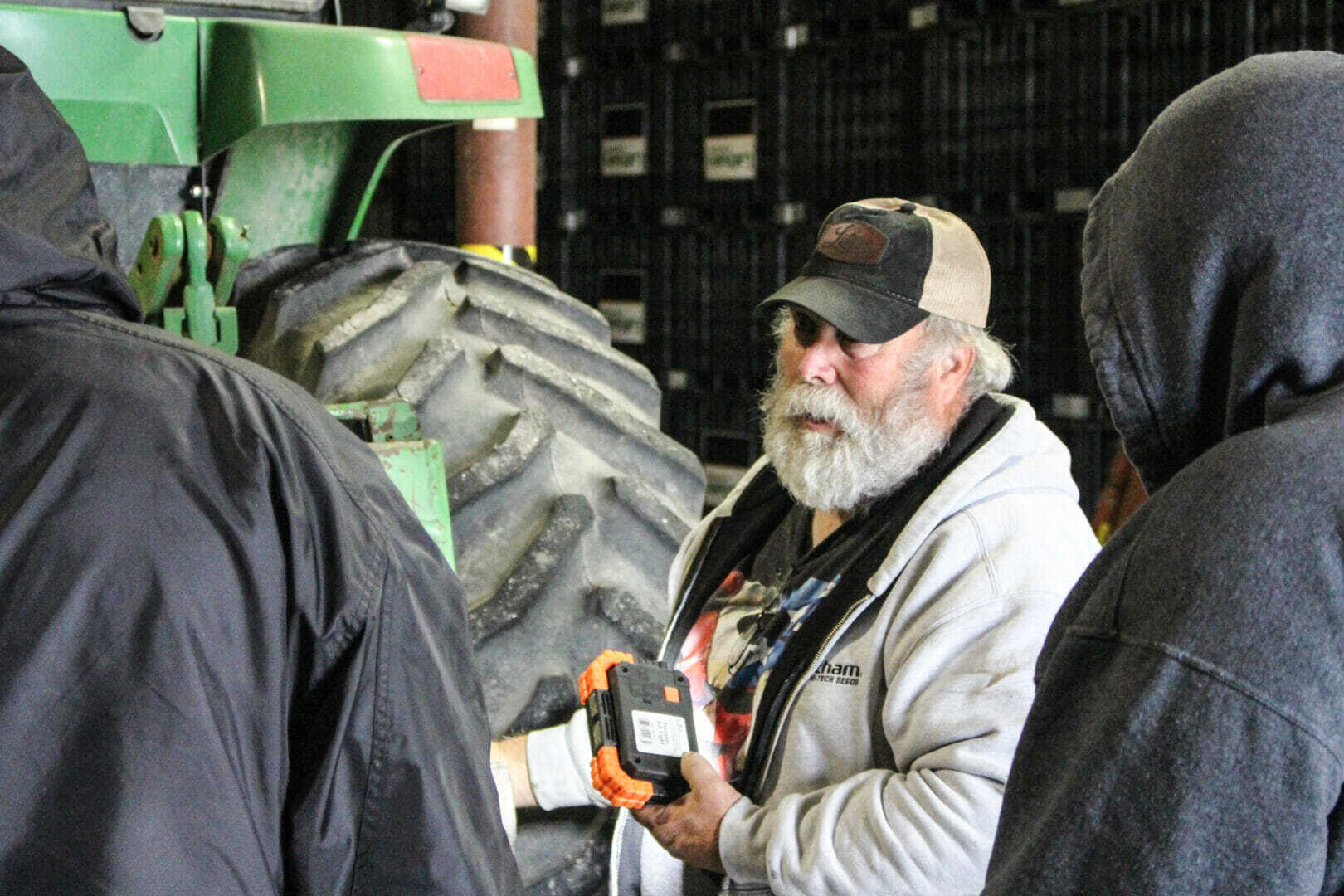

Safety training led by Plant Manager, Greg Jaacks. Greg has been a member of our team for 44 years. -
Latham Hi‑Tech Seeds
John Latham Elected to Seed Industry Leadership
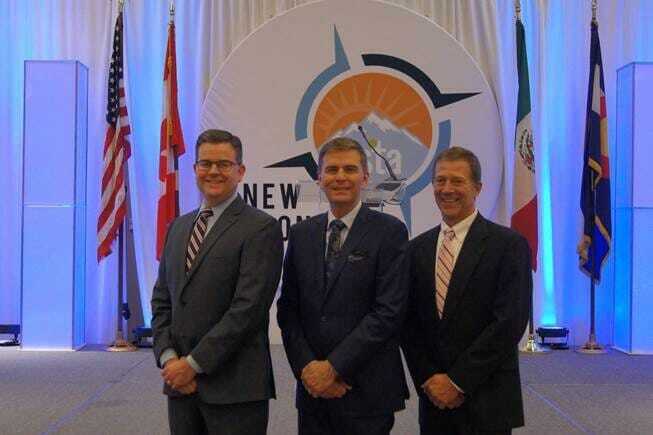

From left to right: John Latham, Latham Hi‑Tech Seeds, Wayne Gale, Stokes Seeds and Brad May, BASF The American Seed Trade Association’s (ASTA) newly-elected officer team was announced recently during ASTA’s Policy & Leadership Development. Members of the FY2019-20 ASTA officer team—officially taking office on July 1 are: Chair Wayne Gale, Stokes Seed; First Vice Chair John Latham, Latham Hi‑Tech Seeds; and Second Vice Chair Brad May, BASF.
“To be nominated to ASTA leadership by these leaders is a true honor. I’ll take away from this experience life-long friends and memories,” says John Latham, who has served on the ASTA board of directors and its executive committee for the past seven years. (Click here to watch a short biographical video that was played last week when John was inducted as First Vice Chair.) “It has been a great opportunity to get to know seed industry leaders from all sectors of the seed industry. I’ve been able to learn a great deal about the industry that I’ve been able to bring to our business.”
During the conference, June 15-19 in Denver, ASTA also announced winners of its prestigious annual awards: the Distinguished Service, Honorary Member plus a brand-new award called the the Better Seed, Better Life Ambassador Award.
2019 ASTA Distinguished Service Award: ASTA’s Distinguished Service Award recognizes an individual who made outstanding contributions to our industry throughout the year. The 2019 award was presented to Alan Galbreth, who has spent his entire 43-year career in the seed industry working for the Indiana Crop Improvement Association (ICIA), where he was appointed CEO In 2011. He serves on various committees within AOSA/SCST, AOSCA and ASTA, including as Chair of the former ASTA Seed Analyst Liaison Committee and more recently as Chair of the ASTA Seed Industry Relations Committee. He also represents ASTA on the international level as a liaison to the OECD Seed Schemes.
2019 ASTA Honorary Member Award: ASTA’s Honorary Member Award recognizes individuals who exemplify leadership, vision and service. This year’s award was bestowed upon two seed-industry professionals.
- Blake Curtis, Curtis & Curtis, Inc.: In addition to serving as Senior Vice President of Management and Sales at his family seed business where he has worked since 1979, Curtis has held a number of volunteer leadership positions over the years. From 1986 to 1995, Curtis served as Caucus Chairman, then Minority Whip, and finally Minority Leader in the New Mexico State Legislature. He has been President of the New Mexico Seedsmen’s Association, a member of, and Chair of, the New Mexico State University Board of Regents, and held a variety of leadership positions with ASTA, including Chair from 2012-2013
- John Duesing Corteva Agriscience: Duesing, whom ASTA Chair Jerry Flint described as a “road warrior and relentless advocate for ASTA and intellectual property protection for seed,” has been an active member of ASTA’s International Executive Committee for the past five years, and has been instrumental in shaping ASTA’s U.S. Plant Variety Protection (PVP) strategy and its involvement in UPOV policy and the International Seed Federation.
Better Seed, Better Life Ambassador Award: Lileen Coulloudon, Texas Foundation Seed Service, is the recipient of the first-ever ASTA award honoring an individual for exemplary advocacy on behalf of the seed industry. New to the seed industry, and a recent addition to ASTA’s Seed Ambassador Leadership Team (SALT), Coulloudon has demonstrated true leadership in advocacy by sharing the “Better Seed, Better Life” message online and within her community.
For photos from the conference, visit the PLDC Flickr album.
Founded in 1883, the American Seed Trade Association (ASTA) represents over 700 companies involved in seed production, plant breeding and related industries in North America. ASTA is the leading voice of action in all matters concerning the development, marketing and movement of seed, associated products and services throughout the world. The association’s broad membership offers varieties from alfalfa to zucchini and all production types including conventional, organic and biotech. ASTA promotes the development of better seed to produce better crops for a better quality of life.
The American Seed Trade Association plays an important role in helping regulators and legislators understand issues that impact trade and our everyday business, adds John. That’s why he has made a point of “storming the hill” annually. During a visit to Capitol Hill this spring, John and other ASTA leaders discussed trade, plant breeding innovation and agricultural research with federal officials. Because sophisticated breeding programs allow the seed industry to help meet the need for a wide variety of nutritious and high quality products, while supporting sustainable agriculture practices that preserve our environment’s natural resource and biodiversity, industry representatives spend a great deal of time advocating for science.
-
Latham Hi‑Tech Seeds
U.S.-China Soybean Trade – Glass Half Full or Glass Half Empty?
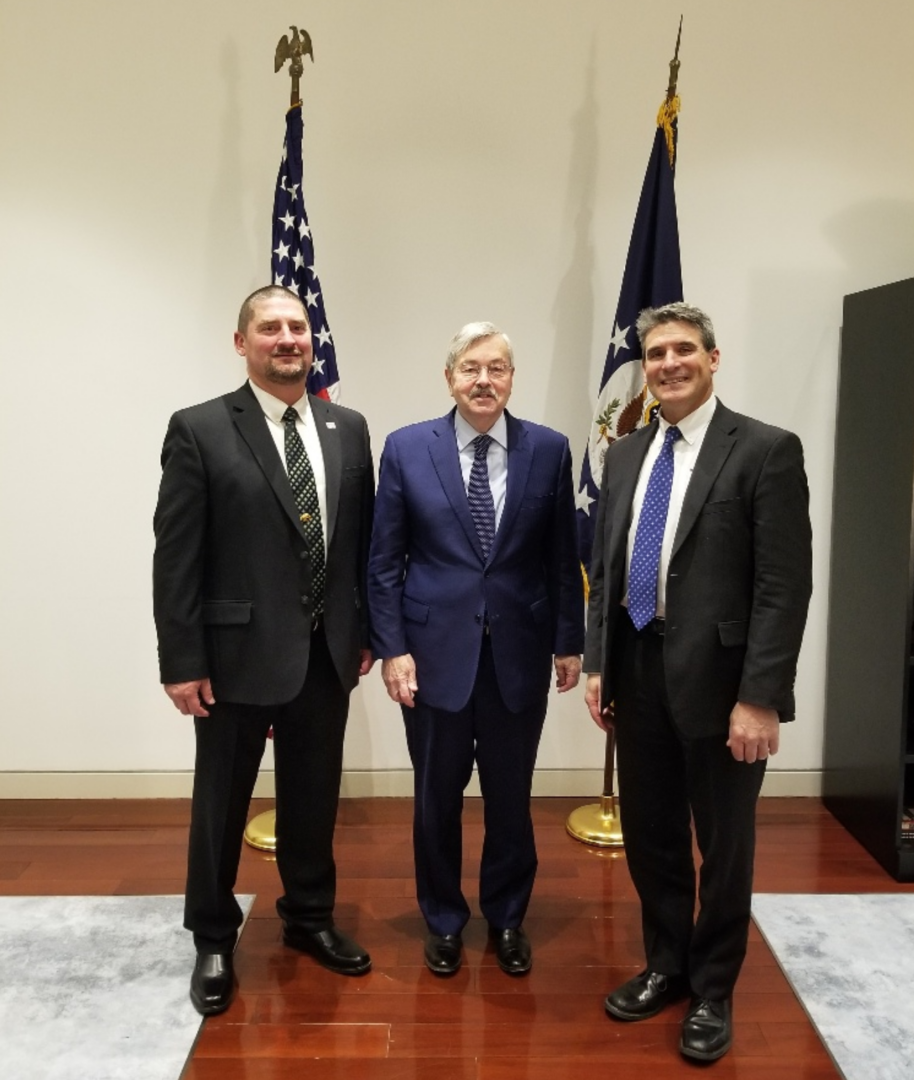

Tim Bardole (left) Ambassador Branstad, Lindsay Greiner 2019 China Trade Mission Commentary by Aaron Putze, APR
As we near the one-year mark of the U.S.-China trade war, conversations about how and when it will be resolved and its lingering implications on Iowa agriculture are ripe with educated guesses and outright speculation.
What we know for sure is that the trade dispute’s reverberations impact nations far and wide.
No one better understands the stakes – or is monitoring the situation more closely – than Iowa’s soybean farmers. That’s because they have the most to lose – or gain – from U.S. trade relations with China.
U.S. soy exports to China have fallen dramatically, down more than 90 percent during the first quarter of the 2018-19 marketing year compared to the same time one year earlier. Subsequent real and intended purchases by China of an additional 10 million metric tons has drawn merely a yawn from the Chicago Board of Trade.
Now, nearly one year into the trade war and with planting season looming, domestic soybean supplies continue building while prices remain well below the cost of production for most farmers. Add foul weather into the mix and, well, let’s just say these aren’t fun times in U.S. farm country.

Tim Bardole, Jackman Soong, Lindsay Bardole COFCO Beijing While nothing can be done about the weather, most believe something can be accomplished on trade. Yet the stalemate continues. What’s most disconcerting for soybean farmers and the industry is a complete lack of clarity or consensus about if, how and when a deal will be struck between the two countries.
I’ve visited with numerous farmers about the trade stalemate. Some are more positive than others about the situation and its short- and long-term impact on their farm and the industry. Using that approach, I organized key take-aways from time spent in China March 24-30 as a participant in an Iowa Soybean Association-led trade mission:
China: Glass half full
-

Beijing rush hour China’s increasingly urban population holds great potential for U.S. agriculture. Forty years ago, 18 percent of China’s population lived in cities. Today, its 58 percent – or around 840 million people. An additional 300 million Chinese residents are expected to transition from small, rural villages to urban centers by 2030. With city living comes increased income, with the average city dweller earning nearly triple of their rural neighbors.
- More income means higher per-capita meat and protein consumption. Those living in urban areas eat 12 kilograms more of fish, eggs, poultry, pork and vegetable oil annually than their urban neighbors. As urban population centers grow, it’s estimated that meat and protein consumption will, too.
- More chickens, pigs, poultry, dairy cows and fish will require more feed. Production of major animal proteins was up .4% in 2017 to almost 350 million metric tons. This trend is expected to continue
- Smaller, “backyard” farms are being displaced by large-scale facilities that produce meat, milk, eggs and fish more efficiently. Modern feed mills serving these farms manufacture feed using better ingredients. At the top of the list is soybean meal. Soybean meal’s share of all protein meal consumption is around 80 percent so the transition from inefficient farms to large-scale enterprises bodes well for increased soybean meal consumption.
- Since 1992, soybean oil and meal consumption in China have increased 1,500 and 2,000 percent respectively. The U.S. Soybean Export Council predicts that the country of 1.4 billion will consume around 123 million metric tons of soybeans by 2029, up from an estimated 88 mmt predicted for 2018-19.
-

Fresh salmon There are only three places on the planet that grow significant amounts of soybeans: Brazil, Argentina and the U.S. While Argentina did get stung last year by a drought, overall production has steadily increased the past six years due in large part to favorable weather conditions. Meteorologists say it’s reasonable to assume that Mother Nature will have a change in attitude in one of these key growing regions sooner rather than later. When that happens, soybean prices will respond accordingly offering opportunities for farmers hungry to make sales.
China: Glass half empty
- A trade deal is elusive given the enormity of the issues at play. They include intellectual property rights, forced technology transfer by China for the privilege of doing business in the country of 1.4 billion people and timely approval of traits for importation. China also faces criticism for not complying with World Trade Organization provisions including massive subsidization of its domestic food system.
- An economy that grew routinely by double digits from 1975-2010 is softening dramatically. In 2015, China’s Gross Domestic Product grew 6.9 percent. In 2016, the growth was 6.7 percent. The forecast for 2018-19 is somewhere in that neighborhood, although some market analysts predict real growth may be less than five percent.
- Rapidly aging population in China resulting in its one-child policy that was imposed for decades. It was recently rescinded but the younger population will increasingly struggle to cover the social costs brought about by an inverted demographic. Productivity is also taking a hit as health care costs rise.
- The U.S. share of China’s total soybean imports has fallen from 36.2 million metric tons in 2016-17 (or 62 percent of U.S. soybean exports) to 27.7 mmt (49 percent) in 2017-18. Thus far in 2018-19, 5 mmt has been shipped to China, 7 mmt have been ordered; China has also signaled an interest in purchasing an 10-12 additional mmt. Best-case scenario for 2018-19 U.S. soybean exports to China is 23 mmt (a decline of 37 percent in two years).
- The U.S. administration’s approach to China has relegated U.S. soybean farmers to residual suppliers. With or without the tariffs, China will continue to make significant investments in South America’s infrastructure, ensuring soybeans grown there can arrive in Chinese ports more quickly and economically.
- China will continue incentivizing more domestic soybean production by increasing soybean yields and acreage.
Some speculate that a resolution to the trade war is imminent and soybean prices will respond positively and quickly. Some believe an agreement will take years. Still others contend that even if an agreement is announced tomorrow via Twitter, the U.S. will struggle to reclaim only two-thirds of sales once made to China.
Only time will tell.
In the interim, it’s game on to find new markets, confirm new sales and make the case to the administration about swiftly resolving the trade war.
-
-
Latham Hi‑Tech Seeds
Seed Industry Storms the Hill


As 2nd Vice Chair for the American Seed Trade Association (ASTA), John Latham serves as a liaison with state and regional associations on national legislation. John Latham, president of Latham Hi‑Tech Seeds, last week joined a diverse group of seed-industry leaders Washington, D.C., for the American Seed Trade Association’s (ASTA) annual Storm the Hill legislative event. Topping the list of 2019 legislative priorities are innovation, trade and agriculture research funding.
“Virtually everything in life starts with a seed, and so many things we enjoy as a society today — from our food, to our clothes, to the fuel that powers our cars — are the direct result of continued seed improvement over the years,” said ASTA President & CEO Andy LaVigne. “As our world faces growing environmental and food production pressures, seed innovation is critical to a sustainable future. The policies being made today in Washington, D.C., will have major impacts on the seed industry’s ability to continue to meet domestic and global challenges in the years ahead.”
INNOVATION: Plant breeding innovation offers exciting potential for our planet, our health and our food. Breeding methods like gene editing can be accessible to breeding programs for every crop and to both the public and private breeding sectors. To fully realize the potential of evolving methods, policy must be based on the end-product and not the breeding method itself. If newer breeding methods result in plant varieties that are the same or indistinguishable from varieties developed through more traditional methods, they should not be treated differently from a regulatory perspective. It is critical that USDA, EPA and FDA are coordinated in their policies surrounding plant breeding innovation, and that the U.S. takes a leadership role in working towards policy alignment at the global level. LEARN MORE.
TRADE: Seed is a global industry, with U.S. exports totaling $1.9 billion in 2018. Seed exports to Mexico and Canada combined for a total of $630 million last year. ASTA urges swift passage of the U.S.-Mexico-Canada Agreement (USMCA) agreement which: strengthens science-based sanitary and phytosanitary regulations; provides strong intellectual property protections, including adoption of UPOV 91 requirements; and promotes innovation by harmonizing the agricultural biotechnology trait approval process. LEARN MORE.
AGRICULTURE RESEARCH: ASTA members will be reinforcing the need for continued funding for USDA agriculture research, including critical programs like the Germplasm Enhancement of Maize (GEM) program and the National Plant Germplasm System. GEM is a unique public-private partnership between the federal government, universities and companies of all sizes, GEM supports global food security by promoting genetic diversity in corn. LEARN MORE.
ASTA members representing 15 states participated in more than 70 meetings on Capitol Hill.
-
Latham Hi‑Tech Seeds
States Focus on Nutrient Reduction Strategies
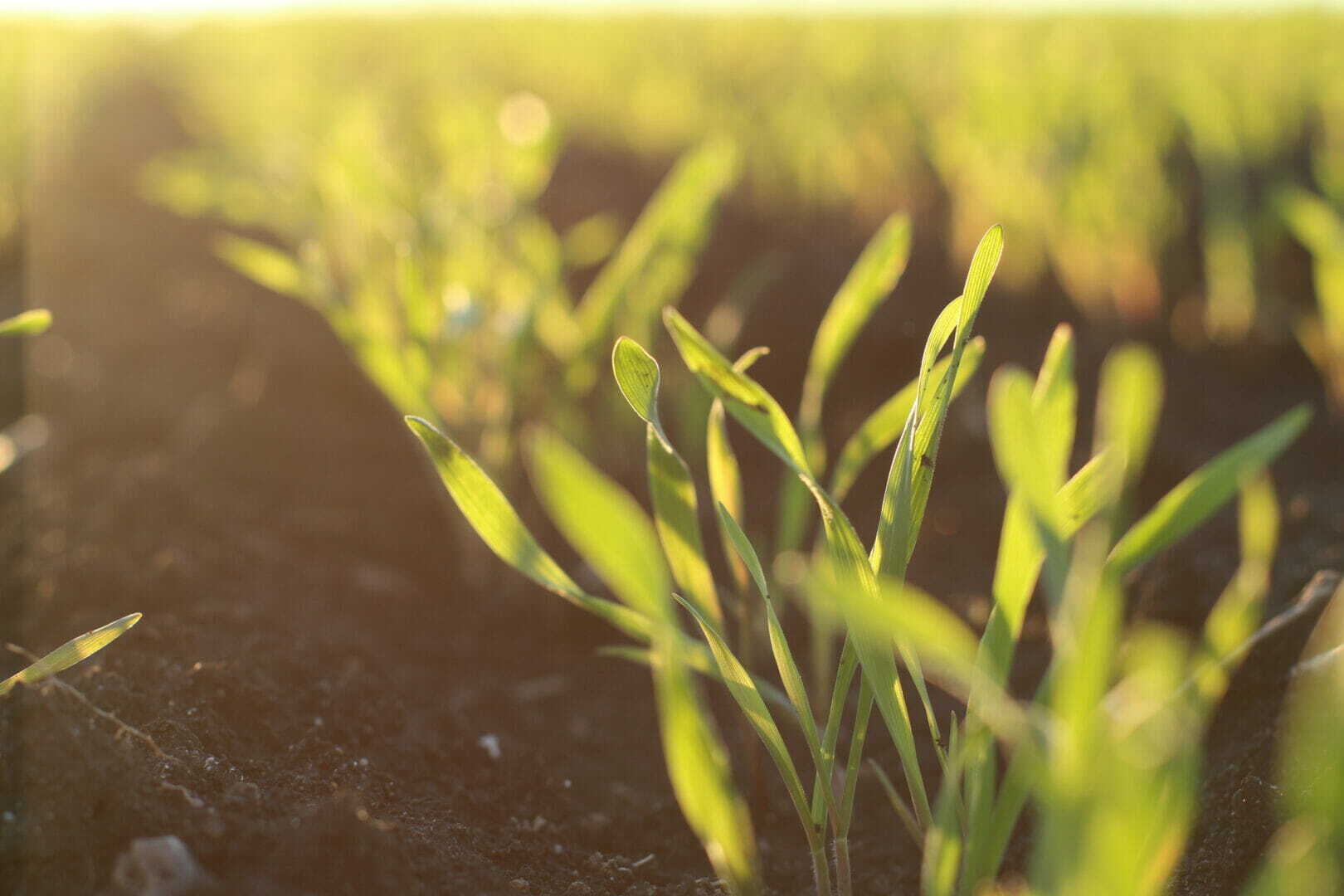
Reducing the excessive use of nutrients was the focus of presentations made recently during the annual Agribusiness Showcase and Conference in Des Moines.
Most Upper Midwest farmers are very aware of problems in the “Hypoxia Zone” of the Gulf of Mexico. This area where the Mississippi River discharges into the Gulf is negatively affected by the abundance of nitrate nitrogen (N) and phosphorus (P) found in the river water. Excess nutrients can come from many sources including: sewage treatment plants; soil erosion; deposition of atmospheric nitrogen and fertilizers used on farms; lawns; and golf courses.
The EPA in March 2011 issued a letter to encourage states bordering the Mississippi and Missouri Rivers to reduce contaminants, specifically N and P, found in lakes, rivers, streams and groundwater. Phosphorus is tightly bonded to soil particles, so erosion is the main reason it is found in water. Nitrogen, on the other hand, converts to nitrates and easily leaches down through the soil profile. This allows nitrates to infiltrate groundwater and eventually reach lakes, streams and rivers through tile systems or aquifers.
Below are a few recommendations from experts who spoke at the agribusiness conference:- Eliminate “insurance” and “build” applications of nutrients. We tend to base our fertilizer needs on soil tests and what our yield goals are, then add an extra 10-20% to make up for losses due to weather, timing, etc. We need to stop this practice.
- Bioreactors at the field’s edge can lower nitrate in runoff water before it can enter a stream or tile drainage ditch.
- Saturated Buffers can help reduce both erosion and nitrate runoff for farms that have a river or stream flowing alongside or through the field.
- Cover Crops can greatly reduce erosion and help with more efficient nitrogen use. Cover crops are one of the few practices that may help an entire field, rather than merely an edge-of-field strategy. Long-term benefits of cover crops include managing weeds, increasing organic matter and building overall soil health.
- Precision Agriculture. Programs like Climate FieldView™ and Latham’s Data Forward™ bring economics and conservation together by using your own farm data. This leads to better variety selection and crop input decisions and often better use of soil and fertilizer resources.
- These are just a few of the most popular strategies, but you could visit with your local NRCS staff member for more ideas. Most state strategies are voluntary, but Minnesota is considering making some of their strategies mandatory. Fall application of nitrogen fertilizer might be the first practice banned in Minnesota.
- One farmer put it very simply, “Either join the effort now and have some freedom in what practices you use or wait until it is mandatory and then be told what to do.”
Contact your Latham RSM or our Technical Agronomist Phil Long to talk about ways our cover crop portfolio or Seed-2-Soil® services can help you and our customers raise the most profitable and sustainable crops.

-
Latham Hi‑Tech Seeds
Latham Hi‑Tech Seeds Announces Ryan Schon As General Manager
 Latham Hi‑Tech Seeds announces Ryan Schon of Ankeny, Iowa, as its general manager.
“We’ve had the pleasure of working with Ryan in different capacities for the past 20 years, and we’re pleased that he is has joined our management team,” says John Latham, president of third-generation, family-owned Latham Hi‑Tech Seeds in Alexander, Iowa. “Latham Seeds has experienced 15 consecutive years of growth, and we believe Ryan will help us grow in areas that will allow us to provide even greater support and services to our dealer network and farmer-customers.”
Latham says Schon’s background in agronomy, marketing, and precision agriculture, combined with his education and experience, will help his company gain greater efficiencies.
“Ryan’s fresh perspective will allow us to consider new business approaches and opportunities. He also understands the intricacies of working with other family-owned seed companies, plus he has experience working with his own family’s business,” says Latham.
Schon grew up in Glidden, Iowa, where his family owned a lumber and construction business. His grandparents also farmed in Carroll County.
“I learned so much growing up in a family business: working hard, making work fun and doing whatever it takes to get the job done,” says Ryan, who earned a Bachelor of Science degree in Agronomy from Iowa State University and holds a Master of Business Administration from Lindenwood University.
Schon most recently served as senior corporate development manager for Granular and led the post-acquisition integration of Granular with Encirca. He provided a voice for farmers as new Encirca Services were developed with Pioneer Agronomy Science, data scientists, software development, field teams, and external collaborators.
Prior to working for DuPont Pioneer, Schon was a business development manager and traits marketing lead with Monsanto. He and his family also lived abroad for one and a half years.
“The most amazing thing I observed is that all those farmers had the same farmer spirit,” says Schon, who has visited farmers on six continents and in about 25 countries. “In many cases, I didn’t know their language and we talked through a local translator. But there’s a universal farmer spirit that comes from putting all your faith in a seed that you’ve put in the ground and knowing that your livelihood depends on what it produces.”
Schon says he enjoys having the opportunity to return to his Iowa roots and enjoys being part of the U.S. seed industry.
“The seed industry is so collegial. Practically every seed company started as a family farm,” says Schon. “In a previous job, I organized a customer meeting for leaders from all the independent seed companies. I quickly learned that the best thing we could do is make time at the beginning of the meeting for everyone to spend time together catching up. I don’t think there are many industries where that would be true, and I really enjoy the comradery. I look forward to maintaining and strengthening the contacts I’ve made within the industry. I especially welcome the opportunity to work with the Latham team to lead the the company into this next generation of growth.”
Latham Hi‑Tech Seeds is a family-owned company marketing hybrid seed corn, soybeans and alfalfa under the Latham® brand name. Since 1947, the Latham name has stood for the latest genetics and highest quality seed. Today it’s owned by third-generation seedsman John Latham and his wife, Shannon, and John’s brother, Chris. They’re committed to bringing world-class technology home® to rural communities in Iowa, Minnesota, the Dakotas, Nebraska and Wisconsin. For more information about Latham or its products, visit www.lathamseeds.com or call 1-877-GO-LATHAM (1.877.465.2842)
-
Latham Hi‑Tech Seeds
#AskTheAgronomist Special Edition

More Topics. More Expertise. More Value.
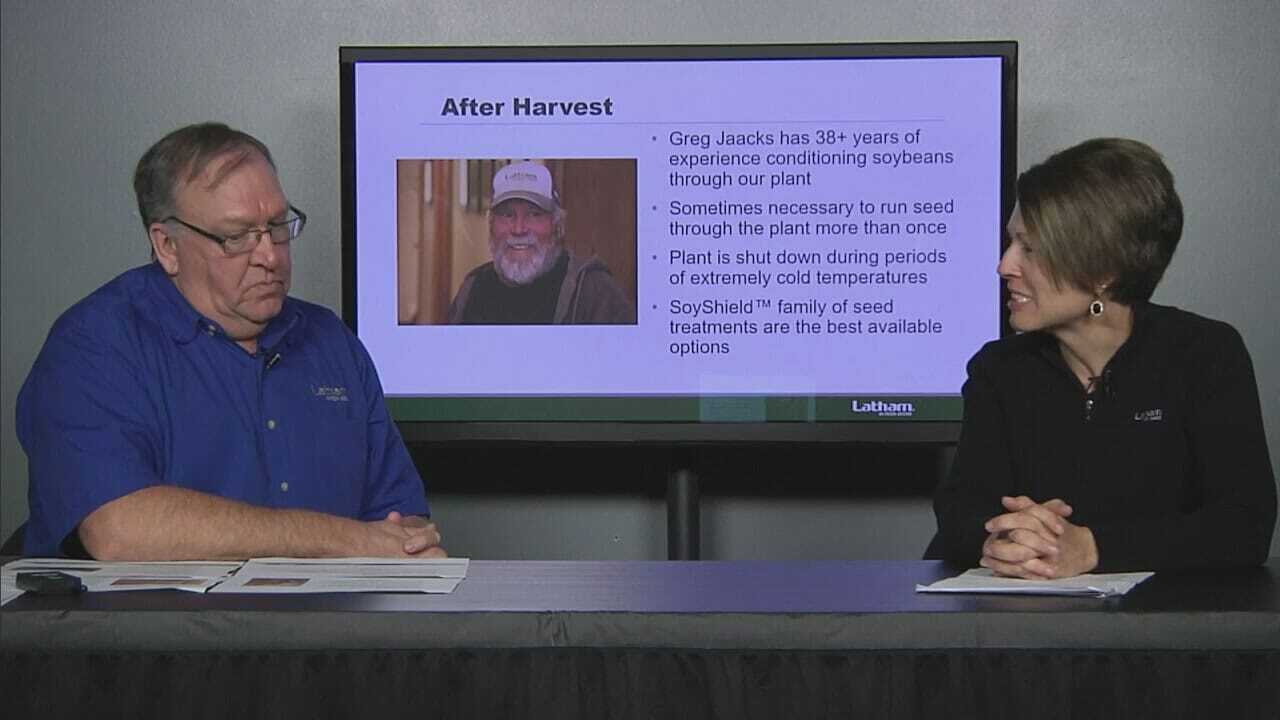
Below we have shared our 5-segment #LiveWithLatham Broadcast! We had our Agronomy & Product Teams with us to talk about the 2018 growing season, Latham® hybrids and varieties, an industry update, on-farm research and our Latham quality standards. Tune in to the segments below.
https://www.facebook.com/LathamSeeds/videos/206956050211982/
https://www.facebook.com/LathamSeeds/videos/387560941788121/
https://www.facebook.com/LathamSeeds/videos/2371959466165669/
https://www.facebook.com/LathamSeeds/videos/713236272403231/
https://www.facebook.com/LathamSeeds/videos/643567089391080/
-
Latham Hi‑Tech Seeds
Give Back this Holiday Season

The brisk air and cozy fall nights excite many Midwesterners for the Thanksgiving and Christmas seasons. As we take time to recognize and be thankful for what we have, it’s important to remember those families and friends that find this season the most difficult time of the year. Unfortunately, disappointment can fill the voids while some families can’t afford to gift their children or prepare a traditional thanksgiving dinner.
We are challenged to give back to our communities and families in need, whether it is through sharing hot dishes, quality time with each other or financially. Those in the Midwest are known for helping neighbors and friends during the fall and spring when times become highly stressed, where others face many stressful times during the holiday season.
We encourage you to continue helping the less fortunate throughout this holiday season. Here are some ways people in #NorthIowa are giving back this season:
Donating a gift to your local community center is a simple way of giving and can make a young girl’s or boy’s holiday. You never know how much your actions will impact an individual or family, especially during the holiday season when some need it the most. Whether you take part in the giving tree at a local church, donating toys to a shelter or help a relative prepare holiday food, you can make a difference!
How you demonstrate giving and show caring can also make a difference in your children’s lives. Your actions can make an impression and create a legacy. Giving back can be a gift you gift yourself this season!
-
Latham Hi‑Tech Seeds
Seeds of Kindness Grew while Farmer’s Last Crop was Harvested
It was an emotional morning at the Rasmussen farm Wednesday, Oct. 31. Family and friends, combines and auger wagons, poured in to help bring in a loved one’s last crop. Just five months ago, this same group of dedicated family and friends helped make sure this crop was planted.


Virgil Rasmussen, who had served for years as Latham® dealer in Emerson, Nebraska, endured a hard-fought fight against Leukemia for the past year. The height of his treatments occurred during the busy spring planting months, and the Emerson community responded in a big way. Five tractors with planters, a seed tender, transport team and a meal prep crew came together to make it happen. With the crop safely in the ground, Virgil was able to focus on getting better. In mid-October, he received the all-clear from his doctor team. He had won the battle against Leukemia!


It was a surprise to everyone when late last week they received news of Virgil’s illness and sudden passing. Loved ones, with heavy but determined hearts, once again answered the call for help. A harvest bee made up of friends and neighbors arrived to show their love and support to Virgil’s wife, Irene, and their family, as they put Virgil’s last crop safely in the bins.


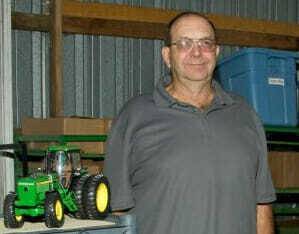
Virgil enjoyed his life’s work in agriculture. He planted and harvested 42 crops on his home farm east of Emerson. Whether it was full-scale out in the fields or a 1/16th size toy replica, Virgil will be remembered for his love of tractors and for his unique ability to customize toy tractors of various models. Virgil was a proud grandparent. He also loved fishing and providing great service to his seed customers. We at Latham Seeds are grateful for the opportunity to have known Virgil, and we extend our thoughts and prayers to the entire Rasmussen family.

When a farming family is in need or facing crisis, friends and neighbors pull together to take care of every detail right down to the field meal. In honor of all the helping hands that worked to bring home Virgil’s crop, we share this favorite field meal for Swedish Meatballs.