Latham Hi-Tech Seeds

(641) 692-3258

  • Home
  • Performance
  • Products
    • Corn
    • Soybeans
    • Soybean Blends
    • Alfalfa
    • Corn Silage
    • Seed Guide
  • Find a Rep
  • Media
    • Blog
    • News
    • Videos
    • Podcasts
    • TECHTalk
  • About Us
    • Company History
    • Our Mission
    • Careers
    • Become a Rep
    • Sowing Seeds of Hope
  • Contact Us
  • Latham Hi‑Tech Seeds

    Prepare Now for Increased Production in 2024

    Corncob background

    There’s more to fall than getting the combine ready. To ensure healthy, productive soils next year, think about doing these three things now:

    1. Review your field data
    2. Correct compaction
    3. Add a cover crop

    Whether your fields produce bumper crops or have lower-than-average yields, take the time after harvest to assess soil fertility levels, replenish depleted nutrients, determine reasons for high- and low-yielding areas and evaluate overall soil health. Doing this can help give your crops a head start for next season.

    Soil samples and yield maps can predict the future

    Begin next season’s preparations by pulling post-harvest soil samples and assessing this season’s yield maps. Soil samples will identify any phosphorus or potassium deficiencies, while yield maps will show the amount of nutrients removed from the soil by this year’s crops. This information will help you determine crop nutrient amounts for next season, based on actual numbers rather than estimates.

    If post-harvest conditions allow, farmers can make partial (or base) nitrogen applications in the fall. Then test soil nitrate levels in the spring to determine the additional amount needed to meet next season’s crop performance goals. This ensures that nitrogen will be available in the soil at planting, as well as throughout the remainder of the growing season. If weather delays spring applications, this nitrogen management strategy provides you with more time to assess fertility needs based on early-season crop and soil conditions.

    Consider fall nitrogen applications with a stabilizer

    If you can make a fall nitrogen application, consider the effects of soil texture, soil moisture levels and soil temperature to avoid leaching and denitrification issues. Fall nitrogen applications should not be made until your soil cools to 50 degrees Fahrenheit or lower, when soil bacteria begin to go dormant. Fall-applied nitrogen must be used with a stabilizer to prevent it from converting into a mobile nitrate form that can move off-target and run off into nearby waterways. If manure is part of your nitrogen strategy, consider also using a stabilizer.

    Ease spring workloads with simple steps

    If your fall soil samples identify phosphorus (P) or potassium (K) deficiencies, you can apply these nutrients any time after harvest. To ease spring workloads, broadcast applications may be made in the fall and incorporated into the soil. If a spring application works better, P and K can also be applied prior to planting.

    Another important issue to assess in the fall is soil compaction. Before doing any fall tillage, check compaction depth to help you determine the proper tillage tool to use. Accurate tillage depth and the tillage speed will loosen soil and prepare it for next season.

    Team Latham

    September 21, 2023
    Agronomics, Corn, Crop, General, Soil, Soybeans, Tech Tuesday
  • Latham Hi‑Tech Seeds

    A Love for Farming Drives This Farmer

    Tony

    Like many farm kids, Tony Rother never outgrew his love for equipment. He has always enjoyed farming and big trucks.

    Because he also was good with numbers, Tony considered a career in financing. He graduated from North Iowa Area Community College (NIACC) but his heart was set on farming rather than studying more numbers. His family’s farming operation wasn’t large enough to support everyone, so Tony spent two years driving trucks for Sukup Manufacturing in Sheffield, Iowa. In 2005, he reached his goal of starting his own trucking company.

    Today Tony and his wife, Jessica, live down the road from where Tony’s great grandfather began farming in 1919. His parents, Mark and Sue Rother, live on the homeplace. Father and son have been farming together for more than 20 years. Since 2010, they also have been hauling seed to Latham® dealers and customers.

    “What I enjoy most about trucking is the freedom I have,” Tony says. “I enjoy being my own boss and making my own decisions. I really enjoy working for Latham Seeds and talking with farmers across the Midwest.”

    Tony

    The ability to drive long distances comes in handy with an active family. Tony and Jessica have two children: Landon and Olivia. Both are active in traveling sports teams. Landon’s favorite sport is basketball and Olivia’s is softball. Jessica works as a social worker for Iowa Total Care, which takes her to several counties across North Iowa.

    In their free time, the Rothers are involved in their community. Tony helps coach Landon’s West Fork basketball team. Jessica serves on the West Fork Booster Club and teaches Sunday School at Zion-St. John Lutheran Church.

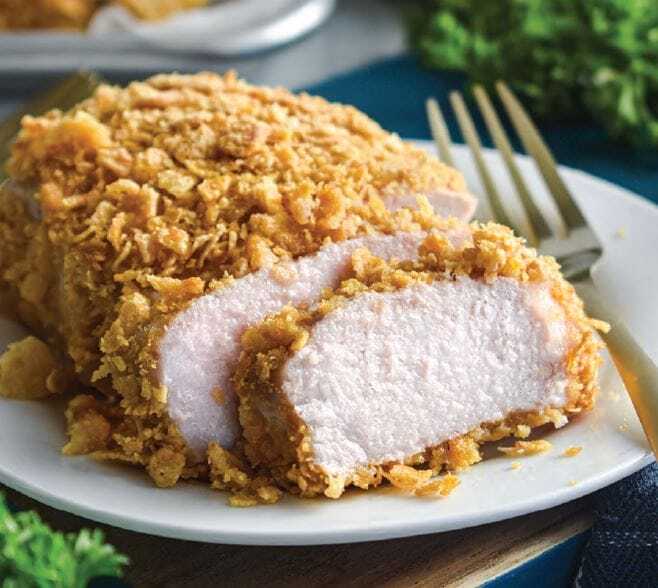
    One of their year-round, favorite recipes is Spinach-Stuffed Chicken Breasts — which is easier to make than it sounds! This main dish can be paired with nearly any type of side.


    Shannon Latham

    September 15, 2023
    Food & Family, General, Latham News, Poultry
  • Latham Hi‑Tech Seeds

    We’re All on the Same Team: Beat Cancer

    Scott Halverson

    The Latham Team placed second on August 24, 2023, in the 16th annual Coaches vs. Cancer Charity Golf Classic presented by the Iowa PGA Section.

    “We had an amazing time playing Talons of Tuscany in Ankeny,” says John Latham, president, Latham Hi‑Tech Seeds. “The fairways and greens were immaculate.”

    Team Latham included: John, Chris and Ian Latham plus Latham Seeds District Manager Noah Snedden and Scott Helverson.

    Scott Halverson
    L to R: Ian Latham, John Latham, Scott Helverson, Noah Snedden and Chris Latham

    Some Iowans will remember Helverson as a wide receiver for the Iowa Hawkeyes. For the past 16 years, he has been a referee for the National Football League.

    “We couldn’t have asked for a better teammate,” John says. “Scott is in great shape, and he was driving the ball extremely well. Plus, he is a great guy. He shared interesting experiences he has had as a NFL referee.”

    Helversen recently officiated the preseason game between the Minnesota Vikings and Tennessee Titans. He has officiated three Super Bowls, including Super Bowl XLII between the Giants and Patriots. The New York Giants upset the undefeated New England Patriots when David Tyree made an amazing fourth quarter-catch of an Eli Manning pass by pinning it against his helmet as he was pulled to the ground.

    Regardless of whom you’re cheering for, everyone wins when we play together to beat cancer.

    Employees and friends of Latham Seeds are invited to join the company owners and team members in raising funds for the American Cancer Society. It was harvest season 2009 when past Latham Seeds President Bill Latham was diagnosed with Acute Myelogenous Leukemia (AML).

    As Blood Cancer Awareness Month is underway in September, Latham Seeds announces its commitment to year two of raising funds for the American Cancer Society. Watch the video to learn more about “Sowing Seeds of Hope”.  We hope you’ll consider a $15 donation in honor of Bill Latham’s fight against AML. Learn more and donate.

    Shannon Latham

    September 13, 2023
    General, Seeds of Hope
  • Latham Hi‑Tech Seeds

    Latham’s “Locker Room Report” Returns to Cyclone Radio Network

    John Resized

    September 9, 2023, marks the 70th meeting between the University of Iowa and Iowa State University football teams. In a state without a professional sports team, the Cy-Hawk game is the Super Bowl of Iowa. After all, bragging rights are at stake!

    “The Cy-Hawk game brings fans of both teams together for a spirited game day atmosphere,” says John Latham, president, Latham Hi‑Tech Seeds. “It was great to see Iowa State win last year. Hopefully, the Cyclones can make it two in a row! Coach Matt Campbell has proven that he can take Iowa State to new heights, and I’m excited for another season of Cyclone football.”

    Many young, talented players will get their first chance to play meaningful snaps at Iowa State.

    “The quarterback is the most important position on the field,” John says. “Iowa State has two incredibly talented freshmen who will get their chance to prove themselves. Rocco Becht is a redshirt freshman from Tampa and JJ Kohl is a true freshman from Ankeny. Rocco is a mobile quarterback who can get outside the pocket and beat defenses. Measuring 6 feet 7 inches tall, JJ has a big arm and throws more traditional pocket passes. We’ll see which QB takes over for the rest of the season.”

    John Resized
    John had so much fun golfing for charity in Hampton this summer with Cyclone football players. From left to right: Dimitri Stanley, Jaylin Noel and Rocco Becht. Dimitri and Jaylin are wide receivers and Rocco is a quarterback.

    Creating a Winning Culture

    Much like a college football coach is who nurturing a culture within his sports organization, a company’s owners and managers must nurture its culture. Culture transforms a company into a team. An organization’s culture sets expectations for how people behave and work together.

    Coach Matt Campbell has brought a five-star culture to Cyclone football. We don’t need a roster filled with five-star recruits if we have players who believe in a five-star culture,” John says. “We’re working hard to create a 5-star culture at Latham Hi‑Tech Seeds. There are similarities in that both ISU and Latham compete against teams with more money, but we overcome the obstacles to win!”

    John 3
    John Latham taking with John Walters and Coach Campbell during a live broadcast of the Latham Locker Room Report.

    Win or lose, you won’t want to miss the Latham Locker Room Report. This post-game radio broadcast includes exclusive interviews with Iowa State coaches and players. It airs on the Cyclone Radio Network.

    Celebrating Cyclones Everywhere

    Everyone wins at a tailgate, and no tailgate is complete without dessert. Today I’m sharing with you one of my family’s favorite recipes for Scotcharoos, which is about as “Iowa State” as one can get!

    Scotcheroos honor two outstanding ISU alumni: George Washington Carver who performed extensive research on peanut products, and Mildred Day who invented Rice Krispie Treats®. FUN FACT: Iowa State honored Day’s memory during its VEISHEA celebration in April 2001 – and set a new world record – by creating a gigantic Rice Krispies Treat that weighed 2,480 pounds.

    When you live in rural America, you can’t run uptown for gourmet ingredients. But you can make simple Rice Krispies treats look gourmet by using a heavy-duty cookie cutter to shape them into footballs before you cover them with chocolate.


    Shannon Latham

    September 7, 2023
    Desserts, Food & Family, General, Latham News, Recipes
  • Latham Hi‑Tech Seeds

    Late Summer Can Lead to Better Harvest Decisions

    Scouting
    Steve Resized
    Steve Sick, Latham Product Manager

    Taking field notes on what you observe in late August and early September can provide valuable information as you move into harvest, as well as confirm or reprioritize agronomic goals for next year.

    Notes I take this time of year generally answer these questions:

    • What diseases are the most prevalent?
    • Which areas of the field exhibit poor growth or yield potential?
    • Should I conduct a pre-harvest yield estimate?

    Late-Season Scouting Suggestions

    Evaluate areas of poor crop growth and potential yield. There can be multiple reasons why a crop didn’t grow well in portions of a field or yield estimates are low in some spots.

    To help determine if soil fertility and health is the cause, try these steps:

    • Mark on a map or GPS reference the location, so you can take directed soil samples after harvest.
    • Pull paired samples. Take one composite soil sample in the poor growth area and then take another composite sample in an area of good growth nearby in the same field. (Soil sample bags are available from many sources and easily available through your local university or co-op.)
    • Use yield maps. These are another great data layer to compare and contrast what you observed during scouting in late August.

    Think About Pest Management While Scouting

    Observe the severity and distribution of diseases, insects, and weeds in a field to help make future adjustments to pest management plans.

    For example, Goss’s Wilt and bacterial leaf streak are two bacterial diseases found this year in cornfields with no previous history. Tar spot is also a new disease that carries over in residue the following year. Hybrid selection for improved tolerance or resistance to these bacterial diseases maybe something to talk about with your seed dealer this fall.

    Some hail and wind-damaged fields now have a late-season weed flush in portion that might warrant a more aggressive herbicide program next year.

    Scouting Now Can Help Predict Yield Potential

    The most compelling reason to scout fields in late summer is to estimate yield potential. There are differing techniques on estimating corn yield in terms of how to sample and the number of ears to pull. I suggest using information from satellite or drone images to direct sampling across the variability that exists in all fields.

    Another word of caution is with the seed size factor used to calculate kernels/bushel with the extremely dry grain fill period we have experienced in parts of Latham Country. For dry areas, that number may need to be much larger than normal.

    Scouting late in the growing season is almost always hot, itchy, sweaty, wet and uncomfortable! However, the insights gained with field observations — when paired with knowledge of the growing season — can help tweak management decisions going forward. This will ultimately lead to more productive growing seasons in the future.

    Did you enjoy this article? We want to (TECH)talk with you! Sign up for our newsletter to receive agronomy videos, articles (and delicious recipes) in your inbox! We’ll TALK soon.

    Team Latham

    August 30, 2023
    Corn, Crop, Fall, General, Growth Stages, Soybeans, Summer, Tech Tuesday
  • Latham Hi‑Tech Seeds

    SOWING (MORE) SEEDS OF HOPE

    Quilt 2

    Latham Hi‑Tech Seeds launched its “Sowing Seeds of Hope” campaign in 2022 — our 75th year of business — to raise $75,000 for the American Cancer Society over three years.

    Hope hero image

    Thanks to Latham® dealers, customers and employees, we raised $25,000 toward that goal by July 1, 2023! We’re on track to raise $25,000 again this year. The silent auction at 2023 Latham Dealer Kickoff in Bloomington, Minnesota, brought in $3,675.

    A special thanks goes to Craig and Lori Haaland for their generous donation of a Latham Seeds t-shirt quilt, which was hand-crafted by Lori. We appreciate Latham’s R&D Team for their generous purchase price of $1,200. This quilt will be presented to a Latham dealer who is a cancer survivor.

    Quilt
    Craig and Lori Haaland with the Latham Seeds t-shirt quilt

    Everyone knows someone who has been personally affected by cancer, and our family is no exception. We also know firsthand what a gift hope can be, when Bill Latham’s life was extended for nearly six years thanks to medical advancements and a stem cell transplant. Those years were invaluable time that allowed Bill to meet his youngest granddaughter and enjoy moments with his five grandchildren — while also passing down business advice to his sons.

    As Blood Cancer Awareness Month gets underway in September, Latham Seeds announces its commitment to year two of raising funds for the American Cancer Society. Watch the video to learn more about “Sowing Seeds of Hope”.

    Employees and friends of Latham Seeds are invited to join the company owners and team members in raising funds for the American Cancer Society.

    You’re also invited to celebrate Blood Cancer Awareness Month at home by enjoying a healthy breakfast made with eggs, which are an inexpensive source of high-quality protein.

    Shannon Latham

    August 24, 2023
    Breads/Breakfast, Food & Family, General, Recipes
  • Latham Hi‑Tech Seeds

    Fall Alfalfa Seeding – What You Need to Know

    Alfalfa3

    Fall Seeding Alfalfa

    While we are rapidly approaching the optimal time to begin fall seeding alfalfa, there’s still time to get the crop established before a killing frost. Newly-seeded alfalfa requires five to six weeks after seeding before a killing frost or freeze.

    A major key to successful forage production is a good soil testing and fertilization program. It’s best to apply needed amendments to the soil prior to seeding establishment. If the soil analysis indicates a need for liming materials, apply agricultural lime in amounts called for by the soil test. If the soil will be tilled prior to seeding, till the lime into the soil.

    Applying Lime Takes Time

    If the seeding must be established no-till and the test calls for large quantities of lime (four or five tons per acre or more), care must be taken to not create a very high pH zone at the surface with a low pH zone just below. In this case, it might be best to apply the lime in equal annual amounts over a period of three or four years.

    Phosphorus and potassium are the two most critical fertilizer materials for establishing and maintaining alfalfa stands. An initial application may be tilled into the soil prior to planting. Fertilizer must be top-dressed in succeeding years. Band application of a starter fertilizer at seeding time may help ensure stands on soils testing low or very low in phosphorus.

    Get the Foundation Right for Planting

    Preparing a firm seedbed for planting is essential. This can be accomplished by firming the soil with a corrugated roller or cultipacker before seeding. After seeding, firm the soil again to cover the seed and obtain necessary seed-soil contact. Final seed placement should be no deeper than ½-inch in heavy soils and ¾-inch in light soils.

    If stands established in the spring are inadequate, they may be reseeded or inter-seeded the following late summer. For alfalfa, stand counts per square foot should be +25 for a good stand, 15 to 25 for a marginal stand, and less than 15 for a poor stand in the establishment year. Poor stands should probably be reseeded or inter-seeded.

    Evaluating Stand Quality

    The difficult decision comes with a stand of 10-15 plants per square foot, where, if the plants remain healthy, additional seeding and fertility operations under less-than-ideal conditions may damage the stand, ultimately doing more harm than good.

    Under those circumstances, producers should consider weather and soil conditions carefully. Reseeding marginal stands largely depends on the producer’s immediate need for forage and the resulting management of the stand going into fall and winter. A reseeded or inter-seeded area would not be harvested after the seeding to improve the chances for good stand survival through the winter.

    Interseeding a poor stand of newly-established alfalfa plants will likely be more successful than attempting to thicken an old, established alfalfa stand. In either case, the alfalfa stand achieved will probably not be uniformly thick.

    Finally, a general rule of thumb is to plant 12-15 pounds per acre of high-quality seed per acre. Products like LH 9400 and LH 9120 BR are ideal choices to plant this fall and will provide years of high-quality forage.

    Did you enjoy this article? We want to (TECH)talk with you! Sign up for our newsletter to receive agronomy videos, articles (and delicious recipes) in your inbox! We’ll TALK soon.

    Team Latham

    August 23, 2023
    Alfalfa, Crop, Fall, General
  • Latham Hi‑Tech Seeds

    Latham Spouses and Guests Attend a Special Kind of ‘Boarding School’

    Shannon 1

    If you’ve ever shared a charcuterie board, you know there are countless ways to prepare the meats, cheeses and garnishes. While there isn’t really a “right or wrong” way to serve a charcuterie board, there are some tips and tricks for creating a beautiful display. We treated spouses and guests at this year’s Dealer Kickoff to a special charcuterie workshop, hosted by a seasoned chef who revealed some of his “secrets of the board.”

    FInal Char

    Shannon 1
    Spouses and guests with Shannon Latham.

    “You can’t really mess up a charcuterie board too much,” says Chef Eric Baker, who worked at the Hilton Minneapolis/St. Paul Airport hotel for 32 years. “But you have to start by knowing your audience. Who are you feeding? What’s it for? Know how many ingredients you need, or how many boards you want to make. Do this first, before you even touch a slice of salami.”

    Chef Eric retired from his head chef role at the Hilton two years ago, but when the hotel invited him back to lead Latham’s special charcuterie event earlier this month, he gladly accepted. He began the workshop by introducing his favorite ingredients to build a charcuterie board with flavors that pair well together and that most guests will enjoy.

    Chef Final
    Chef Eric took our taste buds to a new level!

    (Note: Chef Eric recommends the “3 3 3 3 rule” for the perfect charcuterie board – choose three meats; three cheeses; three starches and three accompaniments.)

    Here are ingredient samples for a solid starting lineup:

    • Cheeses – goat cheese, an aged cheddar, a favorite bleu cheese, parmesan reggiano and soft Brie
    • Other soft cheeses – ricotta, Boursin, etc. in small ramekins
    • Meats – salami (dry or hard), prosciutto and pepperoni
    • Fresh fruit – cherries, apple slices, pear slices and various berries
    • Dried fruit – dates, apricots, figs, etc.
    • Crackers – mix between salted, seeded and toasted varieties
    • Jams and Mustards – any variety (Chef Eric chose a balsamic jam and brown mustard for our workshop)
    • Olives or Pickles – green or black olives; small pickles only
    • Nuts – almonds, cashews and pistachios are all good choices

    After showing our group how to place the cheese and meats on the board, Chef Eric introduced another ingredient: honeycomb. He chose small blocks of raw honeycomb for each charcuterie board – but few of us knew exactly what to do with it. Turns out, honeycomb is 100% edible and is packed with the freshest, smoothest golden honey! Simply slice a piece of honeycomb and spread it on a cracker, a piece of cheese or a slice of fruit and voila! Your charcuterie board has been elevated to next-level goodness. (Thank you, Chef Eric!)

    Finally, a highlight of the workshop was learning how to make a “salami rose” to decorate the charcuterie boards. It only took between eight and 12 slices of salami or pepperoni and the rim of a wine glass to produce flowers that were almost (almost) too pretty to eat.

    Of course, our group did eat – and we even took some of our specialties home, where we’ll know just how to create the perfect charcuterie board for our next entertaining event!

    Shannon Latham

    August 17, 2023
    Appetizers, Food & Family, General, Recipes
  • Latham Hi‑Tech Seeds

    Reeling and Dealing

    Walleye Resized

    Rod Fesenmeyer got his first smell of the open road when he was 21 years old, driving a Winnebago for delivery from Forest City, Iowa, to Fargo, North Dakota. That trip led to more deliveries, including two to Seattle, when he pulled a Volkswagen diesel behind the Winnebagos to drive himself back home.

    Rod went on to buy and operate his own semi, crisscrossing the country from California to the Carolinas and the northern and southern borders. It was a job he loved.

    “I got to see the country and get paid to do it,” says Rod, who was raised in Greene, Iowa, with his sister, Shannon.

    Fast forward to 2009, when Shannon and her husband, John Latham, purchased Latham Seed Co. She told Rod there was a truck driver opening, so he applied for it. He interviewed with Joy Bonin, the company’s office manager, and never mentioned the connection.

    “I didn’t want anybody thinking I was hired because I was Shannon’s brother or John’s brother-in-law,” Rod recalls. “When I walk through the door, I always treat Shannon and John as my bosses, as owners of this company.”

    Rod’s background in over-the-road trucking brought much needed efficiencies to Latham Seeds. His knowledge of federal motor carrier standards also brought about changes to keep drivers in compliance with ever changing rules. Rod went to auction and bought the company’s first (used) sleeper truck, which allowed him to sleep where and when he could. As Latham Seeds hired more drivers and purchased more equipment, Rod’s position evolved into logistics and fleet management. His ability to keep track of records and “wheel and deal” is what led to him becoming Latham Seeds’ purchasing manager.

    “Dad always said you don’t pay sticker price for anything,” Rod says. “The easiest money you’ll ever make is dealing to save a penny.”

    This is rod

    Rod enjoys his current role because he gets to interact with colleagues companywide. He’s usually the first person in the office every morning, which he says gives him time to get to work “behind the scenes.”

    Rod and his wife Marty have four children and 12 grandkids. Since fishing has always been a favorite pastime with his family, Rod is hooked on this recipe for Crispy Fried Walleye.

    Shannon Latham

    August 11, 2023
    General, Recipes, Seafood
  • Latham Hi‑Tech Seeds

    Late-Season Soybean Scouting

    Soybean Plant

    As we roll into late summer, it’s important to continue to scout soybean fields for signs of disease, insect pests and weed escapes. The notes you take today can have a significant impact on this year’s crop and also help you make more informed decisions in future years. Soybean aphid scouting should be well underway at this point. Aphid pressure has been relatively low throughout most of Latham Country to this point, but it’s important to remain diligent in checking your fields. The generally accepted economic threshold for this pest is an average of 250 aphids per plant with more than 80 percent of plants infested and an increasing aphid population. You’ll need multiple scouting repetitions to determine what is happening with aphid populations in your field.

    Two-spotted spider mites are another insect pest in soybeans that have the ability to rapidly increase in population under the hot and dry conditions some of our geography has faced. If mites are positively identified and causing plant damage — and hot, dry conditions are expected to persist — control measures should be considered. Field border treatments may be an option as infestations of spider mites are often confined to field edges.

    Late summer is also when several soybean diseases show up, including Sudden Death Syndrome, Frogeye Leaf Spot, White Mold and others. South Dakota State University has a detailed article on late-season soybean diseases.

    Knowing which diseases are present in your fields can help determine which variety to plant next year. Planting varieties with disease resistance can be the most effective and the most economical method of disease control. Latham® soybeans have great resistance to the major diseases that occur in our trade territory including: Soybean Cyst Nematode (SCN), Sudden Death Syndrome (SDS), Brown Stem Rot (BSR), Iron Deficiency Chlorosis (IDC), White Mold and Phytophthora.

    Soybean pests and diseases can be very serious issues. If you have any questions, feel free to contact me at 402-620-5790 or check in with your dealer.

    Team Latham

    August 8, 2023
    Agronomics, Crop, General, Soybeans
Previous Page
1 … 7 8 9 10 11 … 160
Next Page

Latham Hi‑Tech Seeds

131 180th Street | Alexander, IA 50420

(641) 692-3258

SIGNUP FOR OUR NEWSLETTER
  • Contact
  • Legal
  • Dealer Center
  • Seedware Login
  • Latham Gear

© 2025 Latham Hi‑Tech Seeds. All rights reserved. | Iowa Web Design by Webspec | Privacy Policy

Latham® Hi-Tech Seeds is a trademark of M.S. Technologies, L.L.C., 103 Avenue D, West Point, IA 52656.