Latham Hi-Tech Seeds

(641) 692-3258

  • Home
  • Products
    • Corn
    • Soybeans
    • Soybean Blends
    • Alfalfa
    • Corn Silage
    • Seed Guide
  • Performance
  • Find a Rep
  • Media
    • Blog
    • News
    • Videos
    • Podcasts
    • TECHTalk
  • About Us
    • Company History
    • Our Mission
    • Careers
    • Become a Rep
    • Sowing Seeds of Hope
  • Contact Us
  • Latham Hi‑Tech Seeds

    Blogs from Brazil by April Hemmes

    Brazil’s Vice President of Government Affairs was the evening’s hostess. She’s pictured here with April Hemmes.

    Guest blog by
    April Hemmes, Hampton, Iowa

    Franklin County farmer April Hemmes is traveling through Brazil with a group of Iowans.  You can get a sneak peek at Brazilian culture and agriculture here.  Read below for a daily account of her journey, and watch for more travel tales to come this week!

    Wednesday, Feb. 15, 2012

    I’m traveling in Brazil with Iowa Secretary of Agriculture Bill Northey and Delaware Secretary of Agriculture, Ed Kee. These gentlemen are friends, who decided to form a delegation from both states to learn about agriculture in Brazil.

    Floating town on the Amazon

    Today we arrived in Manaus, which was a 5-hour flight from Miami. Manaus, which is located along the Amazon River, was formed when rubber plantations were big here. The Rio Negro and another tributary of the Amazon converge in Manaus. The rivers run side by side, one is black water and one white. It’s truly amazing to see! The reason for difference in appearance is because the Rio Negro is denser and warmer in temperature with a faster current.

    The Amazon is huge; it’s 6 miles across in places. (Yes, 6 miles!!) And we were told the Amazon is actually longer than the Nile because GPS can trace the start of the original tributary farther into the rainforest.  Huge ships haul goods in and out. Ships filled with goods head up river to municipalities, and it takes 7 days to reach some cities.

    Making a rubber ball

    A boat stopped at the rubber plantation where we got to see how rubber is produced. A rubber tree is tapped at night and latex drips into a can.  Then, over an open fire, the canned drippings are stirred until a big, black rubber ball forms.

    Some of us walked around the block to see the big church in town. Many street vendors were selling all sorts of goods. Manaus is a city where the ratio of women to men is 6 to 1. Since I’m the only women on this trip, I have the better ratio of 37 to 1!

    Tomorrow we fly to Brasilia, the capital city of Brazil. It’s a totally planned city.  They took a clear tract of land and then moved the capital there in the 1950s.

    Thursday, Feb. 16, 2012

    Manaus Opera House

    This morning we stopped by the Manaus Opera House. It’s truly beautiful. All of the materials were brought over from Europe. Located inside the Amazon Rainforest of Brazil, it hosts the Amazonas Opera Festival every year from March until May.  It’s also home to the Amazonas Philharmonic Orchestra.

    After a quick stop at the opera house, we traveled over a brand new bridge crossing the Rio Negro. This bridge is almost 2 miles long – at the most narrow point of the river! This bridge opened up the southern side of the river for commerce & building. Before the bridge was built, people from Manaus had to wait 5 hours to cross the river in a ferry.  Now they can cross in just minutes.

    As we headed south, it was apparent we were heading deeper into the jungle. Our destination was a banana plantation. The plantation owner said that after clearing the land they had to fertilize it for 6 years until it could sustain banana plants. After one shoot produces a bunch, they are cut off and another shoot will produce the next bunch. New plants are germinated from rhizomes of an existing plant. The soil is very acidic so it takes calcium (lime) to make it productive, but this is very expensive. When fresh bananas aren’t as valuable, they make their bananas into a gummy candy. We were treated to some, and it’s very tasty!

    Friday, Feb. 17, 2012

    People in the corn field that should yield 185-200 bu/A

    Today we left Brasilia for a lovely 5-hour bus ride to a farm owned by John Carroll, an Illinois farmer who owns 30,000 acres here.

    During the ride, our guide gave us a history of the area. Brasilia is the capital of Brazil. It’s a planned city laid out in the shape of a cross. The city was built between 1955 and 1960. It was designed for 500,000 people but has grown to 2.5 million.

    Other random facts we learned today:

    • Hunting is forbidden here except by indigenous people.
    • The Brazilian government has made it very difficult foreigners to buy land here.

    John Carroll shared many of the regulations by which he has to abide.  He also said he first thought he would just raise soybeans but found cotton was a great crop due to favorable growing conditions. Cotton can be planted continuously as long as no trash is left on the field because of the Boll Weevil.

    “Cotton spends the first 60 days figuring how to die and then we spend the last 60 days figuring how to kill it,” said John.  Next year he will plant 50% of his acres to cotton with the rest corn and soybeans.

    Corn is planted here at populations of 29,000 – 30,000; soybeans are planted at 130,000.

    John explained that it took 6 to 7 years for his land to get to fertility. They found it came into production sooner by saturating the ground with P & K rather than just giving the crop what it needed for that year. He also mentioned that one of the biggest problems they have with the soil is aluminum toxicity, so they apply lime.

    Entrance to the farm headquarters

    Corn harvest will start next month, followed by soybeans and then cotton for the next three months. John hires the corn and soybeans harvested. Harvest crews travel all over the country much like a wheat run in the U.S.

    Contiguous farms in Brazil consist of 8,000  to 11,000 acres.  The Brazilian government requires land owners to leave 20% in its natural state, but higher percentages are required the closer you get to the rainforest. Farmers can also mitigate the land, so they have large areas of brush land they can buy.


    Team Latham

    February 20, 2012
    Agriculture, General, Industry News
  • Latham Hi‑Tech Seeds

    The Rush is on for Maui Gold

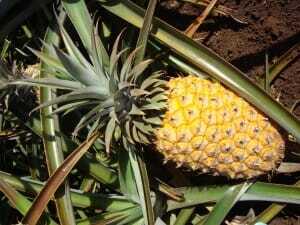
    Maui Gold1
    Photo courtesy of Maui Gold Pineapple

    Leave your picks, shovels and gold pans at home.  You only need a sweet tooth to enjoy the gold rush that’s striking the Hawaiian island of Maui: Maui Gold® pineapple.

    One week ago today a group from Latham Hi‑Tech Seeds had the pleasure – and I do mean pleasure – of touring the Maui Gold Pineapple Company.  We began with a walk through its production facilities where we saw employees hand-sorting pineapples according to color.  The greenest pineapples are shipped to the mainland since the firmer fruit withstands shipping better.

    Our next stop along the tour illustrated just how efficient the Maui Gold Pineapple Company is; there is very little waste.  Pineapples that don’t meet size requirements for shipping are used locally.  Before the smaller fruit are put in a large grate, however, their crowns are removed.  These crowns are then used to seed the next pineapple crop, plus removing the crowns allows more fruit to fit in each crate.

    After touring the production plant, we boarded a bus for a field tour like no other!  Maui Gold pineapples are grown across 1,350 acres on the slopes of Haleakala.  This location in upcountry Maui provides the perfect growing conditions for this particular variety of pineapple: warm, sunny days, cool nights, fresh water and rich, volcanic soils.

    A pineapple is perfectly ripe in the field for only 48-72 hours. Once picked, pineapples will not ripen further.

    Since quality is the pineapple company’s primary concern, Maui Gold pineapple is harvested within a 2-3 day window.  Maui Gold Pineapple Company is the only pineapple grower in Hawaii with employees dedicated to assessing sweetness and consistency in the weeks prior to harvest.  As a result, Maui Gold pineapples are always handpicked at the optimal stage of ripeness.

    If you’re like me, you’re a bit skeptical about a company’s claim to be the best tasting pineapple.  But Maui Gold made a believer out me because you can literally taste the difference.  The Maui Gold variety was developed to be lower in acid and sweeter tasting for fresh consumption.  Pineapple that is more suitable for canning, however, is completely different.  The high volume canning industry prefers plants that are naturally hardy and highly acidic.

    It takes 18 months to grow a Maui Gold® pineapple.

    One can honestly taste the nuances between pineapples.  Our guide, Steve Potter, selected three pineapples fresh from the field.  Each pineapple was in a different stage of ripeness.  We started by tasting the least ripe pineapple, which is probably the most similar to what we’d buy here in the grocery store.  We thought it was good until we tasted the second pineapple, which was much sweeter.  Steve handed us a slice of the third pineapple and said, “You’ll taste hints of coconut in this gold pineapple.”  I was skeptical, but he was right!  I took a bite and couldn’t believe the difference.  It was almost like biting into a piña colada.

    Speaking of pina colada, I know understand where it gets its name.  The name pineapple comes from the combination of the Spanish word “pina” due to its resemblance to a pinecone, and the English word “apple.”  The English called it an apple because of its tasty fruits.

    If you’d like to try these tasty fruits from the comfort of your own home, you’re in luck!  You can order Maui Gold® pineapples online.  You can also get a taste of the tropics by trying Hawiian cole slaw.  It was served aside a grilled fish sandwich at the Haliimaile (pronounced hi’lee-my’lee) General Store where we enjoyed lunch following the tour.  Another common food in the Hawaiian islands is pineapple salsa, which I’m eager to make sometime soon with fish or Hawaiian chicken kabobs.  In the meantime, I’m going to try my hand at making a Pineapple Upside Down Cake with Rum-Caramel Sauce.

    Team Latham

    February 17, 2012
    Agriculture, Desserts, General, Industry News, Recipes
  • Latham Hi‑Tech Seeds

    Latham Customers “Hang Loose” in Hawaii

    While it sounds so cliché, time sure does fly when you’re having fun! It’s hard to believe that already one week has passed since we boarded a plane for Maui, Hawaii.  Thursday, Feb. 9, was a travel day.  Upon arrival in Lahaina, we dipped our toes in the Pacific Ocean and walked along the volcanic sand beach.  Then we enjoyed an oceanview dinner while watching whales flip and spout near the shoreline.

    The next morning we boarded a charter bus tour for a tour of Monsanto’s production and research facility in Kihei.  It was interesting to learn about the key role Hawaii’s seed crops play in the development of new corn hybrids.  Because farm fields in Maui can produce up to four crops each calendar year, a new hybrid can be developed in about half the time it would take if a seed company relied solely on growing conditions found on the continental U.S.

    Saturday was a “free day,” so many group members enjoyed an all-day trip along the Road to Hana while others chose to go whale watching or snorkeling.  Some even rented Harley’s and biked around the island.  My family and I chose to board an Atlantis submarine that took us below the ocean to a depth of 127 feet where we viewed white-tipped reef sharks, Hawaiian green sea turtles and hundreds of tropical fish.  (NOTE: I really enjoyed this submarine tour. It provided the same views as scuba diving without the pain of not being able to clear my ears.)

    Sunday morning we met in the hotel lobby at 2:15 a.m. (6:15 a.m. CST) to take a long, winding, 38-mile bus ride to Haleakala National Park.  The road we traveled is one of the world’s steepest, going from near sea level to the 10,023 summit.  We finally arrived inside the park where we viewed an amazing sunrise.  No wonder Haleakala means “house of the sun” in Hawaiian.  It truly looked as though you could step off the crater and onto a cloud.

    Forty members of our group enjoyed biking (more like “braking”) down from the base of Haleakala National Park to headquarters of the Haleakalah Bike Company.  “The original Freestyle Haleakala Downhill” included a 3,000-foot drop in 10 miles, curving around 29 switch backs.  It was after noon when many bikers returned to the hotel, where they enjoyed the afternoon and evening on their own.

    Monday was another “free day.”  My family chose to snorkel Molokini Crater.  It was fab-u-lous!  This tour truly lived up to its ad:  Snorkel a beautiful reef teeming with colorful marine life and experience one of the best whale watch’s on Maui. Enjoy a freshly prepared BBQ lunch served hot off the grill.  After lunch, we cruised to Turtle Town where our son had the experience of a lifetime.  He came face-to-face with two Hawaiian Green Sea Turtles and snapped, what we hope will be, a blue-ribbon winning photo at this summer’s Franklin County Fair.  As we headed toward shore, we saw many Humpback whales and had the pleasure of watching a calf breach.

    Monday evening our entire group enjoyed a luau including a Hawaii-style pig roast, where a large pit was dug into the ground and lined with banana leaves.  Hot lava rocks were placed into the pit, and then a seasoned pig was placed inside and covered with additional banana leaves.  The food was good, but I believe the cultural dances were even better.  The fire dancing finale was captivating (and in my humble opinion) any video can’t do it justice.

    After spending five nights and six days in a tropical paradise – plus enduring 16 straight hours of travel – yesterday afternoon we returned home.  Now it’s back to reality… and back to work!  I’m working on a blog for tomorrow that will feature a couple of tasty Hawaiian recipes, including one from Maui Gold Pineapple.

    Team Latham

    February 16, 2012
    Agriculture, General, Industry News
  • Latham Hi‑Tech Seeds

    Hawaii’s Seed Crops Experience Exponential Growth

    Last Friday guests of Latham Hi‑Tech Seeds had the opportunity to visit Monsanto’s research and production operations based in Kihei, Maui.

    Move over sugar cane, pineapples and tropical flowers…  seed crops are now the highest value commodity in Hawaiian agriculture.  The value of Hawaii’s seed industry set a new record high of $247.2 million for the 2010-2011 season.

    Since its roots were established 40 years, Hawaii’s seed crop industry has experienced exponential growth.  Hawaii’s seed crop industry has grown an average of 14% in value since 1968.  The seed industry serves as one of state’s few stable sectors for jobs, according to a study commissioned by the Hawaii Farm Bureau Federation.  The seed crop industry provides 22.7% of all agricultural jobs in the state.

    Hawaii’s seed crop industry also contributes substantially to the state’s public policy objectives:

    • Economic diversification
    • Maintaining prime lands for ag use with any incentive to convert these lands to alternative use
    • Creating Hi‑Tech jobs

    The rapid adoption of Hi‑Tech crops has also fueled growth of Hawaii’s seed crop industry.  Its climate allows research operations to play a critical role in the development of new corn hybrids.  Farms fields on Maui can produce up to four crops in just one calendar year!  That means a new hybrid can be developed in about half the time it would take if a seed company relied solely on more temperate growing conditions found on the continental U.S.

    Last Friday Paul Koehler and David Stoltzfus who work for Monsanto in Kihei, Maui, explained to a group from Latham Hi‑Tech Seeds the key role Hawaii plays in hybrid development:

    1st generation (parent seed increase) in Hawaii
    0.3 acres of parent line increase planted in Hawaii, harvested and planted again

    Second generation (parent seed increase) grown in Hawaii
    35 acres of parent seed increase, harvested and sent to South America

    Hybrid seed production grown in South America
    3,500 acres of hybrid seed production planted in South America, harvested and sent to North America

    Hybrid seed sent to North America
    600,000 acres of hybrid seed planted in North America as a full-scale commercial release

    Developing new hybrids that help farmers produce more crops while conserving more natural resources is going to be critical to meet growing global demands.  The world’s population is expected to grow by 40% in the next few decades.  That means farmers will need to grow as much food in the next 50 years as they did in the past 10,000 years combined!

    And that’s why seed companies like Latham and Monsanto are on a mission to help farmers produce higher yields.  It’s also why Monsanto invests more than $3 million a day on R&D. As a result of these investments, Genuity® products are providing increased yields, reducing chemicals into our water supply and helping to feed a growing population

    Team Latham

    February 15, 2012
    Agriculture, General, Industry News, Seed Technology
  • Latham Hi‑Tech Seeds

    Farm Bill Debates Goes Beyond Farming

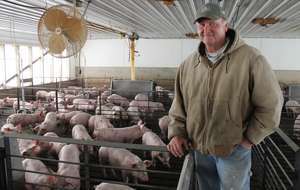
    MUSINGS OF A MIDWEST PIG FARMER
    by Larry Sailer

    Photo courtesy of AgriNews.com

    A few days ago, I heard Judy Woodruff interview U.S. Secretary of Agriculture Tom Vilsack about America’s Agricultural Success.  She says, “Amid all the worry about how long it will take the economic recovery to kick into high gear, there’s a little-noticed sector that’s doing very well, thank you: American agriculture.”

    Sec. Vilsack credits agriculture’s success to “an extraordinary investment in infrastructure…  Farmers are buying lots of new machinery, like large tractors with sophisticated GPS systems, leading to new hiring on the part of companies like John Deere, which recently added 250 people at a plant in Ankeny, Iowa, that manufactures cotton pickers.”

    Auto-steer tractors are just one example of how agriculture is fueling the economy.  Biotechnology is also important an important economic contributor.  Technology has redefined agriculture in other ways, as well.  Agriculture technology, ranging from the Internet and SmartPhones to Genuity® SmartStax® RIB Complete CornTM and Genuity Roundup Ready®2 Yield Soybeans, has led to greater business efficiencies and even increased yields.

    With this in mind, it’s easy to understand why Woodruff would say there are many more facets to agriculture’s success story.  I find it disconcerting, however, that she specifically mentions “two particular bright spots” in the ag sector as the federal department’s housing and food assistance programs.  Neither of these so-called “bright spots” are directly related to farming, yet they make up the lion’s share of the USDA’s budget.

    Woodruff’s interview with Sec. Vilsack opened my eyes that the Farm Bill debate is not just about farming.  The Farm Bill is a very complex program that has a huge budget and will need to involve a lot of hearings and a lot of give and take to build into the new program.


    Larry Sailer, Musings of a Pig Farmer

    February 14, 2012
    Agriculture, General, Industry News
  • Latham Hi‑Tech Seeds

    Breakfast Bowl 2012: Latham Wants to be the “Fan Favorite”

    Every second counts!  And that’s why Latham Hi‑Tech Seeds hopes to take 10 seconds off the clock by receiving the most number of votes in a Facebook poll being sponsored by Franklin County Farm Bureau.  Please vote – and encourage your friends & family to vote – between Feb. 13-24.

    This poll is just one of the ways Franklin County Farm Bureau is celebrating Food Check-Out Week, Feb. 19-25.  This year’s theme is “Stretching Your Grocery Dollar With Healthy, Nutritious Food.”

    To help illustrate this theme, Franklin County Farm Bureau is hosting a “Breakfast Battle ” on Feb. 24 beginning at 8 AM at Fareway in Hampton. Three-person teams, including one from Latham Hi‑Tech Seeds that is being captained by yours truly, will battle it out to see which one can purchase enough items for breakfast, lunch and dinner for a cost of $45-50 dollars in the quickest amount of time.

    The Breakfast Battle is being planned as a fun event for participants to have fun, while getting people together all in an effort to make a difference for those who are less fortunate.  Franklin County Farm Bureau will pay for all of the groceries purchased during this competition.  The grocery items will then be delivered to needy families throughout the county with the help of the Franklin County Food Pantry in Hampton and the Immanuel UCC Food Pantry in Latimer.

    “Today, we have so many choices when we purchase food at the grocery store,” says Jim Dannen, Franklin County Farm Bureau President. “We, as farmers, want to show people not only on where their food comes from, but help consumers choose foods that are healthy and wholesome. Eating healthy on a budget takes planning.”

    Let the planning begin!  I’d appreciate any tips you can provide to help me plan three meals within the $45 to $50 budget.  Feel free to send me your ideas at shannonl@lathamseeds.com.  Also feel free to share some recipes with me to assist with my grocery shopping list!  

    Team Latham

    February 13, 2012
    Agriculture, General, Industry News
  • Latham Hi‑Tech Seeds

    Hemann Family Lands in Mitchell County, Iowa

    Hemann Kids1

    After embarking on a journey that lasted five years and took him across six states, pilot Dale Hemann landed in Mitchell County.

    Today Dale and his wife, Cindy, feel blessed to raise their four children in the remodeled farmhouse where Dale lived as a child.  They also raise corn and soybeans plus sell Latham® seeds.  In addition, Dale contract feeds hogs and finishes Holstein steers after starting them on the bucket.

    “We love it here,” says Cindy, a native of Wellington, Kansas.  “We’ve lived in enough places to appreciate the quality of life in rural Iowa.”

    Like many high school graduates, Dale left his parents’ home in rural Osage, Iowa, and enrolled in college.  Dale earned a bachelor’s degree in Aviation Technology and a commercial pilot’s license before moving to Arkansas where Dale worked for a freight outfit as an airplane mechanic, flying to other cities where he did maintenance right on the ramp.

    After Dale earned a master’s degree in Aviation Safety from the University of Central Missouri in Warrensburg, he had a short stint as production manager at Kestrel Aircraft in Norman, Oklahoma. He then made the move to Tulsa, where he worked for American Airlines.  It wasn’t long before a friend of Dale’s called to let him know that Raytheon had an opening for an engineer in Wichita, Kansas.  Dale got the job and moved once again.  Shortly after moving to Wichita, Dale and Cindy got married. Cindy then left her job at College of the Ozarks in Branson and joined Dale in Wichita.

    After a year in Wichita, Dale was contacted by a friend with whom he had worked at American Airlines.  He thought Dale would be a good fit for a newly created position in his department at FedEx in Memphis, Tennessee.  Dale and Cindy packed up and moved to the Memphis area, settling in Olive Branch, Mississippi.  The Hemann’s oldest two children were born while they were living in Mississippi.

    With their young family in mind, Dale and Cindy began their journey “home.”  They knew they wanted to raise their children around extended family members and in a rural area where there kids could play freely without some of the worries that come with city living.  Dale took a position as a ramp/operations manager with FedEx and subsequent transfers moved the family to Madison, Wisconsin, and then to Ames, Iowa.  They were thrilled when a position opened with FedEx in Rochester, Minnesota, just  60 miles from Dale’s hometown.

    While commuting home from work one day, Dale had a heart-to-heart talk with his dad.  Dale was growing weary of switching jobs and moving his family.  He was seeking stability and believed that farming would provide that.  Plans were made for Dale to begin farming with his dad.  Meanwhile, his parents, Larry and Rosemary, made plans to build a house in town.  Dale farmed long distance for the first year, commuting to Osage on weekends and using vacation days as needed to get the farm work done.

    “None of this would have been possible without the help of my dad,” says Dale.  It was an interesting time for all family members.  Larry and Rosemary moved out of their house in the country one weekend, and Dale’s family moved in the following weekend.

    That was eight years ago, and the family has done lot of growing.  Dale and Cindy’s oldest daughter, Lindsay, is now 13.  Emily will turn 12 on Feb. 29, and Whitney is 9.  Their son, Alex, is 7.

    “I love that we live in the country where our kids have lots of room to play,” says Cindy, who grew up in town where she enjoyed playing with neighborhood kids.  “They find creative ways to entertain themselves, and we host lots of play dates.”

    This time of year the children are busy making crafts, trying experiments and baking.  Four active kids with a host of active friends means lots of kitchen time!

    “We recently made clay.  We had to make volcanoes two weekends in a row because our kids wanted to make them with their friends,” says Cindy with a smile.  “Although we’re constantly cleaning up the kitchen, it’s worth it.  We’re making memories.”

    Cupcakes are one of the Hemann kids’ favorite things to make. The family’s favorite show is Cupcake Wars, which has no doubt inspired some of their fascination with muffin tins and decorating tools.

    Although they enjoy sweet treats, the family’s favorite meal centers on beef.  Today they’re sharing a recipe for Beef Brisket.

    Team Latham

    February 10, 2012
    Beef, General, Recipes
  • Latham Hi‑Tech Seeds

    Aid in the Recovery of Flood-Damaged Fields

    Flood waters that raged through the Missouri River Basin in 2011 will create a slippery road ahead for many Midwest farmers in 2012.  About 150,000 acres of crops were lost in Iowa and an estimated 2 million acres of crops were lost in the Dakotas and Ohio.

    About 60% to 70% of farmland in northwest North Dakota and parts of northeast South Dakota never got planted last year between wet pockets and flooding, says Gary Geske, Latham Hi‑Tech Hybrids’ corn product specialist for the north region.  In the February issue of Midwest Producer, Geske said cropland that was flooded in the previous season needs special considerations during the upcoming growing season.

    All crops need N, P and K, but Geske says flood-damaged fields have even more need for fertilizer.  Micronutrients are like vitamins for the crop to keep it healthy in these types of soils.

    Another way to help rebuild soils and to help flooded fields recover is by seeding cover crops this spring.  According to an article posted yesterday by Integrated Crop Management NEWS, cover crops can also benefit flood-damage soils in several ways:

    • Residue from the cover crop will help reduce soil erosion and crusting.
    • The upright cover crop residue will keep wind and sun off the soil surface, reducing wind erosion, sandblasting, and soil water evaporation.
    • Growing roots of the cover crop will help feed the soil biological life.

    For more information about crop selection, seeding rates and methods, click here.

    Team Latham

    February 9, 2012
    Flooding, General, Weather
  • Latham Hi‑Tech Seeds

    Do Dry Soils at Planting Lead to Yield Loss?

    It’s likely that Midwest farmers could complete spring 2012 planting at a record pace after a dry fall and winter.

    To help determine the impact of dry soils at planting, Iowa State University’s Roger Elmore has employed a hybrid-maize modeling tool.  Elmore, a professor of agronomy with research and extension responsibilities in corn production, says he varied soil moisture conditions at planting to simulate different possibilities.  Overall, his simulations show that yields will be reduced at many of ISU’s research locations if soil moisture conditions do not improve by planting time.

    Every area is different, however.  Subsoil moisture levels certainly vary across Latham’s six-state marketing area.  Gary Geske of Enderlin, North Dakota, serves as Latham Hi‑Tech Seeds’ corn product specialist for the north.  In a recent issue of Midwest Producer he said, “We’ve got dry topsoil, but it seems dry because we are used to it being so wet.  With a couple of timely spring rains, I’m anticipating a good growing season.”

    Dry soils are welcome while the planters are rolling, but spring rains will be needed once the seed is in the ground for timely emergence, growth and ultimately yield.

    Webspec Admin

    February 8, 2012
    Drought, General, Season, Spring, Weather
  • Latham Hi‑Tech Seeds

    Support Science, Not Sensationalism

    One year ago the U.S. Department of Agriculture’s decision to approve Roundup Ready® Alfalfa renewed a debate about the safety of genetically modified crops and the use of glyphosate in the environment.  During this same time period, retired Purdue University professor Don Huber proclaimed the discovery of a plant pathogen “… that appears to significantly impact the health of plants, animals and probably human beings.”

    With his “15 minutes of fame” expiring, Huber appears to be fanning the flames of his theory in hopes this issue will reemerge like a phoenix from the ashes.  Recently I heard him being interviewed on the radio program, “Coast to Coast,” and was amazed by the sensational, unscientific claims he was making.

    Huber’s claims were not – nor have they ever been – substantiated.  That’s why it concerns me greatly that many well meaning Americans will hear Huber speak and be scared into thinking biotechnology, and specifically Roundup Ready crops, should be eliminated.

    To the contrary, there is much scientific evidence that supports the safety and beneficial impacts of GM crops.  Increased yields, reduced production costs and reduced pesticide use are a few of the benefits outlined in Case Studies in Benefits and Risks of Agricultural Biotechnology by theNational Center for Food and Agricultural Policy.  In April 2010, the National Research Council of the U.S. National Academy of Sciences issued a report concluding U.S. farmers growing biotech crops are realizing substantial economic and environmental befits including lower production costs, fewer pest problems, reduced use of pesticides and better yields as compared to conventional crops.

    I can personally attest that U.S. farmers are benefitting from lower production costs and fewer pest problems thanks to Roundup®.  Farmers also benefit by having more flexibility at application time and wider window in which herbicide can be applied to effectively kill weeds.  Plus, we no longer have to take the time – and do the back-breaking work – of walking soybean fields to pull weeds.

    Farmers aren’t the only ones benefitting from Roundup usage.  The environment benefits from reduced pesticide applications.  Plus, consumers are benefitting from increased agricultural productivity.  Biotech crops simply yield more than conventional crops.  In fact, farmers today grow twice as much food as their parents did – using less land, energy and water.  Increasing crop yields even more is going to become increasing important to keep up with the growing world population.  Did you know more food will have to be produced in the next 50 years as the past 10,000 years combined?

    I like to eat.  I like to wear clothes.  I like farming, too.  For all these reasons, I’m siding with science instead of sensationalism!

    Team Latham

    February 7, 2012
    Agriculture, General, Industry News
Previous Page
1 … 113 114 115 116 117 … 159
Next Page

Latham Hi‑Tech Seeds

131 180th Street | Alexander, IA 50420

(641) 692-3258

SIGNUP FOR OUR NEWSLETTER
  • Contact
  • Legal
  • Dealer Center
  • Seedware Login
  • Latham Gear

© 2025 Latham Hi‑Tech Seeds. All rights reserved. | Iowa Web Design by Webspec | Privacy Policy

Latham® Hi-Tech Seeds is a trademark of M.S. Technologies, L.L.C., 103 Avenue D, West Point, IA 52656.