Join us as we discuss the importance of protecting your investment every year. How does Latham Seeds seed treatment differentiate? Tune in and find out!
-
Latham Hi‑Tech Seeds
#AsktheAgronomist: Protect Your Investment with Seed Treatment

-
Latham Hi‑Tech Seeds
Seed Treatment Fundamentals

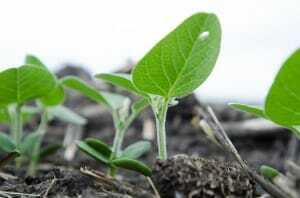
Did you know up to 90% of seedling diseases are caused by 4 major fungi? These fungi kill soybean seedlings before emergence or damage the seed enough to reduce yield.
4 Major Fungi:
- Pythium
- Phytophthora
- Rhizoctonia
- Fusarium
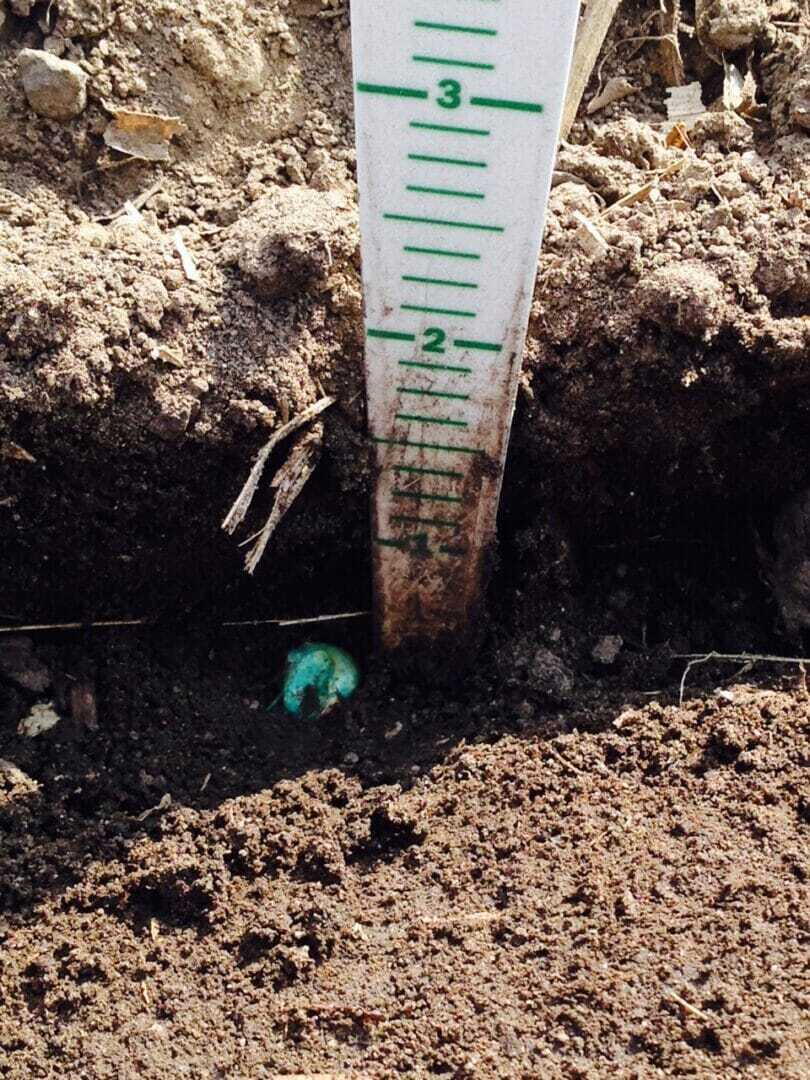
Research shows that during the emergence stage alone 2.5 bushels of soybean yield are at risk due to seed rot and seedling blight. Latham SoyShield® brand seed treatments are best-in-class formulations designed to battle the toughest pathogens like Fusarium and Phytophthora.
Instead of viewing seed treatment as an input cost, consider it an investment – an insurance policy if you will. After all, it takes less than a bushel of soybeans to pay for the cost of treatment!
Wet, poorly drained soils favor the development of fungal pathogens that cause seedling diseases, which slow germination and plant growth. Seed treatments protect seedlings until they have a fairly well-established root system.
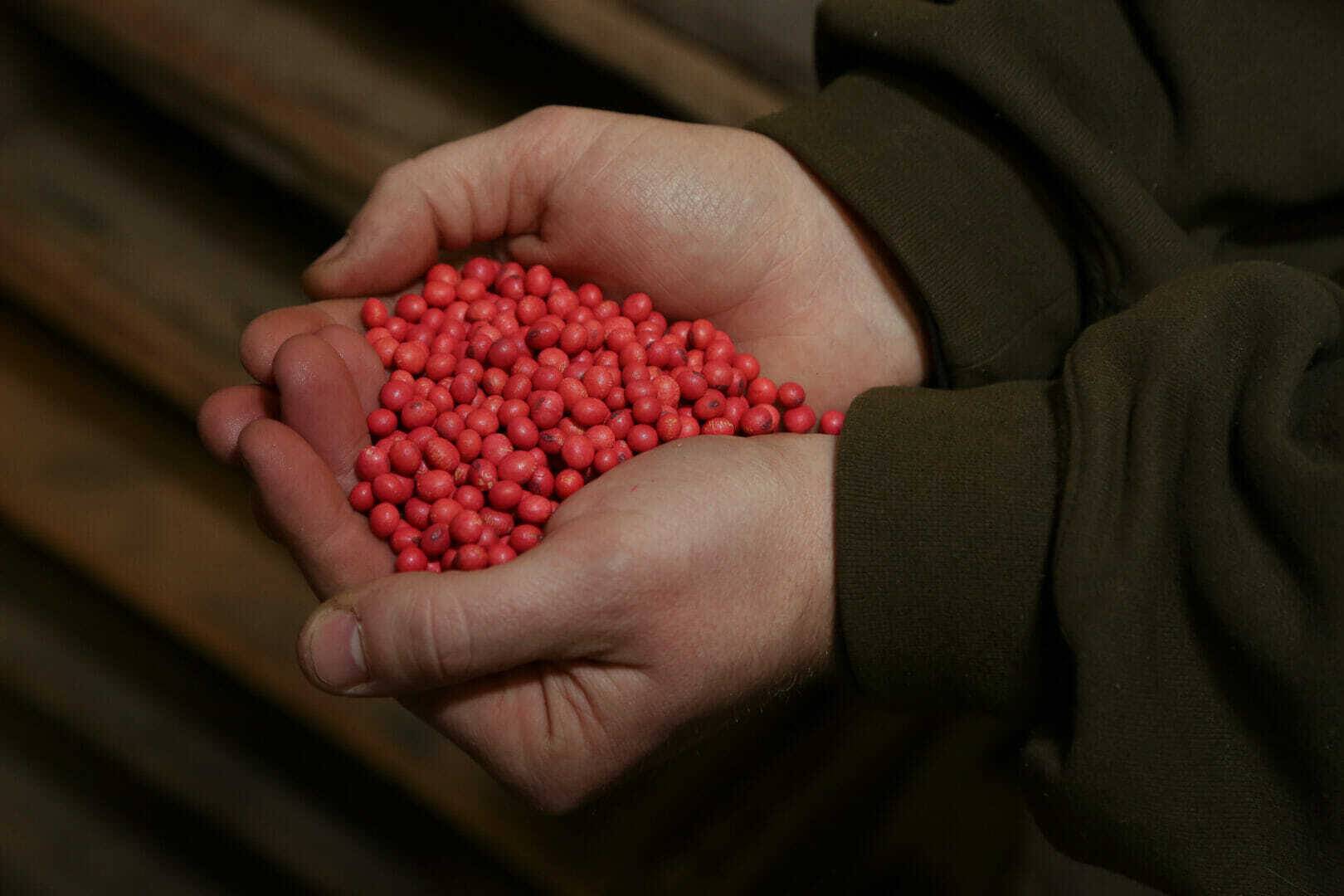
To help the seeds go through the planter better, Latham Hi‑Tech Seeds adds a proprietary blend of polymer and seed coating. Our customers say they waste less seed and see more even stands, resulting in better yield potential and ultimately an increased return on investment.
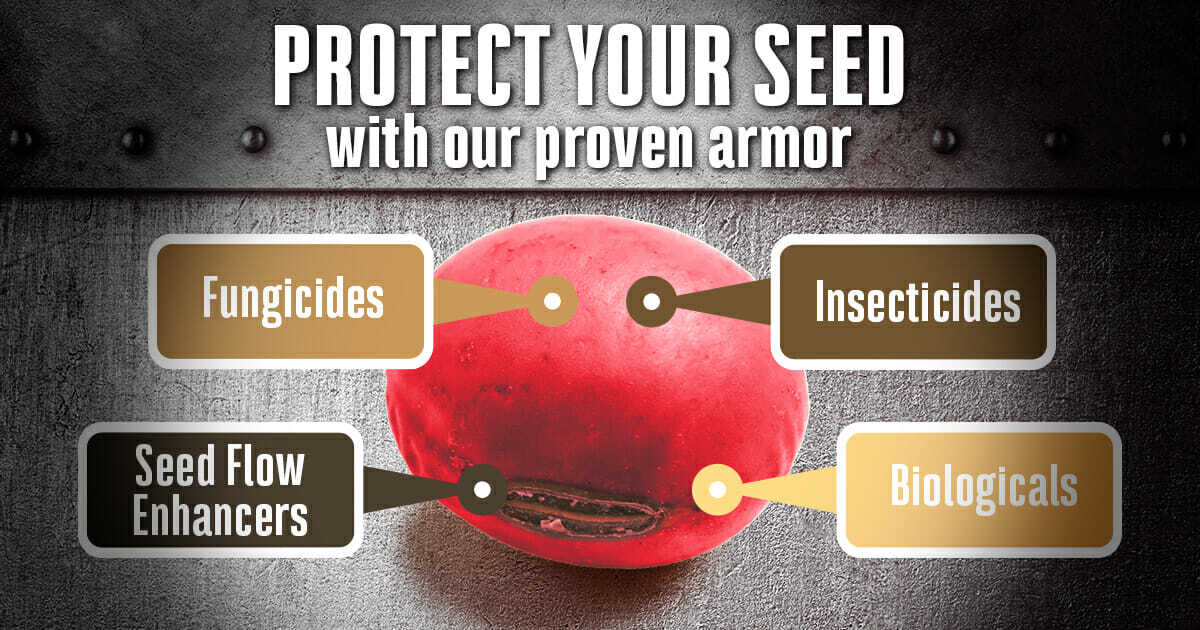
Latham Hi‑Tech Seeds’ signature SoyShieldTM, a fungicide-only package, and SoyShield PlusTM with fungicide and insecticide, protect seeds from disease and insect damage for up to 30 days. This time frame is longer than many other seed treatments and is typically an adequate window of protection.
SoyShield Plus includes an exclusive fungicide combination that provides excellent protection against seed and soil borne diseases including: Pythium, Phytophthora, Fusarium and Rhizoctonia. In addition, seed treatments can provide health benefits for more rapid and increased germination under certain conditions.
Some seed treatments also help protect against nematodes, which are becoming more prevalent. Many fully-loaded treatments may have innoculants, micronutrients or plant food. Interested in learning more? Talk to your local Latham® representative or leave your comments below. You’re also welcome to call us at 1-877-GO-LATHAM (1-877-465-2842).
-
Latham Hi‑Tech Seeds
Look at Multi-Year Soybean Yield Data

Yield variability in 2020 reminds us how important it is to review data from multiple years – and even multiple locations – when accessing a given seed product’s performance. Multi-year data helps “smooth out” the peaks and valleys associated with single-year data and provides a more reliable picture of overall product performance.
Following are nine Latham® soybean products, in order of maturity, that grabbed my attention as I was preparing for 2020 Post-Harvest Huddles with our dealers:
L 0852 LLGT27: New for 2021, this powerhouse yielder carries the Rps3-a gene for Phytophthora and has very good tolerance to iron deficiency chlorosis (IDC). This variety earned six Top 10 finishes in the 2020 F.I.R.S.T. trials; took first in 2019 Latham Test 909 Summary; placed first in our 2020 Test 960 trial at Glyndon, MN; and was 2nd overall in the 2020 Summary of Test 960!
L 1238 L: This top-yielding Ironclad™ soybean features excellent scores for both White Mold and Sudden Death Syndrome (SDS). It took 1st place in our 2018 Test 961 Summary and had four other 1st place finishes in Latham Trials from 2018 to 2020. It moves south very well out of zone.
L 1429 LLGT27: Here’s a great yielding line with a good defensive package! It has strong Soybean Cyst Nematode (SCN) tolerance and is excellent against IDC and Brown Stem Rot (BSR). In 2019 and 2020, it earned five Top 10 finishes in the F.I.R.S.T. trials along with four wins in Latham SuperStrip plots. It also placed 1st six times in our research trials, including two summaries!
L 1858 R2: This is one of the very highest performing lines in our Latham soybean portfolio. Every year since 2018 it has topped a F.I.R.S.T. Trials SUMMARY somewhere in the state of Minnesota! Enough said.
L 1883 L: This Ironclad line has excellent tolerance to White Mold and SDS with great tolerance to Charcoal Rot. It has six 1st place finishes under its belt from 2018 to 2020 SuperStrip trials. It consistently performs at the top of its class.
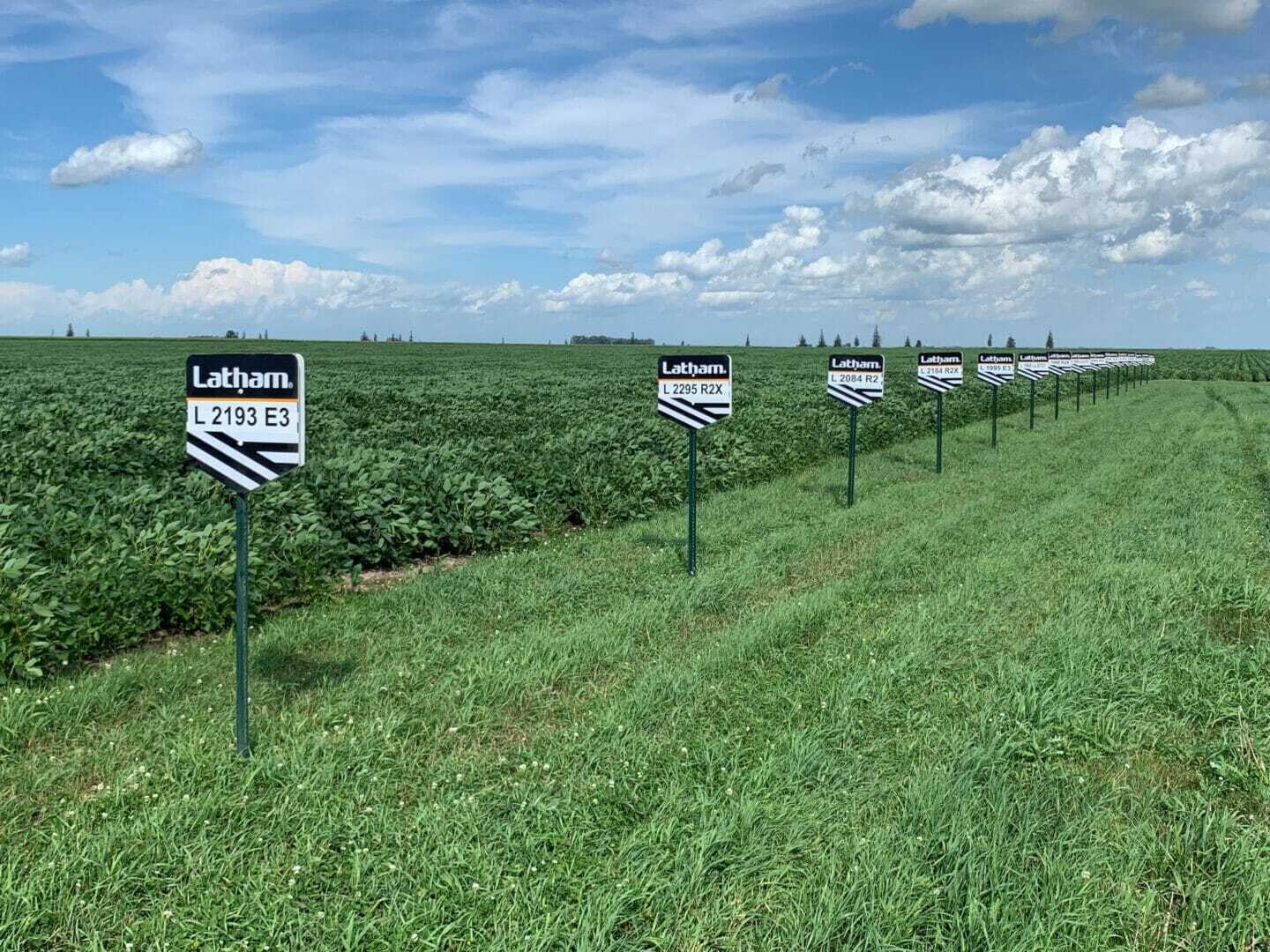
L 2193 E3: Our top-selling soybean for the past two years looks to be headed there again in 2021! With only two years of SuperStrip data, this Ironclad variety has claimed: eight 1st places, eight 2nd places and six 3rd place finishes. That’s a gold-worthy Win-Place-Show combo!
L 2295 R2X: With a very strong defensive package, this soybean variety is a proven performer! It has 22 Top 10 finishes in the F.I.R.S.T. Trials and 37 Top Four finishes in Latham SuperStrips – including 13 wins – during the past three years.
L 2549 R2X: If you think L 2295 is impressive, get a load of this offensive powerhouse! In the 2018 to 2020 F.I.R.S.T. Trials, 2549 captured 41 Top 10 placements with six of those being for 1st place and nine for 2nd place! It has also won five SuperStrip plots. It has L 2084 R2 and L 2440 R2 in its pedigree with a strong defensive package.
L 2894 E3: In its first year of F.I.R.S.T. Trials, this popular Enlist E3 line took 1st place twice and earned seven more Top 10 finishes. In 2019 to 2020, it took 1st in six SuperStrip plots and topped our Latham Research Trials in both Alexander and Olin, Iowa.
For more multi-year yield data, visit our performance page!
-
Latham Hi‑Tech Seeds
#MadetoWin Video Series Recap

#MadetoWin Week 1
John Latham for the first #MadetoWin video of the harvest season! John will discuss the recent XtendFlex approval, preview Latham seed quality for next year and discuss products that are winning in the field throughout Latham Country!
#MadetoWin Week 2
Join us for the second #MadetoWin update with John Latham! John highlights products performing well throughout Latham Country. #LathamSeeds
#MadetoWin Week 3
Join us for week 3 of our #MadetoWin video series! John Latham covers his Power 10 hybrids based on yield results. Tune in the learn more! #LathamSeeds
#MadetoWin Week 4
Join us with John Latham! John discusses his Power 10 soybean varieties covering our entire marketing territory. Tune in to learn more! #LathamSeeds
#MadetoWin Week 5
Join John Latham for this week’s #MadetoWin video series! John will discuss our 2020 F.I.R.S.T. Trial winners. #LathamSeeds
#MadetoWin Week 6
John highlights our top 10 products based on F.I.R.S.T. trial wins. #LathamSeeds
#MadetoWin Week 7
John Latham talks soybeans! Tune in to hear a run down of the multiple F.I.R.S.T. Trial soybean wins throughout Latham Country! #MadetoWin #LathamSeeds
#MadetoWin Week 8
Join us for the final episode of our #MadetoWin series with John Latham! John discusses our new XtendFlex options and what it means for farmers across Latham country. #LathamSeeds
-
Latham Hi‑Tech Seeds
Ask the Agronomist: 2021 Crop Planning
Join us on November 12 at 8 AM as we discuss the conclusion of the 2020 harvest season and begin planning for 2021. We will share three different scenarios to help you select the right products for your acres. #AskTheAgronomist
-
Latham Hi‑Tech Seeds
The History of Latham® IRONCLAD™ Soybeans

Soybean Cyst Nematode, Iron Deficiency Chlorosis, Phytophthora Root Rot and Sudden Death Syndrome are just a few of the pests, diseases and agronomic issues that have contributed to lower yields and higher costs. Farmers, who needed protection against these agronomic issues, were hesitant to plant defensive soybean lines in fear of giving up yield.
Then in the late 1990s soybean breeding techniques were developed that could quickly identify cultivars that had sound defensive traits and were high yielding.
In 2011, Bill Latham, then head of Latham’s Research program, challenged our Soybean Product Team to find an idea or a concept that would help change the way farmers felt about defensive soybean products. Bill, an ex-Marine aviator, was a military history buff as were several other members of our team at that time. We remembered back to the pre-Civil War era when naval warships were made almost exclusively out of wood. Offensive firepower from these ships was quickly outmatching their wooden defense. Innovators at the time were quick to experiment with using iron plates over the wooden sides. Hence, the term “Ironclad” was born.
The first ever battle between two ironclads took place in 1862. The Monitor was the Union warship. The Confederacy had captured the Union ship Merrimack, plated it with iron, and renamed it the CSS Virginia. However, the battle has gone down in history as the Monitor versus the Merrimack. Although both sides claimed a victory, in essence it was a draw as neither ship could sink the other. It did, however, dramatically change the course of naval warfare. From that battle on, navies all over the globe began using metal plates over wood and eventually made their ships completely out of metal!
Back to 2011… After much discussion, it was decided to use the designation of IRONCLAD™ for Latham brand soybeans that had a resistance gene for Soybean Cyst Nematode, a gene for Phytophthora Root Rot and scores of 2.2 or better (on a scale of 1-5) against Brown Stem Rot, Iron Deficiency Chlorosis and either White Mold or Sudden Death Syndrome.
Latham’s first IRONCLAD soybeans were introduced in our 2013 Product Guide. It was quickly evident that these defensive traits were exactly what farmers in Latham Country needed to protect yield and increase profitability.
It should be noted here that since the start of our Ironclad program, we have never had a #1 selling soybean that was NOT an IRONCLAD! Additionally, our 2021 Product Guide features 28 Ironclad soybeans out of the total 56 we have listed. That’s truly an amazing advancement during a short eight-year period of time!
-
Latham Hi‑Tech Seeds
#LathamSeeds Wins! 10/14/20 Product Highlights

-
Latham Hi‑Tech Seeds
Fall Harvest is Underway

Fall harvest is underway in North Iowa. This means the scales are busy at Latham Hi‑Tech Seeds headquarters on our family’s Iowa Century Farm in Alexander.Below are the Top 3 Reasons that Latham® brand soybeans have developed a reputation for quality and continue to top yield trials:
- Harvest Protocol – The majority of Latham seed beans are brought to our plant upon harvest. These soybeans are kept under the watchful eye of Latham Production Plant Manager Greg Jaacks and his well-trained team. The Production Team uses a hand probe to take samples of every load of soybeans that crosses our scale. Each soybean variety is then stored in a separate bin; each bin is monitored daily to ensure the seed does not go out of condition before it is bagged or boxed. Some varieties are not grown near our Alexander plant, so we work with trusted family-owned seed conditioning partners that have a reputation for providing top quality.
- Careful Conditioning – Throughout the process of taking the seed from the bin and placing it into bags or boxes, Latham’s Production Team carefully handles the seed each step of the way. Air screens and scalper screens remove sticks and pods. Sifter screens remove splits and small soybeans. Fans remove dust and dirt. Additional separator equipment ensures even shape, form and density. The results of this intensive process can be observed in each and every finished unit of Latham brand soybeans.
- Quality Over Quantity – Throughout the process, quality is top priority as opposed to the speed of conditioning and bagging. Our production process slows when winter temperatures fall below 10 degrees and will halt completely when temps hit zero; other companies continue to condition seed although it can severely affect seed integrity and germination.
Producing the highest quality seed for farmers is the legacy we are proud to continue as the third generation of Latham family members to own and operate Latham Seeds. In fact, we take quality so seriously that President John Latham and General Manager Ryan Schon joined members of our production team this week as they pulled rogue plants by hand from a nearby production field.
We appreciate the diligence of our growers to work with us to produce as pure as seed of possible. We are grateful to have worked for so many years – and for generations – with local farmers to produce Latham brand soybean seed. Below are feature articles about a few of our contract soybean growers:
To celebrate our family’s legacy of producing high-quality soybeans, we’re sharing with you a slow cooker recipe for a meal that can be prepped in the morning before you head to the field during the busy harvest season. The following recipe for Calico Beans has been adapted by The Soy Foods Council to promote soybeans. Because October is Pork Month, you could further adapt this recipe by adding a pound of browned pork burger.
-
Latham Hi‑Tech Seeds
#LathamSeeds Wins! 9/30/20 Product Highlights