Skip to content
Latham Hi-Tech Seeds

(641) 692-3258

  • Home
  • Performance
  • Products
    • Corn
    • Soybeans
    • Soybean Blends
    • Alfalfa
    • Corn Silage
    • Seed Guide
  • Find a Rep
  • Media
    • Blog
    • News
    • Videos
    • Podcasts
    • TECHTalk
  • About Us
    • Company History
    • Our Mission
    • Careers
    • Become a Rep
    • Sowing Seeds of Hope
  • Contact Us
  • Latham Hi‑Tech Seeds

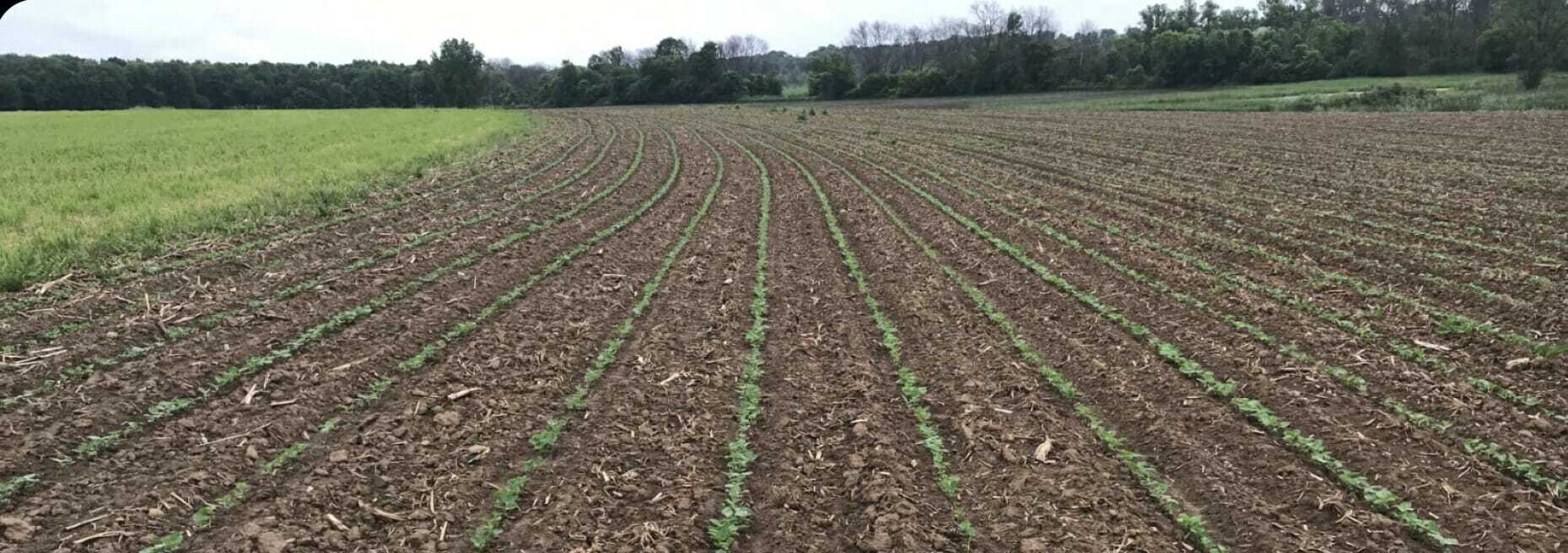
    Establishing a Good Soybean Stand

    Farmers are continually working to increase their soybean yields. The statewide average in Iowa is now more than 50 bushels per acre, but last year several farmers broke the 80-bushel yield barrier with Latham soybean genetics and the Genuity® Roundup® Ready 2 technology.

    Raising record-breaking soybeans begins before the seed even hits the soil. Mark Grundmeier, Latham’s product manager, recently contributed to a Wallaces Farmer article with tips on how to establish a good soybean stand.

    In the article, Mark says the first step to establishing a good soybean stand starts with treated seed. The benefit from seed treatments far outweigh the costs. He adds that fungicide-treated seed is a must to prevent damping off from Pythium, Rhizoctonia, Phytopthora and Fusarium. It’s no secret soybean plants are subject to thousands of variables throughout the growing season.

    Proper planting conditions are crucial, and Mark says it’s important to remember that it’s much better to plant correctly than to plant quickly. Soil temperature sets the stage for healthy growth, and he recommends a temperature of 50 degrees or more at planting.  It’s also important to wait for soils to dry. Wet soils cause trouble from the beginning, and compaction resulting from wet soil can kill root growth.

    For Mark’s full list of tips to establish a good soybean stand, click here to read the article in Wallaces Farmer.

    Team Latham

    April 7, 2011
    Agronomics, Crop, Emergence, General, Soybeans
  • Latham Hi‑Tech Seeds

    It's March: Time to Pick Your Strongest Players

    Morehead State beat Louisville.  Richmond beat Vanderbilt.  Virginia Commonwealth beat Georgetown.  There’s nothing like March Madness! The first weekend of tournament play is one of my favorites because there are so many upsets, near upsets and buzzer beaters.  Inevitably, a Cinderella team upsets a highly ranked Goliath team.

    Latham Hi‑Tech Seeds knows what it feels like to be positioned against a Goliath.  And just like many of these basketball teams, we’re prepared to do battle.  The 2011 acreage battle is expected to intensify through spring, but our starting soybean lineup is ready to play as acres become available.

    Our team captain and power forward is Latham 2440R2, which was the top yielding bean in its maturity across the entire industry in 2010!  When head-to-head with Y-series beans, Latham 2440R2 beat 92Y30 by 8.2 bushels per acre (bu/A) across 21 research locations in 2010.  It shoots a high percentage, winning 69% of the time in Latham’s own yield trials last year across Wisconsin, Iowa, and South Dakota.  Latham 2182R2 is the defensive stopper – great against major diseases – that every team needs at the “wing forward” to win.

    Our “big man” is Latham 2885R2.  This “center” was one of the highest yielders in Latham’s internal 2010 research trials.  Medium tall with good stress tolerance, L2885R2 scores high against Phytophthora, white mold, and SCN tolerances.  The guards on our team on Latham 1985R2 and Latham 2084R2.  These two provide the speed out of the ground, yield potential and defensive characteristics, like excellent resistance to Iron Chlorosis and Cyst Nematode, that our customers need to win.

    Make sure your planting top scorers this spring.  Call on Latham, the soybean team with nearly 65 years of proven product performance.  We’d love the chance to put a winning team in place for you!

    John Latham, President

    March 21, 2011
    Crop, General, Season, Soybeans, Spring
  • Latham Hi‑Tech Seeds

    Pushing Corn Populations

    With corn pushing $6 to $7 per bushel, many farmers will look at pushing corn populations to increase yield even more this year.

    “Trying to uncover the mystery behind plant populations” is the focus of a recent Wallaces Farmer article, featuring Latham’s own Nick Benson.  As corn product specialist and Northeast Iowa regional sales manager, Nick had the opportunity to share his thoughts with Rod Swoboda.

    There are multiple factors corn growers should consider when looking to push plant populations, but Nick says the highlights include:

    1) Reviewing the true data – not the skewed data.

    2) Avoiding planting populations that are too high and thus risking decreased yield.

    3) Remembering that all growing conditions are different, from grower to grower and from field to field – plant populations aren’t a “one size fits all” practice.

    Click here to read the full article and to get Nick’s complete list of factors to consider when pushing plant populations.

    With corn markets where they are today, are you planning to push population in your field(s) this year?

    Team Latham

    February 28, 2011
    Corn, Crop, General
  • Latham Hi‑Tech Seeds

    Fertility Levels Key to Raising Top Soybeans, Part II

    A common practice for farmers in a corn-soybean rotation is to apply enough P&K prior to planting corn to supply their crops for two years.  This works well until corn yields are higher than expected, and no extra nutrients are added for the subsequent soybean crop.  Soybeans are big users of Phosphorus (P) and Potassium (K), and soybean yields will suffer unless more nutrients are applied to compensate for the higher corn yields.

    Nitrogen is essential to photosynthesis.  Nitrogen is usually supplied to soybean plants by a process called nitrogen fixation, which is associated with Rhizobia bacteria in the soil.  It’s important to note, however, that these bacteria are not always present – especially if soybeans haven’t been grown in that field for a few years.  Recent studies show that adding an inoculant to seed may have beneficial effects if planted in soils with low organic matter content or in fields that have undergone significant flooding in recent years.  Try inoculants in your own fields and study whether they benefit your production levels.

    In addition, be sure to monitor the calcium levels in your fields.  There are soils in the Upper Midwest that contain too much calcium.  Known as alkali soils, they can cause other problems for soybean development including stunting, poor root development and iron deficiency chlorosis.

    Soybean yields will also suffer if micronutrient levels are deficient, even if there is adequate P & K present.  If soil tests show low levels of Sulfur, Zinc and Boron, add them to your fertilizer blends.

    Managing nutrient levels will help produce maximum yields – and returns – from your soybean crop given the high market values.

    February 24, 2011
    Agronomics, Crop, Fertility, General, Soybeans
  • Latham Hi‑Tech Seeds

    Fertility Levels Key to Raising Top Soybeans

    Greg 1

    You can only yield what you put into your crops.  If you supplied enough of all of the nutrients required to produce 70-bushel soybeans but provided only enough of one nutrient to produce 40-bushel soybeans, then your yield will only be 40 bushels per acre!  Simply stated, this is what the computer industry refers to as “garbage in – garbage out.”

    To better manage nutrients for your soybean crop, pay particular attention to:

    1. N, P and K;
    2. Secondary nutrients like Calcium and Sulfur;
    3. Micronutrients like Manganese, Zinc and Boron.

    Greg 1Begin by establishing a soil sampling protocol for all of your fields.  Not only will this give you the best field-by-field fertilizer history, but it will be invaluable to your long-term nutrient management strategy.

    A common practice for farmers in a corn-soybean rotation is to apply enough P & K prior to planting corn to supply their crops for two years.  This works well until corn yields are higher than expected, and no extra nutrients are added for the subsequent soybean crop.  Soybeans are big users of Phosphorus (P) and Potassium (K), and soybean yields will suffer unless more nutrients are applied to compensate for the higher corn yields.

    Nitrogen is essential to photosynthesis.  Nitrogen is usually supplied to soybean plants by a process called nitrogen fixation, which is associated with Rhizobia bacteria in the soil.  It’s important to note, however, that these bacteria are not always present – especially if soybeans haven’t been grown in that field for a few years.  Recent studies show that adding an inoculant to seed may have beneficial effects if planted in soils with low organic matter content or in fields that have undergone significant flooding in recent years.  Try inoculants in your own fields and study whether they benefit your production levels.

    In addition, be sure to monitor the calcium levels in your fields.  There are soils in the Upper Midwest that contain too much calcium.  Known as alkali soils, they can cause other problems for soybean development including stunting, poor root development and iron deficiency chlorosis.

    Soybean yields will also suffer if micronutrient levels are deficient, even if there is adequate P & K present.  If soil tests show low levels of Sulfur, Zinc and Boron, add them to your fertilizer blends.

    Managing nutrient levels will help produce maximum yields – and returns – from your soybean crop.

    February 23, 2011
    Agronomics, Crop, Fertility, General, Soybeans
  • Latham Hi‑Tech Seeds

    Tips to Maximize Soybean Yields

    A recent Successful Farming article provided readers with helpful tips for bagging more soybeans next fall. Below are a few of the 21 tips provided.

    1) Look for a high-yielding variety in your maturity zone. Mark Grundmeier, product manager for Latham Hi‑Tech Seeds, says variety selection is THE most important factor contributing to soybean yields. Careful variety selection can help reduce or even eliminate many stress factors including disease, insects and Soybean Cyst Nematodes. Remember “genetics first, then traits.” You can’t expect great trait performance from inferior genetics. Read more on variety selection.

    2) Plant on time. Note that this does not necessarily mean planting early, but planting timely. Mark says farmers need to balance the benefits of early planting with the risks. While soybeans are a light-sensitive crop and it stands to reason the earlier-planted crop receives more sunlight and creates more yield, farmers who plant early must also protect soybeans from seedling diseases and insects. Thus, at Latham, we recommend the use of seed treatments containing either a fungicide or a fungicide-insecticide combination. Our SoyShield™ brand seed treatments are an excellent choice to help with this.

    3) Stop SDS. Last year, many farmers in the Midwest were dealt the challenge managing an SDS outbreak in their fields. In these videos, Mark Grundmeier provides tips for preventing and managing SDS.

    Which of the above steps do you think is most important in maximizing yield?

    Click here for the full list of tips provided in the article.

    Team Latham

    February 8, 2011
    Crop, General, Soybeans
  • Latham Hi‑Tech Seeds

    USDA Approves Roundup Ready® Alfalfa Without Conditions

    The ag community breathed a sigh of relief last Thursday when the United States Department of Agriculture (USDA) announced the deregulation of Roundup Ready Alfalfa without conditions.  As a result, Roundup Ready Alfalfa will be available for spring 2011 planting.

    “This is really a win for farmers across the country as the UDSA’s handling of Roundup Ready Alfalfa could have set an unwelcome precedent for other biotechnology-derived crops,” says John Latham, president, Latham Hi‑Tech Seeds.

    The USDA’s Jan. 27th decision was the final step in an extensive environmental review process that took 46 months to complete.  For additional background information about this process, visit http://www.roundupreadyalfalfa.com/.

    For alfalfa growers’ perspective on the benefits of Roundup Ready alfalfa, check out these two blog posts:

    • http://www.truthabouttrade.org/news/editorials/board-commentary/17172-litigation-is-the-root-of-the-problem
    • http://commonsenseagriculture.com/2011/01/21/roundup-ready-alfalfa-understanding-practices/

    Team Latham

    January 31, 2011
    Alfalfa, Crop, General, Industry News, Seed Technology
  • Latham Hi‑Tech Seeds

    Clear Message Sent to USDA about GT Alfalfa

    Today the required 30-day public review period of the United States Department of Agriculture’s (USDA) environmental impact statement (EIS) on glyphosate-tolerant (GT) alfalfa ends.  The agricultural community waits with bated breath to learn the fate of Roundup® Ready alfalfa:  Will it be fully deregulated or will geographic restrictions and isolation distances be required?

    Three senior U.S. lawmakers last Wednesday wrote a letter stating that the USDA is straying beyond the law by suggesting it can set planting restrictions on genetically modified crops that have already been deemed safe.  According to Reuters, the letter stated that this is the first time such measures would be included in a regulatory decision where the crop did not pose a plant pest or health risk.

    During a House Agriculture Committee forum last Thursday, lawmakers sent a clear message to Secretary Tom Vilsack that placing onerous restrictions on GT-alfalfa production goes beyond the law.  There was no support from members of either party for an option that would impose stringent conditions on biotech alfalfa, according to a Jan. 20 article by Agri-Pulse Communications.

    Also last Thursday, the Independent Professional Seed Association held a panel discussion on the GT-alfalfa issue during its annual meeting in St. Louis.  One panelist was Jim Tobin, Monsanto’s Director of Biotech Business Development, who said, “This is a very serious challenge to our industry and to future trait approvals.”

    Thursday, January 20, 2011, was certainly a banner day for farmers, ranchers and agricultural community members who are fighting for “common sense agriculture.”  Thanks to all of you who took the time to contact your congressional representatives.  As a result, your voice was well represented in Washington, D.C.  Special thanks to all elected officials who told the USDA that the conditional deregulation of GT-alfalfa would negatively impact all of U.S agriculture.

    Now all we can do is wait…

    Team Latham

    January 24, 2011
    Alfalfa, Crop, General, Industry News, Seed Technology
  • Latham Hi‑Tech Seeds

    USDA’s Handling of GT Alfalfa is Bigger Than Roundup®: The Future of R-I-B and Other Seed Technologies Are Threatened

     The U.S. Department of Agriculture (USDA), for the first time in history, is considering placing limits on where, when and how glyphosate-tolerant (GT) alfalfa can be planted. At first glance, once might dismiss this by saying, “Roundup Ready Alfalfa would only be planted on a small number of acres.  It’s not that big of a deal.”

    It is a big deal, however, when you consider the precedent this would set for other biotechnology-derived crops.  In 2009, there were 158 million acres of biotech crops planted in the United States, according to the International Service for the Acquisition of Agri-Biotech Applications.

    For 25 years, the United States regulatory system for biotechnology has been the world leader based on a consistent, science-based decision-making process.  We must act now to ensure the regulatory status of GT-alfalfa does not threaten the U.S.’ status as a world leader in agriculture.

    Science, not politics, should be the driving factor in the USDA’s handling of GT-alfalfa.  Perhaps the Wall Street Journal, in a Review and Outlook piece published Dec. 27, 2010, stated it best when it printed:

    “While it may not be one of the major biotech crops, alfalfa is a regulatory test that could open the gate for similarly politically driven negotiations on non-organic crops from sugar beets to soybeans. If nonscience criteria are introduced as considerations for allowing the sale of biotech crops, the effect would be disastrous for the USDA’s regulatory reputation. We hope Secretary Vilsack makes his decision based on science, not politics.”

    Team Latham

    January 19, 2011
    Alfalfa, Crop, General, Industry News, Seed Technology
  • Latham Hi‑Tech Seeds

    Achieving Higher Soybean Yields

    A few weeks ago, I talked about what I would include on my list for New Year’s Resolutions if I were a full-time farmer wanting to raise 300-bushel corn. This week I want share what tops my list for “increasing bushels per acre” specifically for soybeans.

    Following are keys to achieving higher yields in soybeans:

    1. Variety Selection: In my opinion, this is THE most important factor to achieving higher soybean yields.  Farmers need to manage a number of stress factors: disease, insects, Soybean Cyst Nematodes, etc. Fortunately, many of these stress factors can be managed through careful variety selection. I include insects because even the Soybean Aphid can now be managed with Aphid-Resistant soybean cultivars. In the past, too many decisions have been based on cost per bag and the size of the seed in the bag. Those two factors won’t add a single bushel to your overall yield. Getting to know your local Latham Sales Representative coupled with the Latham Seed-2-Soil program will help farmers determine the best varieties to place in their fields giving them the best possible chance to achieve high yield goals.
    2. Early planting: Soybeans are a light-sensitive crop, so yields are strongly influenced by the amount of solar radiation the crop receives throughout the growing season. It stands to reason that the earlier-planted crop will have more potential for yield since it will have greater access to sunlight. However, there are risks associated with early planting. Farmers must be careful to protect early-planted soybeans from seedling diseases and insects. We recommend the use of seed treatments containing either a fungicide or a fungicide-insecticide combination. Our SoyShield™ brand seed treatments are an excellent choice to help with this.
    3. Weed Management: Soybeans are very sensitive to early season competition from grass and broadleaf weeds. Using a weed control program that includes a pre-emergence herbicide and a post-applied product will reduce the stress from weed pressure and allow for early canopy closure. An early complete canopy is important to intercept as much sunlight as possible throughout the growing season.
    4. Narrow Row Spacing: Again, getting back to the theory that enhanced yields are tied directly to the amount of light that can be intercepted by the soybean crop, then narrow row spacings will help greatly in closing the canopy and allowing for increased light interception. I strongly recommend that farmers take a look at row spacings in the 15 – 20 inch range. Over many years of field observations, this seems to be the range that affords the greatest amount of yield potential while also mitigating risks associated with drilled soybeans in the 7 – 10 inch range.
    5. Soil Fertility: When striving for higher yields, soybean farmers need to ensure they have the available soil nutrients to achieve those yields or else all their careful planning and cultural practices will be for naught. Again, the Latham Seed-2-Soil program is invaluable in helping farmers achieve these goals. Soil sampling, field mapping and nutrient recommendations are just three of the many benefits members of this exclusive club can take advantage of.
    6. Soybean Cyst Nematode: SCN is the number one pest of soybean fields in the United States.  You really can’t even begin to think about raising 80 bu/A or even 60 bu/A soybeans until you know exactly where your SCN populations are in each field.  Nematodes tend to cause the most damage in drier years where soil moisture is lacking and plants are already under severe stress. We haven’t had one of these years lately, and my fear is that many farmers will forget about managing their fields for SCN. Here again, soil sampling and careful variety selection are critical.
    7. Crop Rotation: Many will argue this comment, but in my opinion, the corn-soybean crop rotation is still the most profitable practice for farmers over time. The long-term benefits of this rotation far outweigh the short-term successes of corn-on-corn or even beans-on-beans.
    8. Scouting: Scouting your fields at least once a week is crucial. There will be times during the year when once a week isn’t often enough, and you might find yourself scouting fields every other day! Our Latham Seed-2-Soil experts can help in this aspect by giving advice on scouting techniques and procedures.
    9. Inoculants: If soybeans haven’t been grown in a field for 4 or 5 years or if the soil is sandy, then inoculating the soybean seed should be seriously considered. Most fields in the Upper Midwest won’t require inoculants if they have been part of a corn-soybean rotation. Here again, scouting your fields and digging up plants to assure proper nodulation is crucial for achieving top-end yields.

    January 17, 2011
    Crop, General, Soybeans
Previous Page
1 … 56 57 58 59 60 … 63
Next Page

Latham Hi‑Tech Seeds

131 180th Street | Alexander, IA 50420

(641) 692-3258

SIGNUP FOR OUR NEWSLETTER
  • Contact
  • Legal
  • Seedware Login
  • Latham Gear

© 2026 Latham Hi‑Tech Seeds. All rights reserved. | Privacy Policy

Latham® Hi-Tech Seeds is a trademark of M.S. Technologies, L.L.C., 103 Avenue D, West Point, IA 52656.