Latham Hi-Tech Seeds

(641) 692-3258

  • Home
  • Performance
  • Products
    • Corn
    • Soybeans
    • Soybean Blends
    • Alfalfa
    • Corn Silage
    • Seed Guide
  • Find a Rep
  • Media
    • Blog
    • News
    • Videos
    • Podcasts
    • TECHTalk
  • About Us
    • Company History
    • Our Mission
    • Careers
    • Become a Rep
    • Sowing Seeds of Hope
  • Contact Us
  • Latham Hi‑Tech Seeds

    Corn as High as an Elephant’s Eye

    RachelWithCorn1

    “Knee high by the Fourth of July” was an expression used for many years by Midwest farmers, indicating their corn crop was expected to yield well if those “knee-high conditions” existed.  These days the lyrics, “The corn is as high as an elephant’s eye,” from the song Oh, What a Beautiful Morning from the 1943 musical Oklahoma! by Rodgers and Hammerstein, is more accurate.

    This year you could even describe much of the corn crop as “high as an elephant’s eye and tasseled by the Fourth of July.”  But a walk into Latham’s Genetic Garden will show you just how much corn varieties and hybrids have evolved from the 19th Century until now.

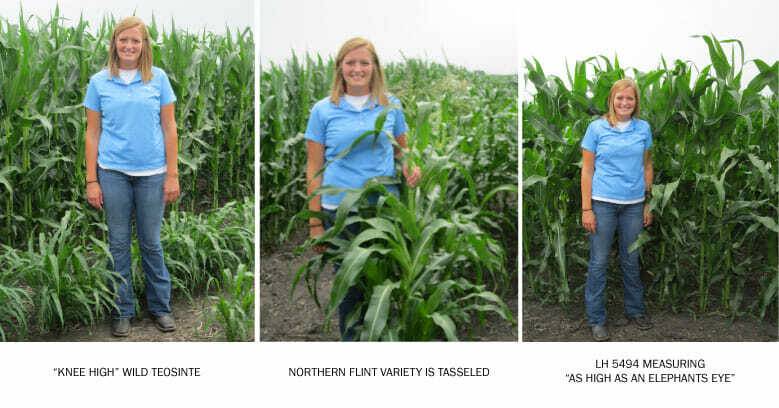
    On July 4th we saw corn plants of every size: ankle high, knee high, head high and even some that had tasseled.  Temperate teosinte, one of the first ancestors of corn, is about knee high.  Wild teosinte is measuring around knee high.  Northern flint, a red dent corn is tasseled.  Current hybrids like LH 5494 3000 GT are “as high as an elephant’s eye.”  This truly shows the evolution of hybrids at Latham Hi‑Tech Seeds.

    Many of the varieties aren’t equipped to handle the hot, humid and dry weather we have seen.  Because the weather we’ve experienced this growing season is starting to take a toll on the Genetic Garden, we’ve begun to irrigate it.

    Look to TheFieldPosition.com for continued updates on the Genetic Garden.  We’d also like to invite you to see it for yourself!  Take a walk through our “living museum of corn” on Saturday, Aug. 25, during the Latham Country Fair in Alexander, Iowa.

    Gary Geske

    July 9, 2012
    Agronomics, Corn, Crop, General
  • Latham Hi‑Tech Seeds

    Iron Chlorosis is Serious Threat to Soybeans

    Ironcholorsis

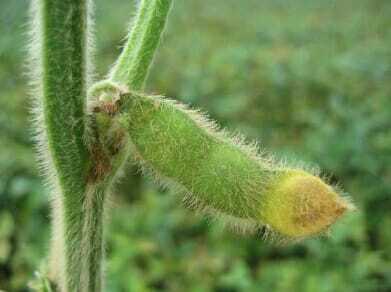
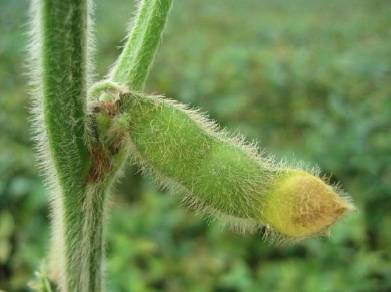
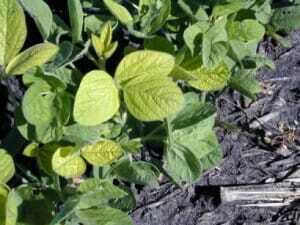
    I’ve received an unusually high number of calls this spring from people, who have noticed all the “yellow soybean fields.” These fields are exhibiting Iron Deficiency Chlorosis (IDC).

    Contrary to popular thought, IDC is not a disease as there are no pathogens, fungi or viruses that can be blamed for this condition. Rather, IDC is a function of the soil type common in the area we call the “Des Moines Lobe.” This area covers most of Central Iowa, continuing north into Minnesota and even further north and west into the Red River Valley region. These soils typically contain some areas that are poorly-drained and also have higher-than-normal pH values.

    This is one of the worst years for IDC in recent memory. Unfortunately, once IDC is noticed in a field, it’s too late to really manage it properly this season. Avoid applying chemicals on these areas that will damage the already-stunted and chlorotic plants. Then be proactive when choosing future soybean varieties for these fields.

    Iron chlorosis symptom – soybean. Photo © John E. Sawyer

    There is no such thing as complete resistance to IDC, however, some soybean brands (i.e. varieties) are better than others at handling this condition. Because Latham Hi‑Tech Seeds is headquartered right in the heart of North Central Iowa where Iron Chlorosis is a familiar challenge to us, we have always tried to choose soybean genetics that have the best possible scores against this condition.

    Latham® soybean brands like L1585R2, L1783R2, L1985R2 and L2183R2 have all demonstrated that they belong in this elite class of defensive products that are designed to give the best possible performance under some of the toughest conditions that our soybean seed customers run into. This is just one more example of our commitment to bringing the highest performing seed products with the best trait values to all of Latham Country!

    Webspec Admin

    July 2, 2012
    Agronomics, Crop, Fertility, General, Soybeans
  • Latham Hi‑Tech Seeds

    Potassium Deficiency is Growing Problem in Corn

    DeficiencySymptoms
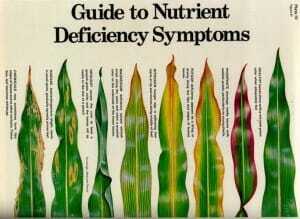
    Potassium deficiency symptoms in corn develop on the edges of older leaves, typically starting at the tip, while the new growth appears normal. (Photo courtesy of the University of Illinois Plant Clinic.)

    While walking fields recently, I’ve seen corn leaves that are yellowing around the leaf margins.  The yellowing starts at the tip of a leaf, extending along its edges to the base of the leaf.  In more severe cases, the edges are brown.

    Corn and soybeans are showing signs of potassium deficiency this growing season. Most of the potassium deficiency I’ve seen so far this season is not due to planting in too-wet soil conditions or compaction, although this certainly could be a reason in some cases.  Instead, I’m seeing more potassium deficiencies where there is an extremely dry soil surface and where root activity has been slow.  Dry conditions typically limit root growth, which explains why soils can have good levels of potassium but nutrients don’t get to the plants.  It also helps explains why, in some fields I have observed, the K deficient symptoms are occurring in the best-drained soils in the field while the more poorly drained areas look better.

    Dry surface soils express K deficiency most often.  Ridge-till, no-till situations and side wall compaction will sometimes show symptoms in dry years.  Irrigation or simply rainfall is a great way to jumpstart the root systems and help the plant develop through the K deficiency.

    It’s important to understand why if and why there is a potassium deficiency because K is an essential nutrient for plant growth that has a large impact on overall yield.  Potassium controls transpiration and respiration, as well as the uptake of certain nutrients including nitrogen and magnesium.

    Photo courtesy of www.omafra.gov.on.ca

    The type of nutrient deficiency determines soil management strategies.  Some people side-dress potash or various forms of K.  Others try foliar products.  One word of warning is that some of these products can be harmful to the plant at certain stages of growth.  A grower should select a low salt form of K and avoid anything with KCl or KSO4 for foliar applications.  A better and safer means is to address the situation by applying potassium before planting 2013.

    Walk your fields now and note where you’re seeing signs of potassium deficiency, so you can be sure to test and possible treat those areas before the 2013 crop is planted.  Another leaf tissue sample can provide helpful information, too.  You can see if there are other nutrient deficiencies in your field.  Tissue sampling is one service provided through Latham’s Seed-to-Soil program.

    Team Latham

    June 28, 2012
    Agronomics, Corn, Crop, Fertility, General
  • Latham Hi‑Tech Seeds

    Corn Rootworm in Northeast Iowa

    Corn Rootworms have arrived in Northeast Iowa nearly three weeks prior to normal years. Farmers are urged to be diligent in scouting fields and monitoring pressures in the coming weeks. For more information, tune into Nick Benson’s most recent YouTube video:

    http://youtu.be/TLNYMhaw-u4

    Team Latham

    June 24, 2012
    Agronomics, Corn, Crop, General, Insects
  • Latham Hi‑Tech Seeds

    Tissue Testing Helps Unlock Full Yield Potential

    A deep, dark, lush green isn’t always the sign of a healthy crop. Sometimes the plant appears healthy but is really suffering from nutrient imbalances. Other times we become suspicious when we see plants with light green colors, or interveinal stripes, and purpling. We begin to ask whether the discoloration is a sign of herbicide, disease or a nutrient insufficiency or imbalance. Further testing is needed to diagnose the situation.

    In the human world, annual physicals help determine if we’re on the right health track. This involves blood tests to find out how we compare to the normal limits scale. Armed with the results, doctors can suggest diet changes, supplements or prescription medicines to bring our bodies into balance.

    As important as blood tests are for humans, so are tissue samples for our crops. Results of the tissue sample will very accurately reflect the nutritional health of the plant and the soil in which the plant receives its food. While soil test results give a good idea of N –P – K levels, tissue samples are more reliable and trustworthy results.

    Tissue samples provide us with the most accurate reflection of the soil and plant’s nutritional matrix. There are 16 essential elements responsible for plant growth and yield. Tissue samples help us know where the plant is so we know where we need to go. By starting early, we can supplement early. If you haven’t sampled in the past, try a field or two this year. Supplement where needed, and get those “WOW” type yields. Click here for tissue sampling instructions.


    Webspec Admin

    June 11, 2012
    Agronomics, Crop, General
  • Latham Hi‑Tech Seeds

    See First-Hand How Corn Has Evolved

    RachelNorby1

    As a summer intern at Latham Hi‑Tech Seeds , one of my main projects is caring for the company’s Genetic Garden.  This isn’t your typical vegetable garden!  This garden will tell the story of how corn has evolved over time.

    Planting the Genetic Garden at Latham Hi‑Tech Seeds, with Corey Catt, Forage Specialist

    Forage Products Manager Corey Catt and I on May 18 planted more than 45 different types of corn.  Our “living timeline” features the earliest ancestor of corn, teosinte, to the industry’s latest technology in LH 5494 3000GT.

    The story of corn’s development starts with corn’s wild ancestor teosinte, but it doesn’t resemble corn as we know it.

    Hand planting was required due to the small, delicate seed of teosinte

    Further into the timeline, we’ve planted corn’s tropical ancestors including the Benz Tropical, Cargill Temperate Tropical and PIRICINCO composite varieties.

    Ancestors of our modern day corn include:

    • Varieties of Flints (including Tama Flint from the Iowa Mesquaki Native American Tribe)
    • Reid Varieties (including Osterland Reid which originates from Iowa Falls, Iowa)
    • Golden Glow and Lancaster Sure Crop.  Reid and Lancaster Sure Crop varieties are, which are open-pollinated varieties first developed by U.S. farmers in the late 19th and early 20th centuries.
    • Minnesota 13, a variety developed at the University of Minnesota in 1897.  This variety was very well adapted for a short growing season and so important that it’s now grown across Minnesota.
    • Inbred varieties such as MO 17 and B73, which are very frequently used in many crosses.
    • Farther down the line of the evolution of corn are Ukrainian Dent and Ukrainian Flint Dent varieties
    • A 4-way cross variety
    • LH 74
    • LH 85
    • Two varieties of pod corn in which the seed is covered by a thin husk.  We removed the husk before planting to insure better seed-to-soil contact and thus better germination of the seed.
    Pod Corn and husk.

    In addition to these varieties, our Genetic Garden includes some fun varieties including popcorn and Japonica Striped Maize.  Japonica Striped Maize is an ornamental corn from Japan; its leaves are striped green, yellow, white and pink, providing a rainbow sort of color display.

    Look for updates on the Genetic Garden on TheFieldPosition.com.  We’d also like to invite you to see it for yourself!  Take a walk through our “living museum of corn” on Saturday, Aug. 25, during the Latham Country Fair.

    Gary Geske

    June 4, 2012
    Corn, Crop, General
  • Latham Hi‑Tech Seeds

    Conditions Favor Rootless Corn Syndrome

    Rootlesscorn1
    Rootless corn (left) compared to corn with normal nodal root development. Photo credited to Monsanto.

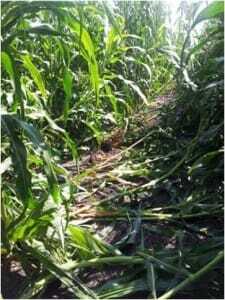
    The change from excessively wet to unusually warm, dry weather has resulted in the development of a substantial crust in fields that were previously worked and planted in late April. Obviously, a thick crust can restrict the emergence of corn and cause underground leafing. The rapid drying of the upper soil layer is also conducive for the development of the “floppy corn,” or Rootless Corn Syndrome.

    The aforementioned weather pattern may mirror situations across Latham Country this spring, but it’s actually an excerpt from an article that was originally written in May 1998 by an agronomy professor at Purdue University in Lafayette, Indiana. Dry surface soils, shallow planting depths, sidewall compaction and cloddy soils all contribute to Rootless Corn Syndrome.  Roots will take the path of least resistance, which means they might grow out the bottom of the seed furrow.

    Such corn plants are technically not root-lodged; they are simply broken over at the base of the stem near the crown area. The nodal roots will appear stubbed off but not eaten. The root tips will be dry and shriveled. For a brief description of normal corn root development, click here for  R.L. (Bob) Nielsen’s “Primer on Corn Root Development.”

    Nodal root growth may resume if more favorable temperatures and moisture conditions return to the fields exhibiting signs of Rootless Corn Syndrome. Cultivation can help by putting soil around the base of plants or aiding in new root development when it does rain.  If the ground is hard, cultivation will help with soil aeration.

    Team Latham

    May 31, 2012
    Agronomics, Corn, Crop, General, Soil
  • Latham Hi‑Tech Seeds

    Soybean Wind Damage

    Recent strong wind events have also taken their toll on soybean seedlings. Shown below is damage post-storm. While it may appear to be bean leaf beetle feeding, it is in fact wind damage. No course of action is needed at this time, but farmers should be vigilant is scouting for potential disease invasion later on in the growing season.

    Webspec Admin

    May 29, 2012
    Crop, General, Season, Soybeans, Weather
  • Latham Hi‑Tech Seeds

    Row, Row, Row Your Corn

    by Corey Catt, Forage Products Manager

    Isn’t it exciting when you can finally “row your corn”?  It’s such a milestone.  It provides us with a sense of accomplishment.  It brings some relief as hopefully no replant will be needed.  And it makes us eager to see how the crop progresses throughout the growing season.
    The average corn plant needs approximately 100 heat units to emerge from the ground.  Depending on weather conditions, a seed/seedling will reach 100 heat units in 7 to 10 days.  Some hybrids emerge faster than others, while others are slower to emerge but may grow more rapidly.  These hybrid differences really depend on genetics.

    Raising a corn hybrids somewhat reminds me of horses racing like the Kentucky Derby.  Remember last Saturday how Bodemeister led the field around the first turn?  I’ll Have Another was in seventh place early but went on to win the race.  The same can be said for corn plants.  Some emerge from the ground like a rocket, while others make up for lost time as the heat rises.

    How quickly do you see hybrids emerging?  One of my favorite parts of the job is hearing “from the field” about what you learned during emergence time as you walk and row your fields.  I always enjoy hearing things from a farmer’s perspective and hope you’ll share this type of information with me as it adds to our pool of information about Latham® hybrids.

    This season Latham Hi‑Tech Seeds will be sharing more stories “From the Field.”  We’re following crop development from planting through harvest in several locations across Latham Country.  You’ll find our Growing Season Gallery on our Facebook page at www.facebook/LathamSeeds.  We also invite you to join us by sharing your own photos “From the Field.”  Simply e-mail your photos of Latham® brand corn, soybeans or alfalfa to lathamseeds.fromthefieldtour@gmail.com.

    Team Latham

    May 7, 2012
    Corn, Crop, General
  • Latham Hi‑Tech Seeds

    Fluctuating Spring Temps Create “Wild Ride” for Alfalfa

    by Corey Catt

    What our alfalfa plants have experienced this spring reminds me of my experience as a kid riding with my grandmother in a car.  She drove with both feet: one the gas pedal, the other on the brake.  Grandma would speed way up and then apply the brakes, continuing this pattern for the duration of the ride.

    Similarly to the wild ride I had with Grandma, alfalfa is getting “jerked around” this spring:

    1. Quick Speed Up –The abnormal early season warmth made the alfalfa want to grow, which broke winter dormancy early and began the seasonal growth cycle.  Fortunately, alfalfa’s unique growing style will initiate new buds from the crown to help recover from this event.
    2. Quick Slow Down – The freezing conditions experienced in areas last week may have caused some damage to the plants.  Some growers report that not all areas of the fields were affected.  Low lying areas, such as hollows and valleys, received the full effect of Mother Nature’s crispy spring chill.

    Although this type of cold injury event doesn’t occur often with alfalfa, universities have responded quickly.  Recent publications by the University of Wisconsin Extension and by Iowa State University Extension provide some good stand evaluators that will help growers make decisions in the days and weeks ahead.

    There will likely be leaf damage in areas where overnight temperatures dipped to 27 degrees Fahrenheit  or below for several hours.   Well established, developing forage plants have lost their winter cold hardiness, so exposed tissue is susceptible to cold temperature injury.  Alfalfa and most legume seedlings have good cold tolerance at emergence, but spring cold snaps can hurt new seedings.  Slope position, soil temperature, companion crop of oats, wind, snow cover, all will influence what occurs in a particular field or part of a field.

    We’ll have to take a “wait and see approach” for about a week before we can determine the extent of the damage.  The severity of damage with obviously effect yield and quality.  Be aware this may alter the PEAQ forage evaluation, as well, as it’s dependent on plant height.

    Team Latham

    April 16, 2012
    Alfalfa, Crop, General
Previous Page
1 … 52 53 54 55 56 … 62
Next Page

Latham Hi‑Tech Seeds

131 180th Street | Alexander, IA 50420

(641) 692-3258

SIGNUP FOR OUR NEWSLETTER
  • Contact
  • Legal
  • Dealer Center
  • Seedware Login
  • Latham Gear

© 2025 Latham Hi‑Tech Seeds. All rights reserved. | Iowa Web Design by Webspec | Privacy Policy

Latham® Hi-Tech Seeds is a trademark of M.S. Technologies, L.L.C., 103 Avenue D, West Point, IA 52656.