Latham Hi-Tech Seeds

(641) 692-3258

  • Home
  • Performance
  • Products
    • Corn
    • Soybeans
    • Soybean Blends
    • Alfalfa
    • Corn Silage
    • Seed Guide
  • Find a Rep
  • Media
    • Blog
    • News
    • Videos
    • Podcasts
    • TECHTalk
  • About Us
    • Company History
    • Our Mission
    • Careers
    • Become a Rep
    • Sowing Seeds of Hope
  • Contact Us
  • Latham Hi‑Tech Seeds

    The History of Latham® IRONCLAD™ Soybeans

    IMG 9881

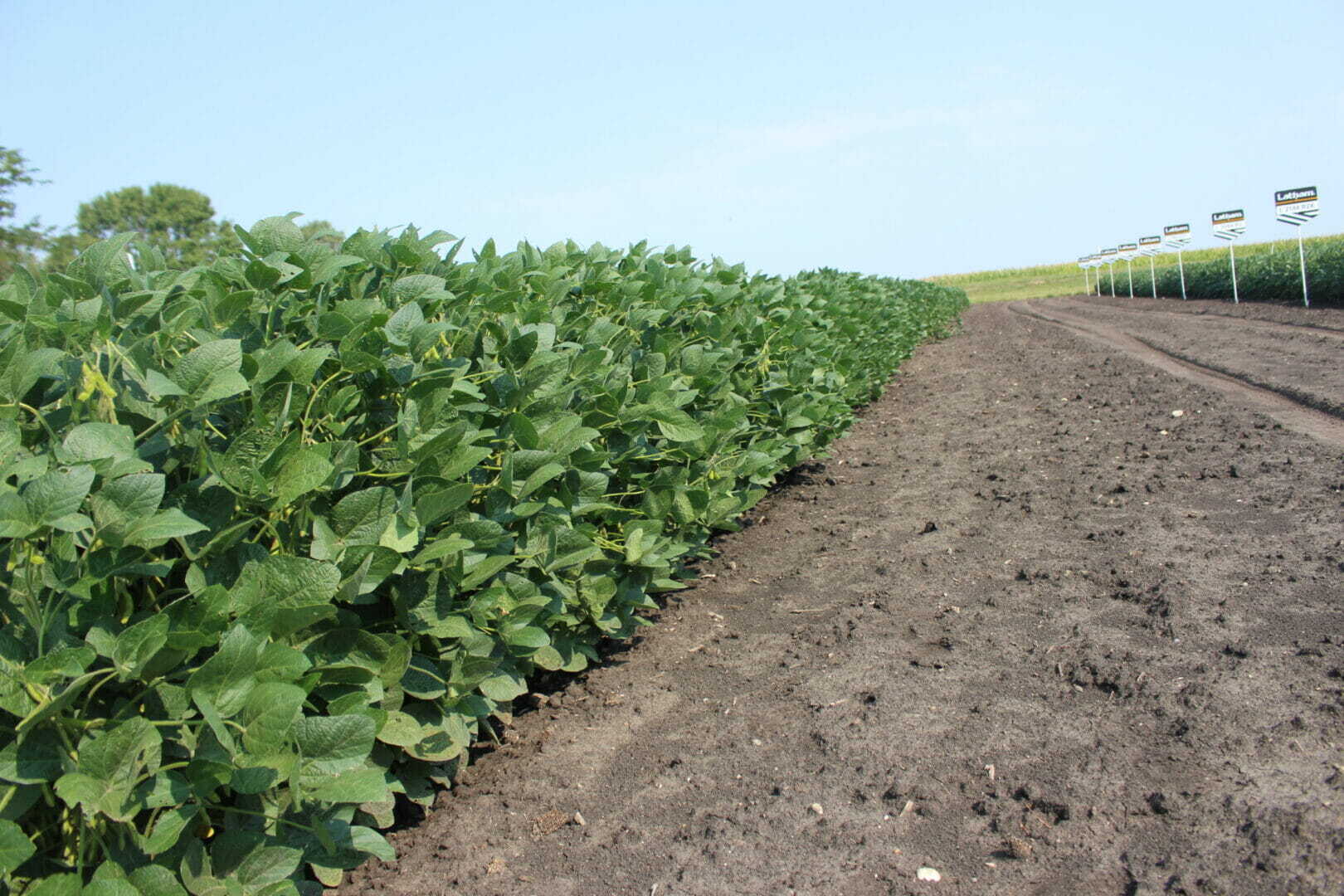
    Soybean Cyst Nematode, Iron Deficiency Chlorosis, Phytophthora Root Rot and Sudden Death Syndrome are just a few of the pests, diseases and agronomic issues that have contributed to lower yields and higher costs. Farmers, who needed protection against these agronomic issues, were hesitant to plant defensive soybean lines in fear of giving up yield.

    Then in the late 1990s soybean breeding techniques were developed that could quickly identify cultivars that had sound defensive traits and were high yielding.

    In 2011, Bill Latham, then head of Latham’s Research program, challenged our Soybean Product Team to find an idea or a concept that would help change the way farmers felt about defensive soybean products. Bill, an ex-Marine aviator, was a military history buff as were several other members of our team at that time. We remembered back to the pre-Civil War era when naval warships were made almost exclusively out of wood. Offensive firepower from these ships was quickly outmatching their wooden defense. Innovators at the time were quick to experiment with using iron plates over the wooden sides. Hence, the term “Ironclad” was born.

    The first ever battle between two ironclads took place in 1862. The Monitor was the Union warship. The Confederacy had captured the Union ship Merrimack, plated it with iron, and renamed it the CSS Virginia. However, the battle has gone down in history as the Monitor versus the Merrimack. Although both sides claimed a victory, in essence it was a draw as neither ship could sink the other. It did, however, dramatically change the course of naval warfare. From that battle on, navies all over the globe began using metal plates over wood and eventually made their ships completely out of metal!

    Back to 2011… After much discussion, it was decided to use the designation of IRONCLAD™ for Latham brand soybeans that had a resistance gene for Soybean Cyst Nematode, a gene for Phytophthora Root Rot and scores of 2.2 or better (on a scale of 1-5) against Brown Stem Rot, Iron Deficiency Chlorosis and either White Mold or Sudden Death Syndrome.

    Latham’s first IRONCLAD soybeans were introduced in our 2013 Product Guide. It was quickly evident that these defensive traits were exactly what farmers in Latham Country needed to protect yield and increase profitability.

    It should be noted here that since the start of our Ironclad program, we have never had a #1 selling soybean that was NOT an IRONCLAD! Additionally, our 2021 Product Guide features 28 Ironclad soybeans out of the total 56 we have listed. That’s truly an amazing advancement during a short eight-year period of time!

    Mark Grundmeier, Product Manager

    November 10, 2020
    Agronomics, Crop, Disease, Emergence, Soybeans
  • Latham Hi‑Tech Seeds

    Ask the Agronomist: Corn Residue Management

    121844642 2002969963179604 4892903202099503941 n
    What’s the best way to manage corn residue on your farm? Tune in to find out! #AsktheAgronomist
     
    1:15 — Topic introduction
    4:15 — Primary fall tillage
    5:20 — Chopping heads
    7:50 — Baling stalks
    9:30 — Strip tillage
    11:20 — Vertical tillage
    13:15 — Final thoughts

    Laura Cunningham

    November 5, 2020
    #AskTheAgronomist, Agronomics, Corn, Crop
  • Latham Hi‑Tech Seeds

    Use 2020 Harvest Information to Prepare 2021 Crop Plan

    Bart 1

    Harvest is the perfect time to assess your fields and adjust your field-by-field crop plans.

    As you harvest your 2020 crops, you will learn more about what worked in a given field. Tools like Latham’s Data Forward help collect information. Even if you use another mapping tool, Data Forward can organize your information.

    Below are ideas about what data to record now to provide great value next spring.

    • Disease. We faced lots of disease pressure in 2020. Be sure to note the diseases you see and where you see them. This is especially important on corn-on-corn acres, as well as on rotated acres. This will help you select products with disease tolerance from the Latham® lineup for greater success in 2021.
    • Weed escapes. Use weed ID materials or Google them to confirm what weed escape you see. Documenting weed escapes aides in the type of herbicide tolerance you may need. Most of Latham’s corn hybrids carry tolerance to glyphosate herbicide; a few carry traits that make them tolerant to glufosinate for use with Liberty herbicide.
    • Fertility issues. Note areas of the field that show deficiency and sample those soils. Make plans to fertilize according to the requirements for next season’s crop. Very uniform and high fertility fields are in the highly productive class. Fields with uneven fertility may be considered as lower productive fields. You can find some great recommendations in Latham product info sheets.
    • Soil conditions. Fields with high residue, like many of the derecho-damaged fields, will require different management and possible product selection. Fields with heavy trash burdens will likely need the strongest emerging products next spring. We strive to provide the best info on emergence scores in our technical data.

    Carefully assessing each field and recording notes at a high level about what you see adds the greatest value to any yield map information that you generate. Use the Latham® Hi‑Tech Seeds product guide, website product tools, tech sheets (also found on our website), plus information from your dealer or RSM to find the best product for each of your fields.

    We will continue to provide product highlights as harvest data becomes available. Have a safe harvest season!

    Latham Seeds Precision Agronomy Advisors

    October 28, 2020
    Corn, Crop
  • Latham Hi‑Tech Seeds

    Ask The Agronomist: Phantom Yield Loss

    IMG 4019

    Tune in as we discuss how the dry harvest season and phantom yield loss can go hand-in-hand. #LathamSeeds

    :25 — Harvest Update
    2:10 — Phantom Yield Loss
    5:45 — Dry Corn Management
    8:35 — Dry Corn Yield Loss

    Laura Cunningham

    October 15, 2020
    #AskTheAgronomist, Agronomics, Corn, Crop
  • Latham Hi‑Tech Seeds

    #LathamSeeds Wins! 10/14/20 Product Highlights

    Soybean 5 winner graphic

    Soybean 5 winner graphic


    Minnesota2193 mower graphic

    1858 MN summary graphic


    Iowa 5487 winneshiek graphic


    South Dakota 2894 SD summary graphic

    Webspec Admin

    October 14, 2020
    Agronomics, Corn, Crop, Soybeans
  • Latham Hi‑Tech Seeds

    Fall Harvest is Underway

    Team latham in the field

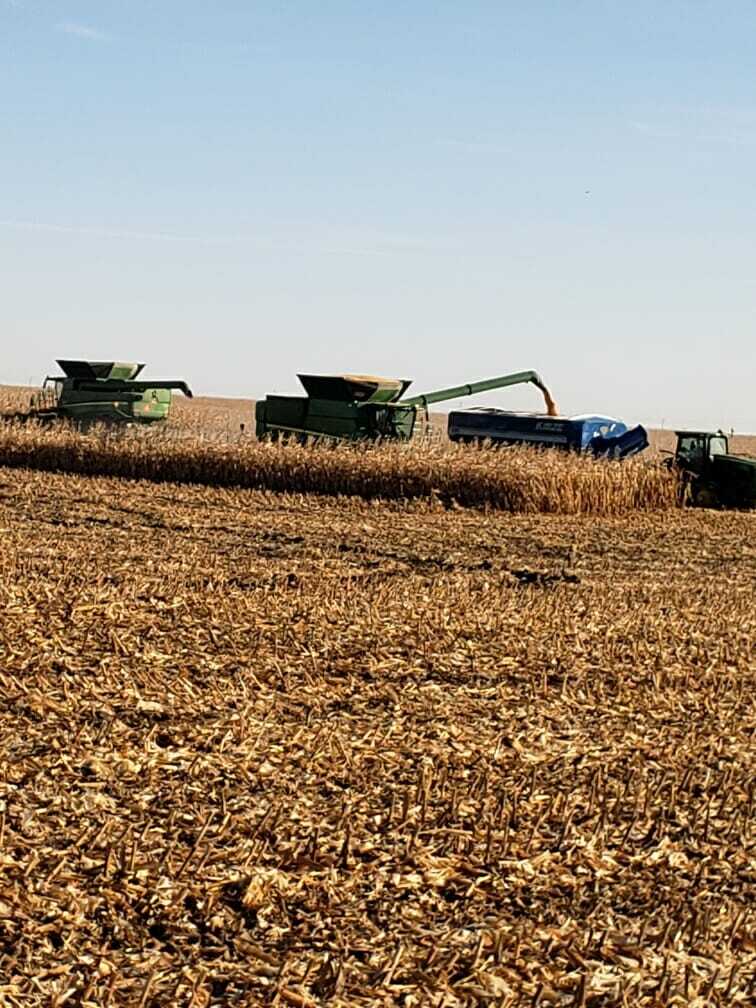
    Team latham in the fieldFall harvest is underway in North Iowa. This means the scales are busy at Latham Hi‑Tech Seeds headquarters on our family’s Iowa Century Farm in Alexander.

    Below are the Top 3 Reasons that Latham® brand soybeans have developed a reputation for quality and continue to top yield trials:

    1. Harvest Protocol – The majority of Latham seed beans are brought to our plant upon harvest. These soybeans are kept under the watchful eye of Latham Production Plant Manager Greg Jaacks and his well-trained team. The Production Team uses a hand probe to take samples of every load of soybeans that crosses our scale. Each soybean variety is then stored in a separate bin; each bin is monitored daily to ensure the seed does not go out of condition before it is bagged or boxed. Some varieties are not grown near our Alexander plant, so we work with trusted family-owned seed conditioning partners that have a reputation for providing top quality.
    2. Careful Conditioning – Throughout the process of taking the seed from the bin and placing it into bags or boxes, Latham’s Production Team carefully handles the seed each step of the way. Air screens and scalper screens remove sticks and pods. Sifter screens remove splits and small soybeans. Fans remove dust and dirt. Additional separator equipment ensures even shape, form and density. The results of this intensive process can be observed in each and every finished unit of Latham brand soybeans.
    3. Quality Over Quantity – Throughout the process, quality is top priority as opposed to the speed of conditioning and bagging. Our production process slows when winter temperatures fall below 10 degrees and will halt completely when temps hit zero; other companies continue to condition seed although it can severely affect seed integrity and germination.

    Producing the highest quality seed for farmers is the legacy we are proud to continue as the third generation of Latham family members to own and operate Latham Seeds. In fact, we take quality so seriously that President John Latham and General Manager Ryan Schon joined members of our production team this week as they pulled rogue plants by hand from a nearby production field.

    We appreciate the diligence of our growers to work with us to produce as pure as seed of possible. We are grateful to have worked for so many years – and for generations – with local farmers to produce Latham brand soybean seed. Below are feature articles about a few of our contract soybean growers:

    • Ted Pitzenberger
    • Phil Pitzenberger
    • Ian Pitzenberger

    To celebrate our family’s legacy of producing high-quality soybeans, we’re sharing with you a slow cooker recipe for a meal that can be prepped in the morning before you head to the field during the busy harvest season. The following recipe for Calico Beans has been adapted by The Soy Foods Council to promote soybeans. Because October is Pork Month, you could further adapt this recipe by adding a pound of browned pork burger.

    Shannon Latham

    October 9, 2020
    Agriculture, Crop, Industry News, Soybeans, Tech Tuesday
  • Latham Hi‑Tech Seeds

    Ask The Agronomist: Managing Stress & Ear Flex

    IMG 9909
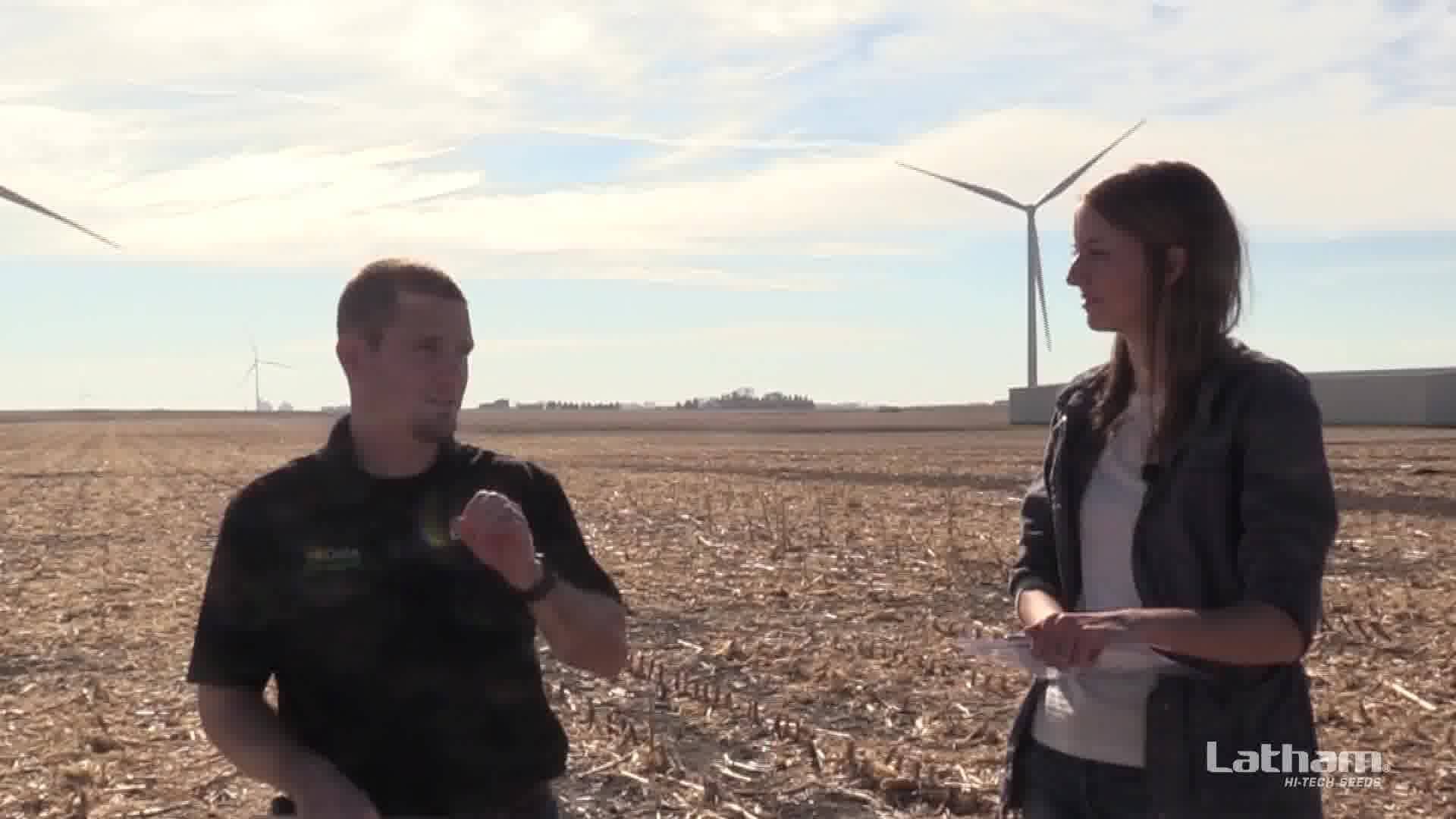
    Phil Long discusses the correlation between in-season plant stress and ear flex. Tune in to learn more.
     
    :25 — Topic Introduction
    :50 — Population resarch at Latham Seeds
    1:45 — Early-season stress
    5:00 — MId-season stress
    8:20 — Late-season stress
     
    #AskTheAgronomist

    Laura Cunningham

    October 1, 2020
    Agronomics, Corn, Crop, Growth Stages
  • Latham Hi‑Tech Seeds

    #LathamSeeds Wins! 9/30/20 Product Highlights

    2193 cerro gordo graphic

    NORTH DAKOTA

    3932 cass graphic


    IOWA5487 2nd place graphic

    2228 humboldt graphic

    1883 osceola graphic

    2682 marion graphic2193 cerro gordo graphic

    6187 mahaska graphic

    5249 clinton graphic

    6289 mahaska graphic


    Webspec Admin

    October 1, 2020
    Agronomics, Corn, Crop, Soybeans
  • Latham Hi‑Tech Seeds

    Premature Plant Death with Bob Foley

    Bob intro vid

    Join Bob Foley as he discusses the impacts of premature plant death, why it is happening and how it could affect your harvest plan. #LathamSeeds

    Laura Cunningham

    September 17, 2020
    Agronomics, Corn, Crop, Disease
  • Latham Hi‑Tech Seeds

    #AskTheAgronomist: Top 3 Stalk Rots & Ear Rots

    Stalk Rot 1

    What are the top three stalk rots and ear rots to keep an eye out for? Tune in to find out! #AskTheAgronomist

    :25 — Topic Introduction

    1:30 — Top 3 Stalk Rots

    6:20 — Top 3 Ear Rots

    9:30 — 10% Rule

    Laura Cunningham

    September 17, 2020
    #AskTheAgronomist, Agronomics, Corn, Crop
Previous Page
1 … 17 18 19 20 21 … 62
Next Page

Latham Hi‑Tech Seeds

131 180th Street | Alexander, IA 50420

(641) 692-3258

SIGNUP FOR OUR NEWSLETTER
  • Contact
  • Legal
  • Dealer Center
  • Seedware Login
  • Latham Gear

© 2025 Latham Hi‑Tech Seeds. All rights reserved. | Iowa Web Design by Webspec | Privacy Policy

Latham® Hi-Tech Seeds is a trademark of M.S. Technologies, L.L.C., 103 Avenue D, West Point, IA 52656.