Skip to content
Latham Hi-Tech Seeds

(641) 692-3258

  • Home
  • Performance
  • Products
    • Corn
    • Soybeans
    • Soybean Blends
    • Alfalfa
    • Corn Silage
    • Seed Guide
  • Find a Rep
  • Media
    • Blog
    • News
    • Videos
    • Podcasts
    • TECHTalk
  • About Us
    • Company History
    • Our Mission
    • Careers
    • Become a Rep
    • Sowing Seeds of Hope
  • Contact Us
  • Latham Hi‑Tech Seeds

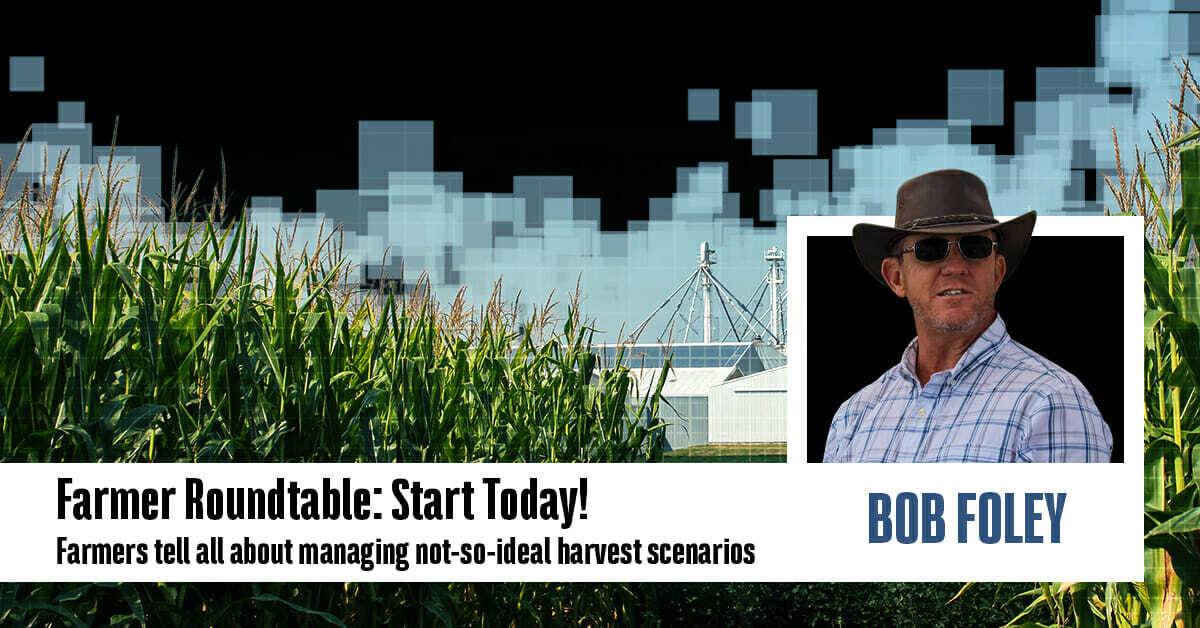
    Farmer Roundtable: How to Manage a Not-So-Ideal Harvest

    Field day presentation slide bob foley

    Join us for a 35 minute segment as farmers tell all about managing no-so-ideal harvest scenarios hosted by Bob Foley.

    Manage for next season

    Harvest ideas and plans

    Grain and handling

    Quality vs quantity

    Laura Cunningham

    September 9, 2020
    Agronomics, Corn, Crop, Growth Stages
  • Latham Hi‑Tech Seeds

    Ask The Agronomist: How to Manage Late-Season Soybean Troubles

    Phil feature 9.4

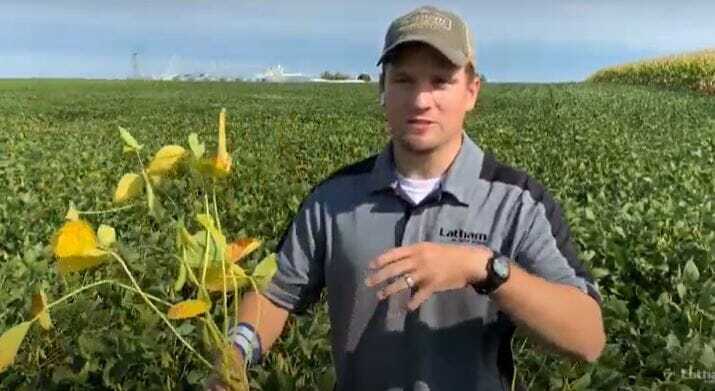
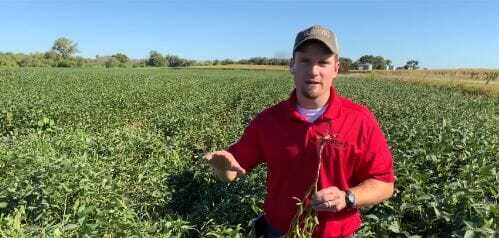
    Tune in as Phil Long discusses 3 common late-season soybean issues. With harvest around the corner it’s time to take final field notes and make a harvest plan! #LathamSeeds

    :40 — Topic introduction

    1:20 — Soybean Yield Estimates

    3:20 — Sudden Death Syndrome

    6:10 — White mold

    8:20 — SCN

    Laura Cunningham

    September 3, 2020
    Agronomics, Crop, Disease, Soybeans
  • Latham Hi‑Tech Seeds

    Ask the Agronomist: Will 2020 be an Early Harvest?

    Feature image for ATA 8.27

    Will 2020 bring an early Harvest? Phil Long talks about 3 different examples of how corn is maturing. Learn about what is in your field and the impacts of an early harvest.

    :30 — Topic introduction

    1:45 — Impact of lack of moisture

    2:45 — Example 1: Corn plant dying from the top

    4:15 — Example 2: Corn plant firing from the bottom

    5:20 — Example 3: Corn plant with red streaking

    7:30 — Impacts of an early harvest

    10:10 — Final thoughts

    Laura Cunningham

    August 27, 2020
    Agronomics, Corn, Crop, Fall, Growth Stages, Season
  • Latham Hi‑Tech Seeds

    Ask The Agronomist: Dealing with the Derecho & Drought

    Most farmers across Latham Country have experienced some type of extreme weather this year. Phil Long discusses the impacts from the derecho and the yield impacts from drought.

    :30 – Topic introduction

    1:00 – Derecho impacts

    2:17 – Current corn field conditions

    5:45 – Stalk & ear rot

    7:20 – Drought effects on corn

    9:50 – Drought effects on soybeans

    Laura Cunningham

    August 20, 2020
    Agronomics, Corn, Crop, Drought, Hail, Soybeans, Weather
  • Latham Hi‑Tech Seeds

    #AskTheAgronomist: Late-Season Soybean Pests

    Phil ata feature
    Join us as we discuss the top 3 late season soybean pests. From identification to management and planning for the future, Phil Long shares key takeaways. #AskTheAgronomist
     
    :58 — Topic introduction
    2:05 — SDS
    5:00 — Frogeye Leaf Spot
    7:00 — Aphids
    9:45 — Soybean staging

    Laura Cunningham

    August 13, 2020
    #AskTheAgronomist, Agronomics, Crop, Disease, Insects, Soybeans
  • Latham Hi‑Tech Seeds

    Corn Silage Testing with Corey Catt

    Corey Feature

    Join us in the field with our Forage Product Manager, Corey Catt! Corey discusses corn silage basics, yield estimates and quality samples. Watch below to learn more. #LathamSeeds

    :30 – Collecting a sample

    3:04 – Track location via GPS

    8:08 – Calculating whole plant moisture

    11:40 – Overall corn silage basics

    14:30 – Yield estimate importance

    15:50 – Discovering grain to stover ratio

    16:50 – Quality sample

    19:11 – Moisture evaluation

    22:00 – Variability and repetition

    August 6, 2020
    Agronomics, Corn Silage, Crop
  • Latham Hi‑Tech Seeds

    Ask the Agronomist: Corn Pollination and Kernel Set

    IMG 6433
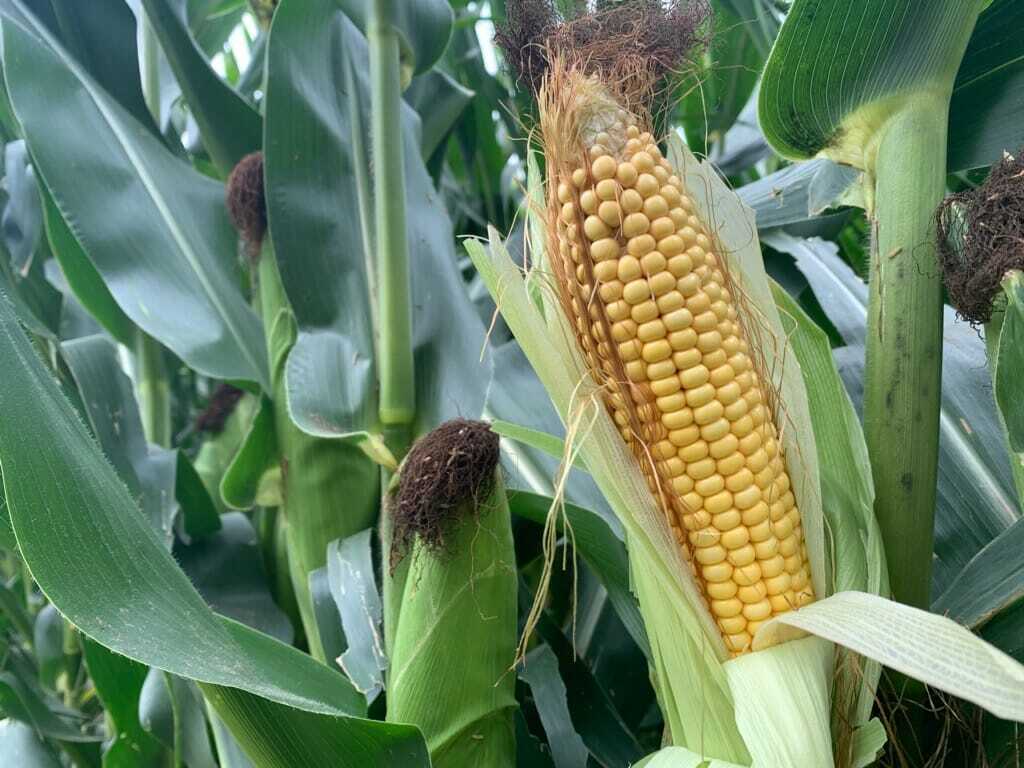
    How well did your corn pollinate? Phil Long discuss pollination, kernel abortion and yield estimates. #AskTheAgronomist
     
    :27 — Topic introduction
    1:45 — Corn development & yield estimates
    5:40 — Nutrient deficiencies
    6:50 — Kernel weight

    Laura Cunningham

    August 6, 2020
    #AskTheAgronomist, Agronomics, Corn, Crop
  • Latham Hi‑Tech Seeds

    Optimize Silage Quality with Timely Harvest

    Chopping silage in the 1486

    KernelIt’s more challenging than most people think to achieve optimum harvest timing. Life on the farm would be mighty easy if the weather cooperated, machinery was always in working order, and the custom harvester came right when you called.

    Some days farming feels like you’ve been handed a bent golf club to play a mini golf course full of obstacles, water hazards, and challenges meant to distract, disrupt and impact the result. Fortunately, farmers are the golf pros of the acre. Despite all the craziness tossed at them, they face the adversity with steadfast grit and determination. Farmers keep their eyes fixed on the goal of doing their best.

    Timing is everything to harvest the best quality corn silage. With corn silage harvest rapidly approaching, let’s review why timing is important.

    In general, 65 to 70 percent whole-plant moisture is the optimal goal range for harvest moisture. The plant is at this moisture level when the kernel is about 50 percent milk line. The starch in the kernel is like a sponge, absorbing moisture from the plant. Think about this… If you remove the entire ear, the remaining stalk contains a moisture level about 80 to 85 percent moisture. Now, add back in a normal size ear that is half milk line. The new whole-plant moisture will be between 65 and 70 percent as that added starch absorbs some of the plant moisture.

    As the milk line of the kernel drops toward the tip, it adds even more starch to the kernel. Each day more starch is added to the kernel, which is absorbing more moisture from the plant. As a really broad general rule of thumb, from about one-fourth milk line stage, corn silage moisture can drop in the field around 0.5 percent each day. Moisture can drop a full percent on those hot, dry, sunny September afternoons when photosynthesis is good and starch is accumulating rapidly. Additionally, there is also some evaporation from the leaf tissues.

    Once the kernel drops below half milk line, the moisture will rapidly drop below 65 percent whole-plant moisture, and it becomes more difficult to pack and ensile. Additionally, as the milk line drops, it is exponentially adding a protein called prolamin zein. This particular protein has a negative impact on starch availability and can be linked to higher fecal starch levels.

    Hybrids like Latham® 5495 3122 EZR and LH 5742 RR and our leafy hybrids tend to have less of this protein. This softer, lower prolamin starch found in select dual-purpose and leafy corn silage hybrids provides flexibility in the harvest window while still giving peak harvest qualities. They can take away a little stress while you’re waiting on weather or the custom harvesting crew.

    Bottom line, as harvest approaches, check moistures early and often to develop the best harvest plan to capitalize on yield and quality.

    August 6, 2020
    Agronomics, Corn Silage, Crop
  • Latham Hi‑Tech Seeds

    Continually Searching for Better Products and Better Positioning

    Cory 1

    Southern IowaProduct team members at Latham Hi‑Tech Seeds continually search for new products to help our lineup perform better in your fields. We look at our MiniStrip trials to document the early season environmental issues at each location, so we can better understand harvest results. While we learn about new products in these plots, we also look for indicators to help us provide better positioning statements on key hybrids in our lineup.

    Each season offers new challenges and opportunities for us to learn more to help better position products in your fields. Like many of your fields, some of our MiniStrip plot locations were planted in cooler soils this spring and endured the very cold temperatures over Mother’s Day weekend. We are watching hybrid reactions to those environmental conditions.

    Soon we will evaluate seed products on flower date. With the abundance of pollen during flowering in a commercial corn field, we generally do not get concerned about pollen viability. We watch for stresses on the plant that may cause issues with proper silking. We also look for differences between hybrids that are close in maturity, so that we can make sound recommendations on which hybrids to pair together that are similar in maturity but offer variation on pollination/silking timing.

    Pairing hybrids in a field with varying pollination windows spreads risk of cool weather, super high temperatures or drought. It is uncommon for us to see issues with pollination but pairing complimentary hybrids in the same field offers protection in seasons of extreme stress. July also is when we look for early onset of diseases. We evaluate for disease tolerance and for benefits we may see from in-season fungicide applications. The continual evaluation of what we see in our plots helps us fine tune the hybrid characteristic information on our tech sheets. We look forward to sharing any important findings from our summer research this fall. Watch for more details coming soon!

    Latham Seeds Precision Agronomy Advisors

    August 6, 2020
    Agronomics, Corn, Crop
  • Latham Hi‑Tech Seeds

    Answers to Frequently Asked Soybean Questions

    IMG 3865

    IMG 3865Q: What’s the outlook for soybean seed supply in 2021?

    I’m certain this concern stems from the uncertainty about the registration of the Xtendimax®, Engenia® and FeXapan® herbicides, as well as the tough time we had this year getting production acres planted, especially in the Dakotas. I’m happy to report that planting went well enough that we expect good supplies of all trait versions. If demand for Xtend soybeans falls off, demand will likely increase for E3’s. Order your E3 soybeans early, so you don’t have to worry about supply.

    Q: Is it necessary to inoculate soybeans every year?

    Since the early 1970s, researchers have believed that inoculating soybean seed isn’t necessary unless soybeans haven’t been planted in the intended field for four or five years. Today, data shows new products, formulations and even biologicals are consistently increasing yields. This is especially true in areas – like sandy soils, fields that are consistently flooded and even those that are consistently dry – where soil bacteria have a tougher time getting established. Latham’s Northern Product Specialist, Gary Geske, recommends testing some of these newer products in your own fields.

    Q: What’s the status of Alite™ 27 herbicide?

    BASF in April was granted registration of this herbicide, which is intended to be used as a pre-plant or pre-emergent herbicide on LLGT27 or GT27 soybeans only. Originally, BASF was hoping it would also be labeled for post-emergent use, but that will have to wait until there is more information made available. Additionally, South Dakota is the ONLY state within Latham Country where farmers can use Alite 27 and then only in these counties: Aurora, Beadle, Brown, Brule, Buffalo, Clark, Codington, Hand, Harding, Jerauld and Spink. The Alite 27 label mentions Product Bulletins for Minnesota and Wisconsin, but my understanding is these are for counties in those states where soybeans are not normally grown. BASF is hopeful more counties will be added.

    Q: How do XtendFlex® soybeans differ from Xtend®?

    XtendFlex is the newest trait innovation from Bayer CropScience (formerly Monsanto). These soybeans carry tolerance to glyphosate (Roundup, Glyphos, etc.) and dicamba (Xtendimax, Engenia, etc.) herbicides just like the Xtend soybeans do. In addition, they are tolerant to gluphosinate herbicides like Liberty or Ignite. This will be another three-way stacked herbicide tolerant trait that farmers can use to fight weed resistance. Full acceptance is expected soon but is dependent on final clearance by the European Union. All other major soybean-importing countries have given their approval. As a side note: Latham Seeds has an EPA-stewarded XtendFlex plot at our research farm this year. It is similar to the plot we had in 2019 but contains about twice as many XF varieties. Stay tuned for more about this exciting new technology.

    Tune into our Facebook, Twitter and Instagram pages for more great QA sessions with Latham agronomy experts.

    Mark Grundmeier, Product Manager

    August 6, 2020
    Agronomics, Crop, Soybeans
Previous Page
1 … 19 20 21 22 23 … 63
Next Page

Latham Hi‑Tech Seeds

131 180th Street | Alexander, IA 50420

(641) 692-3258

SIGNUP FOR OUR NEWSLETTER
  • Contact
  • Legal
  • Seedware Login
  • Latham Gear

© 2026 Latham Hi‑Tech Seeds. All rights reserved. | Privacy Policy

Latham® Hi-Tech Seeds is a trademark of M.S. Technologies, L.L.C., 103 Avenue D, West Point, IA 52656.