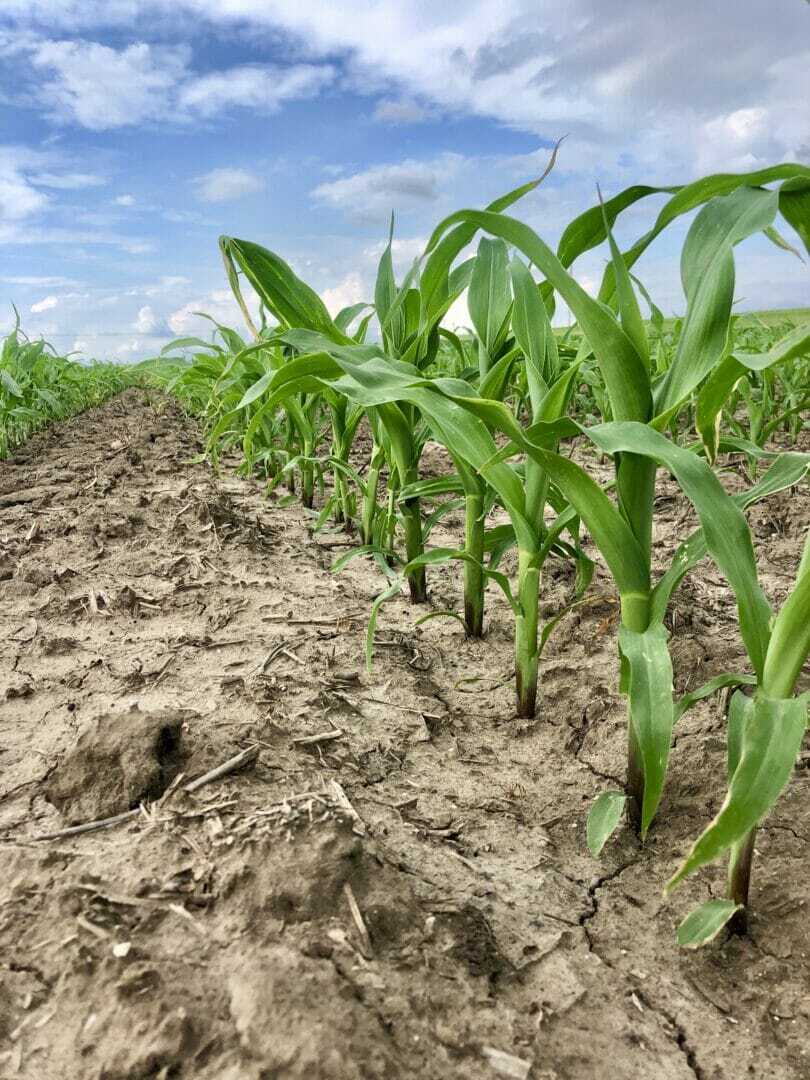
Greensnap can occur during two of the most rapid vegetative growth stages of corn from V5 to V8 and from V12 to R1. During a corn’s rapid growth stage, internodes elongate and become susceptible to breaking off. From V12 to R1, a corn plant can grow up to 4 inches per day!
When greensnap occurs, it happens at the primary ear node which is detrimental to corn yield in the fall. Aside from high winds, other factors can include planting conditions, farm management practices and genetics of the corn plant.
When corn plants are in their first stage of rapid growth from V5 to V8, post-emergence herbicide is often applied. Growth-regulator herbicides can play a negative role in the integrity of the plant structure for short time after application. This combined with rapid plant growth weakens plant structure leaving it susceptible to greensnap.
Here are three suggestions to manage for greensnap in future crop years:
Choose hybrids that have strong plant characteristics. We suggest selecting hybrids with above average root strength, stalk strength and disease resistance.
Take a second look at your herbicide management plan, specifically time of application or reduction of growth regulator herbicides.
Set your corn crop up for success from the beginning of the season by planting into a favorable seed bed at the appropriate seed depth. Give the seed a chance to establish a strong nodal root system to help withstand harsh weather through the growing season.
If you have questions on selecting the right hybrid for your field, let us know. We can connect you with one of our product specialists to ensure the right seed is placed on the right acre. This is the first step you can do to protect your corn crop from greensnap.
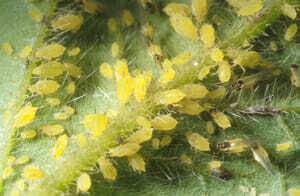
Soybean aphids can reduce yield by 10 to 15%. The insect is found in soybeans between May and August and are less than 1/16 inches long. Aphids have yellow bodies with a translucent appearance and may be winged or wingless.
Unlike other soybean insects, female aphids can produce clones and can multiply the insect population during the summer months. With the rapid reproduction abilities of female aphids, it is possible for populations to double in as little as two to three days. Males typically do not appear for mating until the late summer.
Apart from reproduction, environmental conditions that fuel infestation can also lead to a rapid increase in aphid populations. Temperatures between 72 and 77° and humidity below 78% drive the development of aphids. Drought conditions also make soybeans more susceptible to infestation.
Implications for Yield
Yield loss from aphids is attributed to the damage caused from feeding on leaves. Their destructive leaf feeding can reduce plant vigor and overall stand along with pod and seed populations.
Aside from feeding damage, waste produced from aphid feeding can leave a soot-like mold on the surface of leaves and reduce photosynthetic leaf area.
Scouting for Aphids
Aphids are most often found on the backside of the newest leaves, especially during the earliest part of the summer when the insect first emerges. Sampling for aphids should begin once the first signs of the insect are spotted. It is recommended to sample 20 to 30 plants across many areas of the field.
As the insect population increases, aphids can begin to inhabit the entire leaf canopy. If aphids are spotted on stems, this is a sign that aphid populations are above 400 insects per plant – an amount considered to be excessive. Be sure to scout for symptoms at least every 7-10 days until R6.
Management
Treatment of soybean aphids is advised if more than 80% of plants are infested and counts are in excess of 250 aphids per plant. Also, if it is evident that the population of the insect is increasing, this is also grounds for beginning treatment.
Foliar insecticides are the best method for combatting aphid populations in soybeans. In addition, biological control plays a role in staving off high aphid populations including pirate bugs and Asian ladybird beetles. When assessing the best treatment options for soybean aphids, be sure to consult with your local Latham representative.
This year we have seen slow early growth, reduced tillage, persistent rain and heavy storms. We have also seen an increase in corn-on-corn acres and other agronomic challenges. All these problems can add up to more inoculum in the field and poor overall health leaving plants more susceptible to infection. The early season diseases we think about with corn are typically Anthracnose and seedling diseases (V2-V8); however, Gray Leaf Spot, Northern Corn Leaf Blight, Goss’s Wilt, Southern Rust and Tar Spot can all show early foliar symptoms (V8-R4). Its important to note that bacterial diseases like Goss’s can’t be controlled with a fungicide.
There is very little economic support for early season fungicide application. Depending on the individual fungicide, you may see protection against disease for anywhere from 7 to 21 days. Be sure to check the label for specifics on how long they retain efficacy on the crop. If your focus is on Anthracnose, you may stave off the leaf blight phase of the disease, but this doesn’t mean that the stalk rot phase of the disease won’t infect the plant late season.
It’s also important to remember that coverage is critical with fungicides. This not only means good coverage during your spray operation with correction nozzles, pressure and volume, but it also means that if you spray early in the season, your corn will grow a new leaf approximately every 3-5 days with average GDUs. That new tissue is not protected because fungicides are not very mobile in the plant.
When to Spray?
The best bang for your buck is still going to be around VT to R2 time period because you will be able to suppress diseases that may be present on the leaves and protect them for a few weeks of any diseases trying to get into the plant. Corn is also done putting on new leaves at this point. Typically a 5-8 bu/A yield increase will pay for the investment depending on grain price and application costs. If you are facing heavy disease pressure, be sure to select the right fungicide for the diseases you have. Fungicides with dual modes of action in the Group 3 (Triazoles) and 11 (QoI) will provide suppression and some lasting protection. Look for the active ingredients that end in “ole” (Triozoles) and “in” (QoI).
If you’re facing the fungicide decision to protect valuable yield in a tough year scout your fields for disease. If you don’t see any issues now, then skip an early application and focus on tassel. Take a look at the susceptibility of that hybrid to the disease you are seeing and then evaluate the weather outlook and if you’re in a corn-on-corn or reduced tillage situation. Lastly, monitor fields closely that had Tar Spot last season
It has been an interesting year with all the weather components we have had to face. If you have any questions, don’t hesitate to call in to the Latham Office.
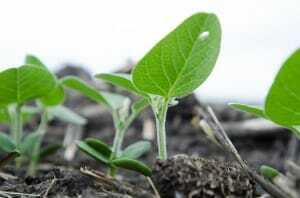
If you’re fortunate to be done with planting your crops, it’s time to get back out there and check your stands. This year I’m especially concerned with soybean stands for three main reasons:
Cold soils. Many fields were planted when soil temperatures were below the recommended 60° Fahrenheit. (This link goes into more detail about the importance of soil temperatures: https://bit.ly/2JuHTkO) Cool, wet conditions can lead to severe disease infestation and reduced stands. Seed treatments protect the seedlings before and just after emergence. Historical data shows that not using a seed treatment can cause yield loss of 2½ to 3 bushels per acre if damping off occurs, but many farmers cut back on seed treatments this season to lower their input costs.
Wet soils. Farmers felt like they were racing against the calendar during an especially wet spring, so some seed was planted into unfit soils. Planting into wet soils can lead to both sidewall and overall field compaction. Delayed emergence may cause uneven stands and reduce yield. Nutrient deficiency, reduced crop productivity and restricted root development are three of the top 10 reasons to avoid compaction. (Click here for the rest of the story: https://bit.ly/2VS06zo)
Soybean Gall Midge. This new insect pest was especially damaging last season in Northeast Nebraska, Northwest Iowa, Southeast South Dakota and Southwest Minnesota. Ask your local Extension Agronomist if any of these pests have been reported in your area. (You can learn more about Soybean Gall Midge in this blog post: https://bit.ly/2JSLetw)
Walking fields right after emergence gives you the most time to make corrections or to replant. Stand reductions rarely occur evenly across a field. That’s why I recommend taking 10 stand counts in the area where the problem is the worst, as well as taking 10 counts in an area that was not affected or is slightly affected. Most university researchers recommend keeping a final stand of at least 100,000 plants per acre.
University trials also indicate that planting soybeans on or before June 1 in northern Iowa and southern Minnesota gives 95% of expected yield. It is usually June 15 before soybean yields drop below 85% of what is expected. Over the years, we have seen decent soybean yields when soybeans were planted around the 4th of July.
Scouting early and often is the best advice I can give, so you can remedy the situation as soon as possible. Different insects, diseases and pests may be present due to weather conditions and stage of crop development. Scout diligently all growing season long!
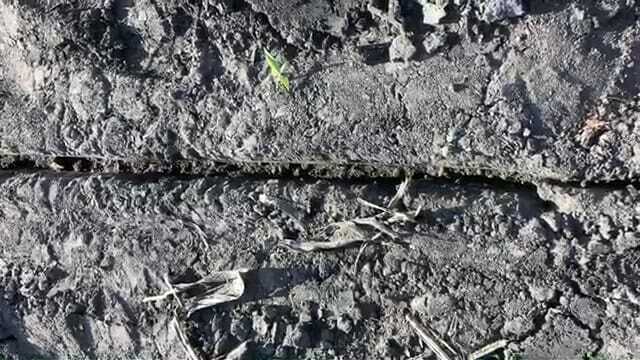
Many farmers are pushing the envelope to get their crop in the ground this season. With moisture continuing to be a real issue, we run into problems with sidewall compaction. We have three examples below of scenarios that can lead to sidewall compaction issues later on: open trench, rubber closing wheels and spiked closing wheels.
Sidewall compaction can result from V-openers “smearing” through wet soil. Gauge wheels or planter lift wheels will then compound the problem. When the soil dries it becomes too hard for roots to penetrate through and develop the root system.
If you see an open trench, the key takeaway is to decrease your unit down pressure and increase closing wheel down pressure. During a seed’s crucial growth stage, it transitions from growing seedling roots into developing its nodal root system. This tends to be around V2 and V3 and is when you can see implications of sidewall compaction. When the seedling shuts down those seedling roots the nodal root system starts to grow horizontally along the trench searching for water. You may start to see nutrient deficiency symptoms, yellowing corn, stunted growth or floppy corn.
The University of Kentucky released a study showing a 50 percent yield reduction when corn is planted in a completely open trench. We recommend avoiding sidewall compaction by either staying out of the field until conditions are suitable, staggering your closing wheels or investing in the spiked closing wheels. The spiked wheels leave a zippered pattern in the soil that breaks down the sidewalls to ensure seed to soil contact.
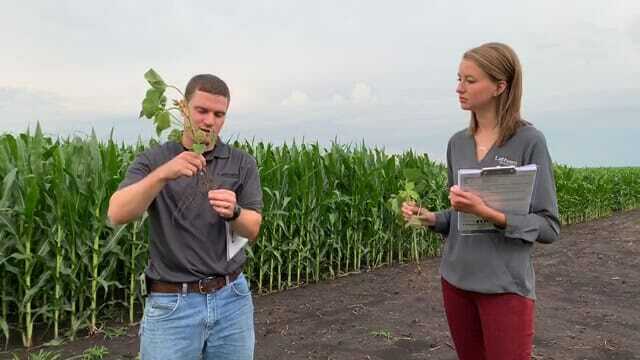
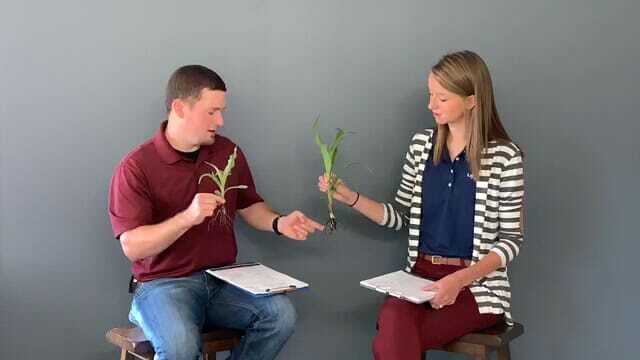
Sidewall compaction is not something you can see from your planter, so we encourage you to jump out and look at what’s happening with your seed to soil contact. Dig few plants and wash off the roots to determine how growth is proceeding. Knowing this information early on will be important for late season windy and wet weather, and for evaluating stalk quality when harvest approaches later in the season.