
How does crusting and rolling soybeans go hand in hand this season? Phil Long talks about these two topics in reference to this year’s growing season.


How does crusting and rolling soybeans go hand in hand this season? Phil Long talks about these two topics in reference to this year’s growing season.

Will your planted fields be affected by imbibitional chilling? Tune in the hear symptoms of the chilling effect.
 Written by Darin Chapman, Latham Agronomy Adviser
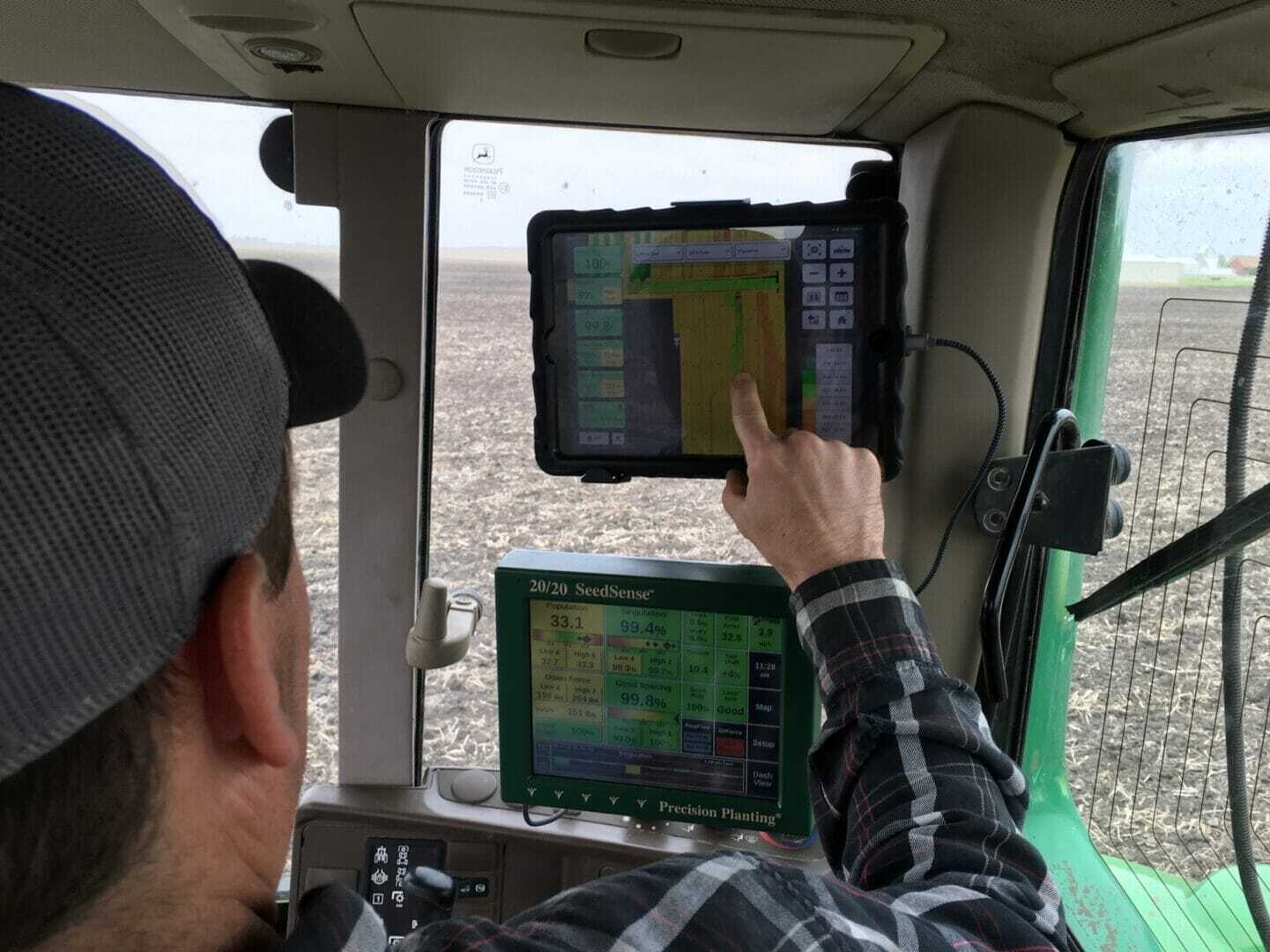
Having a plan, and the execution of that plan with corn planting is critical to maximizing the yield potential with today’s high yielding hybrids, and many of these management decisions are made well before planting. Some of these choices may be hybrid, crop rotation, tillage, nutrient placement, target planting rate, and even planter upgrades.
One of the most crucial key management decisions to look at is achieving uniform plant emergence. If we do not achieve even emergence throughout the field, everything else we worked hard to achieve such as singulation, target population, and spacing will not matter if they don’t have even emergence.
Consider three things when trying to achieve stellar emergence: Simultaneous, quick, and secure. Consistent heat and moisture are two things needed when a seed is planted. Tillage, residue management, downforce, and closing the furrow, are just a few variables to manage attaining even emergence.
Let us help you with these management decisions to attain even emergence and a picket fence stand. Call 1-877-GO-LATHAM to schedule a Data Forward Needs Assessment.
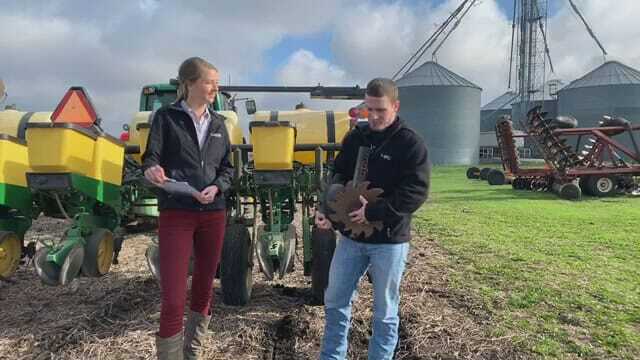
What’s the proper height adjustment for your row cleaners? Tune in to find out! We will go over three scenarios: no-till, reduced till and conventional till. #AskTheAgronomist
https://www.facebook.com/LathamSeeds/videos/347855382746136?sfns=mo
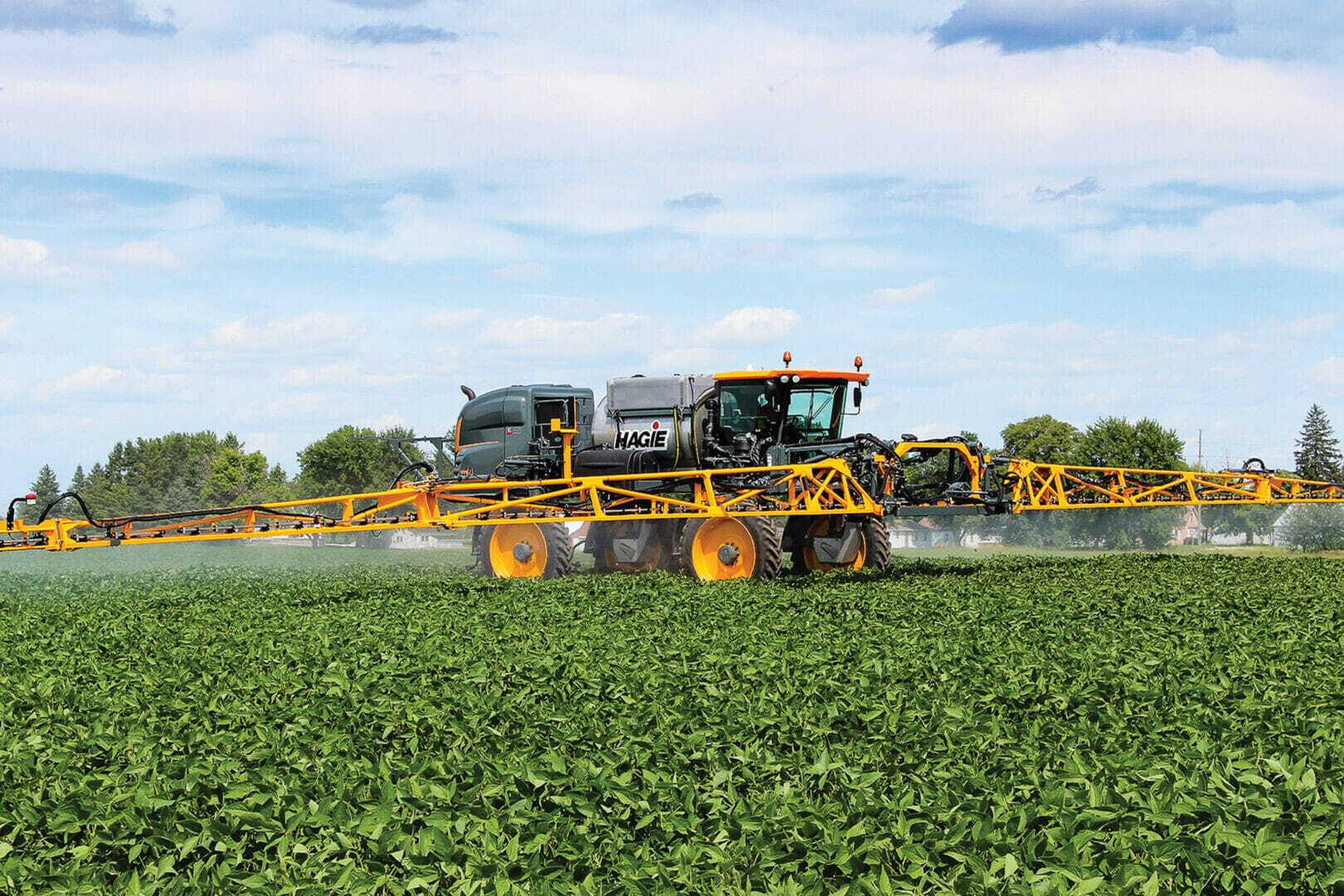
In 2018, the EPA extended the registration for over-the-top use of select dicamba products to control weeds in soybean and cotton fields that are genetically engineered to resist dicamba. This registration included label updates which add certain measures to further minimize the potential of off-target damage. This registration will automatically expire on December 20, 2020, unless the EPA extends it further. Listed below are some of the FEDERAL updates now in effect:
Minnesota: Must not apply dicamba herbicides after June 20th. There will be no temperature restriction for 2019.
North Dakota: Must not apply dicamba after June 30th. Keeping records of dicamba applications is required and will be strictly enforced.
South Dakota: Must not apply dicamba after June 30th, 45 days after planting or the R1 (beginning bloom) stage of soybeans, whichever comes first. Applicators must also pass a short exam after training is completed.
Illinois: Must not apply dicamba after June 30th. Do not apply when the wind is blowing toward adjacent residential areas. Before spraying, the applicator must consult the FieldWatch sensitive crop registry. Further restrictions apply when spraying near the downfield edge of any Illinois Nature Preserves Commission Site.
These are just some of the new requirements for the application of dicamba over-the-top of soybeans in 2019. There may be additional restrictions from the states not mentioned above or from local authorities. If you will be applying any of the dicamba products in 2019, make certain you attend the required ANNUAL training and conform to what the label requires. Please make these restrictions a high priority so we can continue to use this valuable tool in the fight against weed resistance!
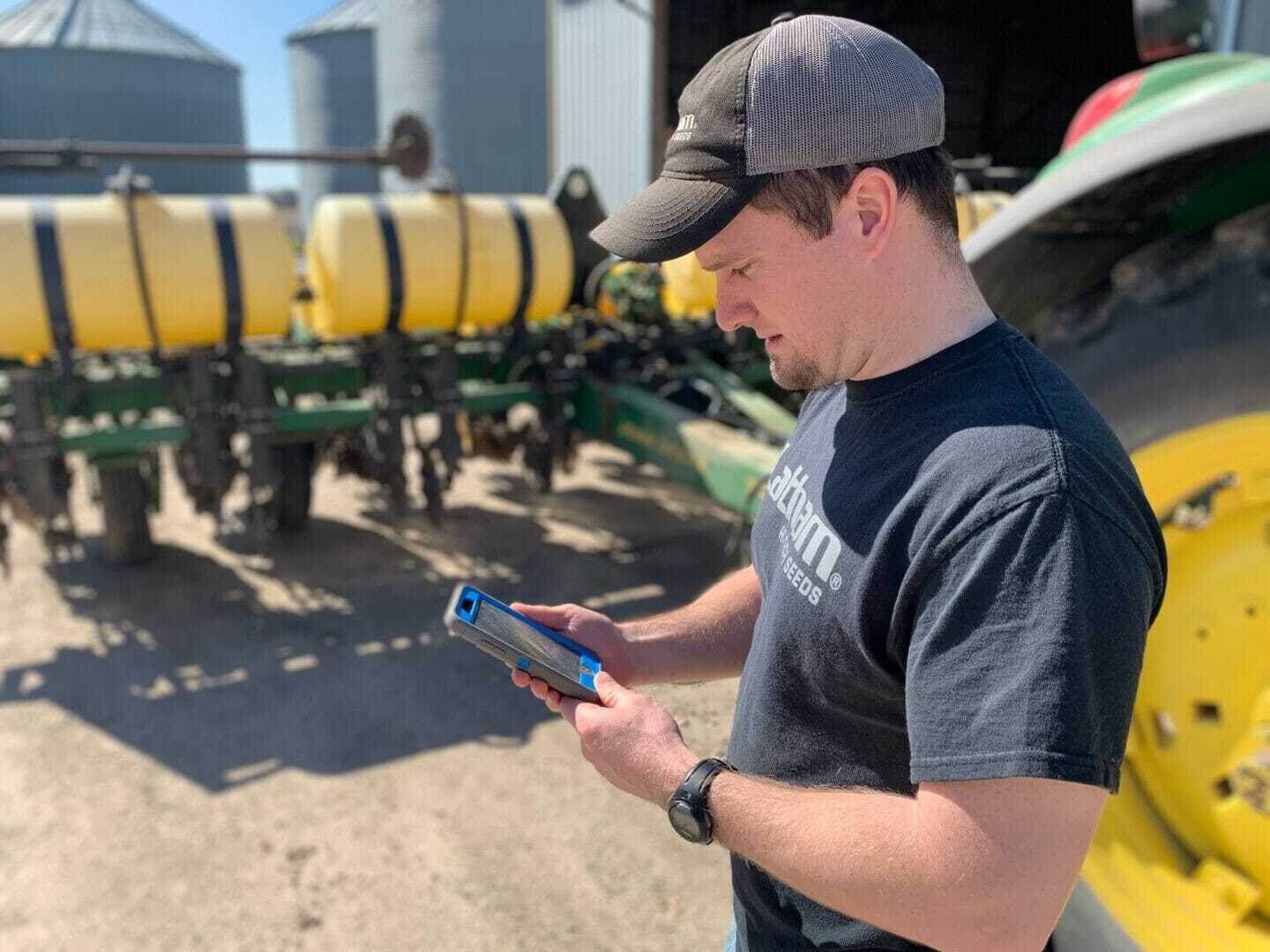
 Viewing equipment in real time offers benefits like knowing how close an operator is to finishing a field, and this feature just got easier thanks to technology. Climate FieldView has released a cab app for iPhones that will help farmers coordinate filling planters in the spring and semis during harvest.
The opening map screen on the phone app is an interactive weather radar. From the menu, “remote view in” to another account. You will quickly see which field operations are underway in real time.
This new app also allows you to pull up reports that you can print or send. For example, you could send a planting summary to a landlord as soon as you finish planting the field. Simply pull up the “Field Planting Summary” PDF file and email this file from the tractor cab. You also may view reports “by hybrid” to see how many acres of each hybrid you have in the ground and at what population. If you’re running more than one planter, you can view reports “by planter.”
Another feature of the iPhone Cab App (and on the iPad version) is the ability to “log out” of the app and into another account, so you can toggle between accounts to log data. This feature may be especially useful for growers who have more than one Climate account or who custom farm ground for farmers who also use Climate FieldView. NOTE: Those who custom farm multiple farms with separate Climate accounts may find it remains faster and easier to log the data under your own account then send “field files” to that particular Climate account.
One more announcement Climate recently made is a partnership with NAU Crop Insurance Company, which covers acres across Latham Country. Climate also partners with Farmers Mutual Hail Insurance Company, which allows simplified reporting for crop insurance. This eliminates manual reporting errors and can speed up the reporting process.
Hopefully, these new features will help make the 2019 planting season more productive so you’re less fatigued.
Have a safe spring!

Will late anhydrous application timing hurt your ideal corn planting window? Tune in to find out!

 As prices have dropped over the last two months, farmers are second guessing planting intentions. They are looking to cut costs, and often times cost cutting starts at cutting seed costs. Keeping the hybrids with top yield and proven performance versus picking up a cheaper option is key to end-of-year profit. Cheap seed options can be older genetics, poor performing genetics or even discontinued genetics reaching the end of their life and viability.
It doesn’t take much to make up for inferior genetics as in perceived seed savings. Cutting $50 a bag is only saving $20 an acre, or roughly seven bushels. One cost savings that may be applicable to North Dakota farmers would be changing from a VT2 PRO to a Roundup Ready 2 trait. Keep the genetic that performs on that particular field and save the difference in trait costs. However, It may require more attention to pests throughout the growing season and an additional cost of an aerial application with insecticide. Check with your Latham® dealer on availability and your agronomist about the rising potential for future pest issues in your area.
Farmers can add fertility after the crop is established. They can also add weed control after the crop. However, there’s only once chance to place the right seed on the right acre. Seed is truly the foundation for every successful crop. Why limit net farm profitability from the onset?

Join us this morning as we discuss the final “R” in our nitrogen application series! #AskTheAgronomist
https://www.facebook.com/LathamSeeds/videos/320955165207264?sfns=mo
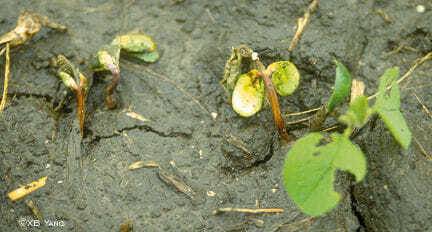
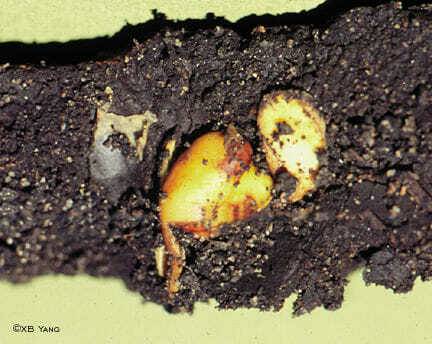 Rotting of soybean stem and root tissue, or “damping off,” can jeopardize stand quality and reduce yield. The Phytophthora fungi can impact seedlings both before and after emergence. Even if seedlings successfully emerge above the soil, they will have poor vigor and slow early growth.
Poor stand is one of the primary consequences of damping off, though replanting may be possible. North Dakota State University research cites that Phytophthora-related yield loss has reached up to 30% in states throughout the Midwest.
Cool weather is a major cause of damping off as it slows germination and stifles growth. Phytophthora thrives in soil temperatures between 70 and 77°F but can also survive in extremely cold temperatures. Warm temperatures, poor drainage and/or clay soils create a susceptible environment for damping off.
 Before seedlings emerge, the fungi can cause seeds to rot. Rotten seeds will appear to be caked in soil with discolored roots. Roots may not be fully developed or even exist.
Wilting can occur in emerged seedlings as the cotyledons will appear brown and saturated. Plants that developed leaves before showing signs of damping off will begin to turn a grayish color before turning brown.
Damping off can sometimes be confused with herbicide injury. Whereas fields impacted by herbicide injury will have uniform damage, damping off will create inconsistent patches of impacted crops.
With the overwintering nature of the Phytophthora fungi, controlling the amount of field residue can make the environment less conducive for fungal growth. Also, when planting early or in fields with poor drainage consider using fungicide seed treatments to protect seedlings.
Varieties equipped with genes resistant to Phytophthora will protect plants after they emerge and later in the season as well. Contact your local Latham® representative to determine which varieties will work best for your needs.