Skip to content
Latham Hi-Tech Seeds

(641) 692-3258

  • Home
  • Performance
  • Products
    • Corn
    • Soybeans
    • Alfalfa
    • Corn Silage
    • Seed Guide
  • Find a Rep
  • Media
    • Blog
    • News
    • Videos
    • Podcasts
    • TECHTalk
  • About Us
    • Company History
    • Our Mission
    • Careers
    • Become a Rep
    • Sowing Seeds of Hope
  • Contact Us
  • Latham Hi‑Tech Seeds

    Note Effects of Frost and Plan Accordingly for Harvest

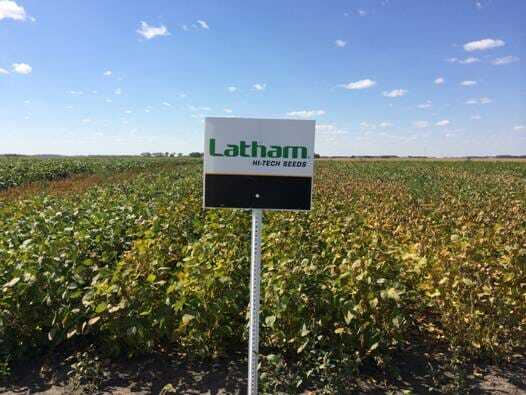
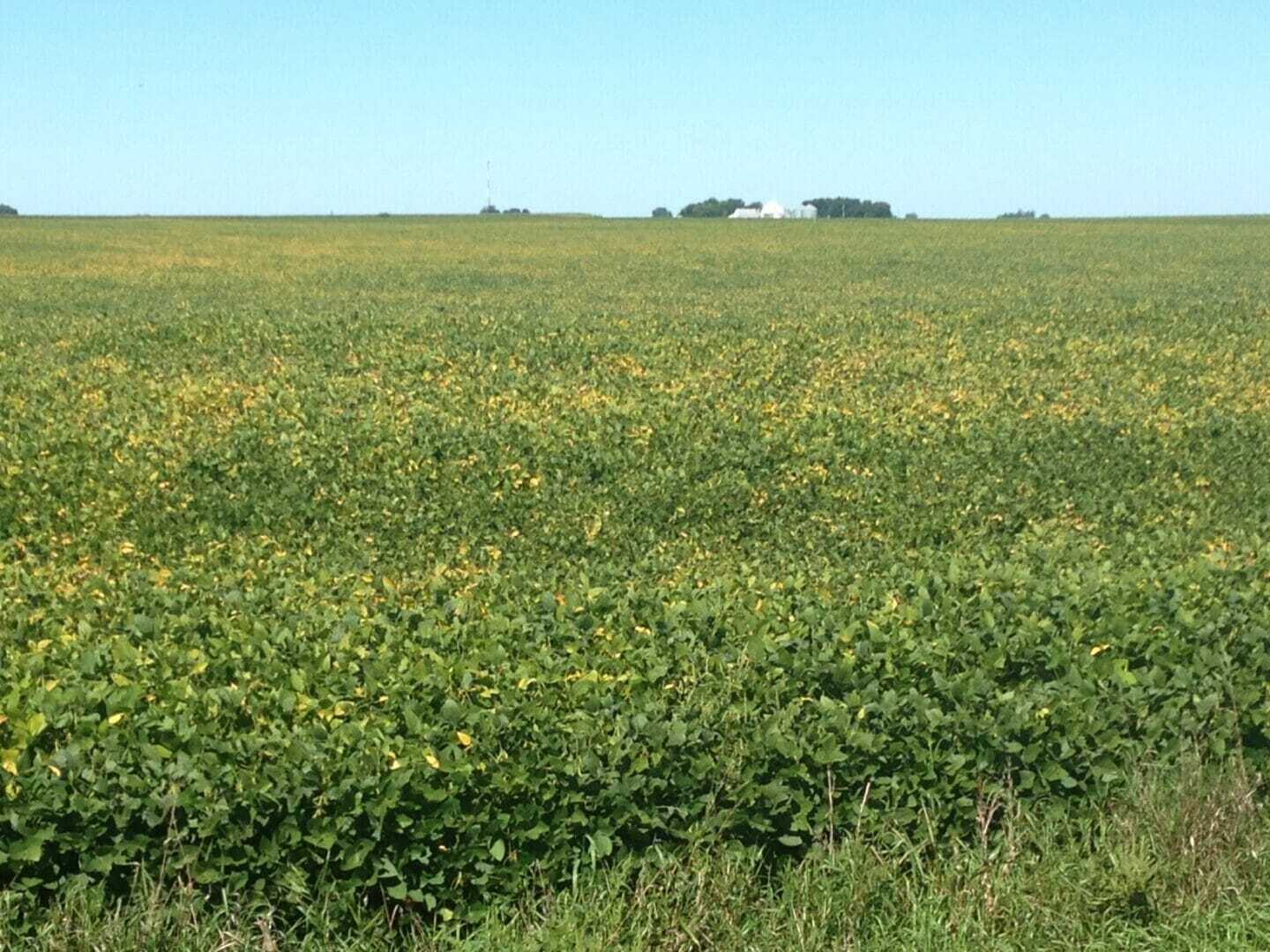
    Frost damage Soybean2

    Weather is always a concern for farmers – and rightly so. Weather accounts for 70 bushels per acre, or 27 percent, of total yield! In research conducted by Dr. Fred Below, Professor of Plant Physiology at the University of Illinois, weather ranks as the most important factor affecting corn yield.

    Corn and soybean crops across Latham Country were affected by a mid-September frost. Effects of the frost appear to be highly variable based on local climate conditions, crop maturity, and topographical features.

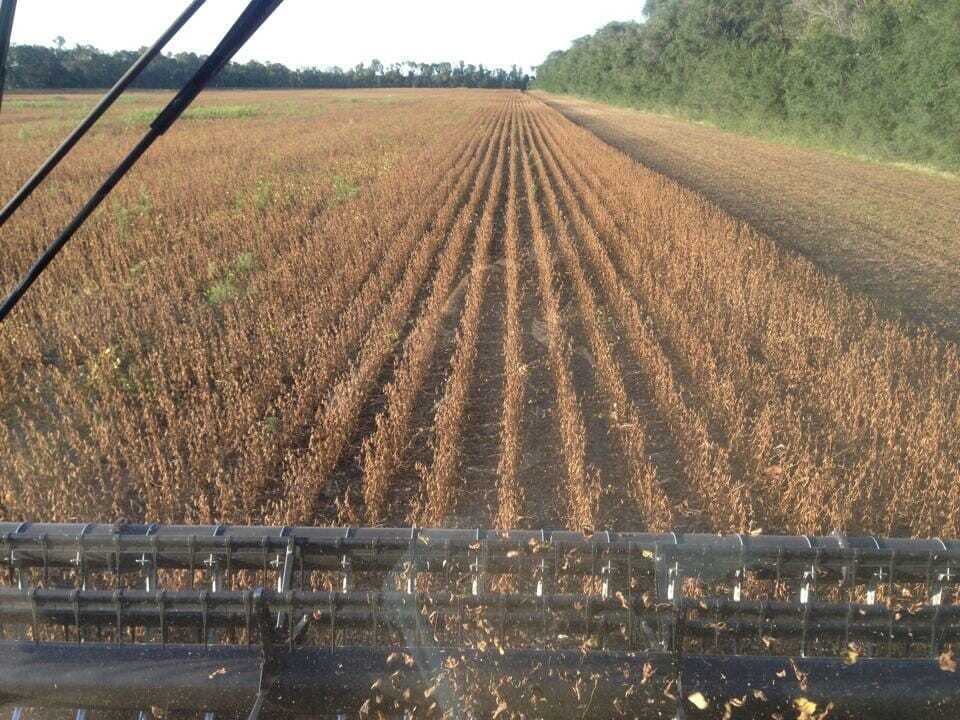
    frost damage Soybean2If you haven’t yet already done so, now is the time to scout crops affected by frost and prioritize fields for harvest. The amount of damage to corn from a frost or killing freeze depends largely upon two factors: (1) How cold it gets and for how many hours; and (2) The plant’s stage of development.

    When grain filling is stopped by frost/freeze damage, the grain itself is often impacted. Test weights are often impacted, and kernels tend to be softer and more susceptible to mechanical and drying damage.  Misshapen and broken kernels impact air movement through dryers and storage bins, increasing the potential for losses at those stages as well.

    When accessing frost damage in soybeans, watch for these characteristics:

      • Green or elongated yellow soybeans that shrink to smaller than normal size after drying.
      • Reduced oil content and quality.
      • Higher moisture level (by 1% to 2%) than indicated by a moisture meter.
      • Slower field dry-down.

    Take note of crop damage and prioritize fields accordingly. Focus first on fields that are exhibiting lodging or are at the greatest risk of lodging. Rank and then harvest the fields where stalk lodging or stalk rot is the worst. Hybrid maturity and crop residue management should take a backseat to weak stalks.

    Stalk quality problems often are not apparent until mid- to late September in years where crop development is delayed. Monitor corn fields for compromised stalk strength or the development of severe stalk rots, and adjust your harvest schedules accordingly. Harvest these fields early in the season to avoid the consequences of severe stalk lodging.

    Prioritizing corn fields for harvest is always important. This year it may be even more so as there were so many variables affecting crop growth and development from planting through harvest. There are some areas that received enough rainfall, so the crop is growing fairly evenly across the field.

    In a wet spring like we experienced, roots – or lack thereof – can be a real issue. Stalks could be weaker and the plants may be smaller in very wet or ponded areas of fields. Wet soils are more of a significant factor with bad roots or root lodging, and that would affect harvest decisions.
    September 25, 2014
    Fall, Frost, General, Season, Weather
  • Latham Hi‑Tech Seeds

    Attention Turns to Harvest

    GaryG 9 17beans
    Latham® dealer Kyle Geske starting harvest on Latham L00938RR soybeans
    Latham® dealer Kyle Geske starting harvest on Latham L00938RR soybeans

    Our season of extremes continue. This past week we experienced extreme temperature differences, as temperatures at one point as low as 33 degrees but daytime highs reached 90 degrees in Northwest Iowa.  This past weekend also brought another rain event – or two – to the area. Top soil moisture is 80% adequate, and subsoil moisture is 79% adequate.

    Although last week’s early frost nipped immature crops, 76% of Iowa’s corn and 74% of our state’s soybean crop are in good to excellent condition. Click here to see how crops are faring by region across Latham’s six-state marketing footprint.

    Team Latham

    September 24, 2014
    Fall, General, Season
  • Latham Hi‑Tech Seeds

    Light Frost Nips Immature Crops

    Image002

    After getting a later start at planting in many areas, followed by even later replants in many areas, farmers across Latham Country were hoping for a late frost. An early frost affected many regions across the Midwest, which might have an impact on some corn and soybean yields. The minimum temperature of the freeze and the growth stage of the corn influence the potential yield loss.

    To see how crops are faring across our six-state marketing footprint, click here.

    Team Latham

    September 17, 2014
    Fall, Frost, General, Season, Weather
  • Latham Hi‑Tech Seeds

    Wet Weather Continues

    NickC 9314

    NickC-9314Above-average temperatures and frequent rains continued this week. At Latham headquarters in North Central Iowa, about 7 inches of rain has fallen during the past 9 days. Some parts of the state could use a break from the wet weather, however, the crop remains in very good condition. Iowa Secretary of Agriculture Bill Northey, today on KILJ Radio, reports that 76% of corn and 73% of the state’s soybeans crop is in good to excellent condition.

    Diseases like Sudden Death Syndrome continue to surface. Keep a watch on stalk rots, which can help prioritize fields for the upcoming harvest. Scouting reports will also be helpful as you select seed now for next year’s crop. Click here for regional crop updates in the territories we cover.

    Team Latham

    September 3, 2014
    Fall, General, Season
  • Latham Hi‑Tech Seeds

    Ease Your Worries with Pre-Harvest Prep

    Harvest Checklist1

    Ever since the cicadas began to sing in mass, folks have been predicting when the first frost will hit. More than one Midwest farmer is worried about how frost will impact late developing corn.  While it may give us something to talk about, the first frost is beyond our control.

    “Worry is not preparation,” so let’s instead channel our energies into preparing for harvest.  Make a pre-harvest check list to ensure you’re ready, regardless of when harvest begins.  To preserve maximum yield, you may need to harvest at higher moisture levels this fall.  In addition to having combines and other equipment in tip-top condition, it’s important that drying facilities are clean and ready for use.

    You can also prepare now by prioritizing corn fields for harvest.  Fields under stress from either too much water this spring or a lack of rain this summer will warrant special harvest considerations.  Closely watch those fields that show nitrogen deficiencies as the potential for stalk rot increases when nitrogen leaches.  Plants need enough nitrogen to fill the kernels plus maintain plant health.

    Check stalk strengHarvest_Checklistth by pinching the lower internodes on the plant and feel for weakness.  The root mass can affect the plant’s ability to stand up against late-season winds.  Late-season heat may also affect the ear shank.  If the shank gets weak from heat, it usually kinks or has a sharp bend.  A high-yielding hybrid may also cannibalize itself to maximize yield.  To check for these issues, walk into a field and shake the plants.  Watch to see if ears fall.

    Roots can be more of an issue than stalks in a wet spring like we experienced.  Saturated soils limit the growth of root hairs and brace roots, making the total root mass much smaller.  If those plants grow close to full size, that puts a lot of stress on the plant later in the year –either it may not have the ability to take up enough nutrients or the plants may lodge if there is a late-season wind or wind and rain event.

    Plan for the worst and hope for the best, as the old saying goes.  With so many consecutive days of excessively high temperatures, it’s hard to imagine it being cool enough frost anytime soon.  Hopefully mild temperatures are on their way – and will last well into October.  If the weather should take a turn for the worse, however, at least you won’t be caught off guard.

    August 29, 2013
    Fall, General, Season
  • Latham Hi‑Tech Seeds

    Goal: To Consistently Raise 300-Bushel Corn

    PeterBixel1
    Peter Bixel

    Farmers throughout history have raised corn yielding 300 bushels per acre (bu/A).  In 1985, Illinois farmer Herman Warsaw produced corn yields of 370 bu/A.  Warsaw spent years working toward his goal.  He patiently built up soil nutrition and tilth for better plant health.

    So what do we need to do to raise 300-bushel corn?  Like Warsaw, we must commit to plan.  Our plan must involve soil fertility, which takes into account nitrogen and micronutrients.  Weather dictates when nitrogen (N) can be applied, its availability to the plant and its usability by the crop.

    Nitrogen loss can occur immediately after application, and leaching can occur after N has been incorporated into the soil.  That’s why renowned corn yield researcher Dr. Fred Below uses a stabilizer when applying his nitrogen.  His fertility program also includes aggressive rates of Phosphorus (P) and Potassium (K) to push for higher yields. Potassium is very important but is often lacking, especially in a drought year like 2012.

    “As growers, we need to look at agronomy first.  It’s important to build a good database for each field, understand interactions of nutrients and use the tools to apply the agronomy,” said Ron Olson, who was one of the first consultants nationwide to use GPS/GIS tools to assist farmers in managing Precision Ag databases.  From 1974 to 1996, Ron owned an independent agronomic consulting company based in Illinois.

    Today Ron serves as Research and Development Manager – New Products for the Mosaic Company.  During a recent presentation in Des Moines to Seed-2-Soil and SciMax client, Ron admitted that a lot of work must be done to consistently achieve 300-bushel corn yields.  However, he says taking incremental steps will lead to higher yields overall.

    Nutrient management is key to increasing yield, according to research done in cooperation with Dr. Below and the University of Illinois.  This research uses “omission plots” that compare corn both with and without fertilizer, fungicide, insecticide and seed treatments.  While yields increase with each of these additions, fertility has the most impact.

    In addition nutrient management, other factors influence yield.  Click here to see Dr. Below’s 7 Wonders of the Corn World, which are the seven factors that have the most influence on yield.

    Team Latham

    February 25, 2013
    Corn, Crop, Fall, General, Season
  • Latham Hi‑Tech Seeds

    Singing the Praises of Autumn Rains

    Rainy21

    Rainfall slowed harvest last week, but no one is complaining.  Ninety-five percent of the corn crop has already been harvested and soils statewide desperately need moisture.  As a result of the recent rainfall, topsoil moisture levels have improved to 31% very short, 38% short, 29% adequate, and 2% surplus.  Subsoil moisture improved and is now rated 60% very short, 34% short, 6% adequate, and 0% surplus.

    Subsoil moisture is the first indication of next year’s crop, says Iowa State Extension Climatologist Elwynn Taylor.  We’re still facing dry conditions, and there’s a 22% chance that next year’s growing conditions will be as bad those we faced in 2012.

    The good news is there’s a 60% chance that conditions will be better in spring 2013.  Autumn rainfalls can go a long ways toward replenishing soil moistures.  Taylor says 1 inch of rain equates to more soil storage in the fall and spring versus in the summer because (1) not as much moisture is being lost to warm soils and evaporation; and (2) no moisture is being taken up by growing plants.

    Another reason why fall rains “goes further” is there are fewer drying winds.  For example, the drying rate for April 15 was 0.2 inches and .14 of an inch for Oct 15.  It took 5 days to dry 1 inch of water in April and 7 days in October.

    Rainfall over a longer period of time, which allows the moisture to soak into the ground, is more advantageous than a hard rainfall that runs off the surface.  It takes 2 inches of soaking rain to replace the moisture in one foot of soil, although this varies slightly depending on soil type.  During the 2012 growing season, roots used the water down to 8 or even 10 feet in some places, so now we need 16 to 20 inches of soaking rain to replace those water levels.  Fortunately, the rainfall we’ve received over the past two weeks have been gentle rains for the most part.  We assume 70% of the rain soaks in, so 10 to 12 inches of rain over a long period could conceivably recharge 5 feet of soil.

    Thanks to Taylor’s insights, we’re singing the praises of autumn rain.  We’re also doing the rain dance because we’re still facing dry conditions here.  Hopefully, we’ll be singing the rain sometime soon!

    Team Latham

    November 1, 2012
    Fall, General, Season
  • Latham Hi‑Tech Seeds

    Adjust Combines for Drought Conditions

    It’s going to be an early harvest – perhaps three to four weeks earlier than “normal.” As we posted in our Aug. 15 crop report, crop conditions are well ahead of the 5-year average with 94% of the corn crop already at the milk stage and 80% at dough stage. Third crop alfalfa is one month ahead of schedule.

    That means the time is now to prepare for harvest! Harvest, for both and soybeans, typically begins in the Midwest between Sept. 17-27. Soybean harvest is usually finished by Halloween. Corn harvest is most active Oct. 5 through Nov. 10 and usually ends before Thanksgiving.

    It’s certainly not going to be “harvest as usual” this fall. Harvest will begin sooner and most likely progress slower. With weak and/or lodged stalks and stems, slower combine travel speeds will help ensure the crop feeds into the combine as easily as possible. Finding the correct travel speed to balance machine field with crop quality requires checking both losses behind the combine and grain quality in the tank, says Iowa State University’s Mark Hanna with the Department of Agricultural and Biosystems Engineering.

    Be sure to adjust combine settings for drought conditions. The gap between snapping plates above the stalk rolls on a corn head should be adjusted this year. In normal years, a gap of 1.25 inches is used. Given the situation this year, however, that gap most likely should be narrowed to just over an inch to avoid butt shelling of smaller diameter ears. The use of a reel, cones or divider modifications on the corn head may also help pick up more of the lodged corn.

    To help reduce the amount of lodged corn at harvest time, assess crop progress now and identify potential problem areas. Focus first on harvesting fields that show signs of Stalk Rot or exhibit weakened stalks that could subsequently lead to Stalk Lodging. Secondary concerns include hybrid maturity, crop residue management and logistics.

    Prepare now for a safe and fruitful harvest!

    August 16, 2012
    Drought, Fall, General, Season, Weather
  • Latham Hi‑Tech Seeds

    TIPS TO AVOID COMBINE FIRES

    Dry conditions and strong winds have contributed to several combine and field fires across the Midwest this harvest season.

    Remember to clean and maintain your machines regularly because static electricity, which is generated as the combined moves through the field, can ignite the residue.  Use a pressure washer or a compressed air blowgun to thoroughly clean your machine.  Remove excess crop residue from rotating units.  Frequently blow leaves and chaff off the engine with compressed air or a portable leaf blower, and remove wrapped plant materials on or near bearings, belts or other moving parts.

    Mark Hanna, Iowa State University Extension agricultural and biosystems engineer, offers additional tips to prevent combine fires:

    • At the beginning of each day, check engine fluid levels (such as coolant and oil).
    • Check the pressurized oil supply line to the turbocharger shaft for areas that may rub from wear and start an oil leak.
    • Examine exhaust or hot bearing surfaces.  Repair leaking fuel or oil hoses, fittings, or metal lines immediately.

    If a fire does occur, CALL 911 FIRST.  Then attempt to extinguish the fire by pulling the pin on the fire extinguisher and squeezing the handles together.  Aim the nozzle at the base of the fire and sweep from side to side.  Remember P.A.S.S., which stands for Pull, Aim, Squeeze, Sweep.  For more tips on how to avoid and handle a combine fire, click here for a related Farm Journal article.

    October 6, 2011
    Fall, General, Season
  • Latham Hi‑Tech Seeds

    HARVEST PROGRESSES LIKE WILDFIRE

    Gusting winds, dry plant material and hot combines sparked several field fires last week throughout Latham Country.  A combine fire on Thursday caused fire to stretch two miles wide and 1 mile long near Kanawha in North Central Iowa.  As a result, law enforcement officials asked farmers to temporarily cease harvesting due to the elevated risk of fires.

    Although harvest came to a temporary halt in some areas, great progress was made statewide over the last seven days.  Twelve percent of Iowa’s corn crop has been harvested, according to the National Agricultural Statistics Service report on Oct. 3, which is ahead of the 10 percent five-year average.  Ninety-eight percent of Iowa’s soybean crop has turned color, but just 21 percent of the soybean crop has been harvested to date.

    Select a territory in the map below to view a region’s most recent crop report, provided by Latham’s regional sales managers

    Team Latham

    October 5, 2011
    Fall, General, Season
Previous Page
1 … 9 10 11 12 13 14
Next Page

Latham Hi‑Tech Seeds

131 180th Street | Alexander, IA 50420

(641) 692-3258

SIGNUP FOR OUR NEWSLETTER
  • Contact
  • Legal
  • Seedware Login
  • Latham Gear

© 2026 Latham Hi‑Tech Seeds. All rights reserved. | Privacy Policy

Latham® Hi-Tech Seeds is a trademark of M.S. Technologies, L.L.C., 103 Avenue D, West Point, IA 52656.