Skip to content
Latham Hi-Tech Seeds

(641) 692-3258

  • Home
  • Performance
  • Products
    • Corn
    • Soybeans
    • Alfalfa
    • Corn Silage
    • Seed Guide
  • Find a Rep
  • Media
    • Blog
    • News
    • Videos
    • Podcasts
    • TECHTalk
  • About Us
    • Company History
    • Our Mission
    • Careers
    • Become a Rep
    • Sowing Seeds of Hope
  • Contact Us
  • Latham Hi‑Tech Seeds

    Keep your hands off my plate, Big Brother!

    10945723 934955563204126 6145299811043838749 n

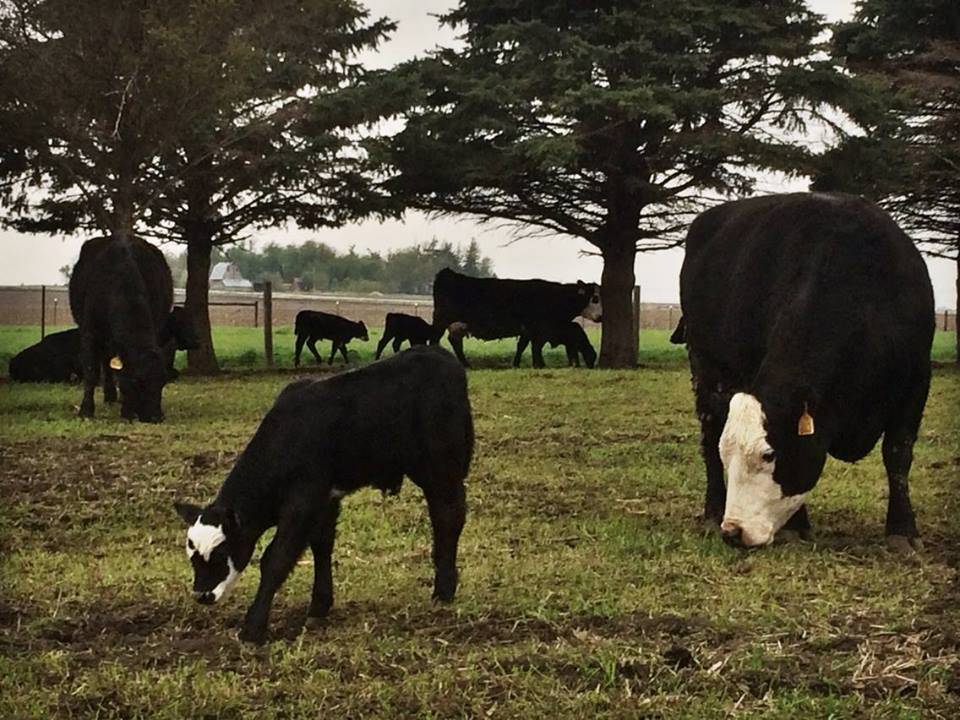
    “Lawmakers from cattle producing states are seeing red following a 571-page federal report that encourages Americans to go green,” according to a Feb. 23 story by Fox News. Beef producers say Obama is trying to kill their industry by proposing dietary guidelines that call for a reduction in red meat intake as a way to reduce Americans’ carbon footprint.

    4782_00 TangyLimeGrilledTopRoundSteak_pwm“Every single one of us should be registering a comment on these guidelines,” says Val Wagner, who raises cattle with her husband and children in North Dakota. “Guidelines have a funny way of turning into regulations and mandates. And this will also set up how nutrition is taught, as well as food assistance funding and even military meals. You have until midnight April 8. Don’t pass by this opportunity.”

    This federal report will become the basis for government food assistance programs, military meals and school lunch programs, which are all “government-controlled programs.” I don’t like it, but I understand how these programs fall under the federal government’s jurisdiction. However, a government (at least in a Republic or a Democracy) should never “control” what gets placed on the plates of its citizens.

    Here’s my beef with the proposed dietary guidelines:

    1. Dictating what, how much and when we eat infringes upon our freedom of choice. What is happening to America, Land of the Free? “Freedom of Choice” has been America’s hallmark since 1776, but are choices are becoming limited by the day. Setting dietary guidelines for beef consumption is one more example of government over-reach. This Administration has already nationalized healthcare, and my Facebook newsfeed has been filled with real-life examples of insurance being canceled since Obamacare was enacted.
    2. Reducing the amount of animal proteins in the school lunch program has been nothing short of disastrous! Due to “healthier meal requirements,” calories per plate are based on the age of children being served. The number of fruits and vegetables served, as well as whole grain foods, has increased. It doesn’t sound unreasonable until you learn this “one size fits all”-style of feeding kids does not take into account kids with high levels of physical activity. It also doesn’t take into account a child’s body mass, so a 5-year-old kindergarten student receives the same amount of food as an 11-year-old boy in the 5th grade.
    3. Today’s farming practices are sustainable. I don’t believe an environmental warning belongs in a nutritional report. Even if the environment was germane to nutrition, it’s unfounded.The ruling administration in Washington is taking special time out to bad-mouth a law-abiding industry. “Sustainability” is a certainly a buzz word today, but America’s farmers have been moving along the sustainability continuum for 25 years.


    Congress addressed sustainability in the food and farming system as far back as the 1990 Farm Bill, wrote The Foodie Farmer (aka Registered Dietician and New England farmer Jennie Schmidt) in a February 21 post: “Under the law of the 1990 Farm Bill, the term sustainable agriculture means ‘an integrated system of plant and animal production practices having site specific application that will, over the long term:

    • Satisfy human food and fiber needs.
    • Enhance environmental quality and the natural resource base upon which the agricultural economy depends.
    • Make the most efficient use of nonrenewable resources and on-farm resources and integrate, where appropriate, natural biological cycles and control.
    • Sustain the economic viability of farm operations.
    • Enhance the quality of life for farmers and society as a whole’.”

    The Foodie Farmer blog post goes on to graphically illustrate the strides farmers have made by implementing best management practices (BMPs). It shows how farmers and ranchers are producing more food with fewer resources, as well as effectively refutes the Dietary Guidelines Advisory Committee (DGAC) stats that “up to 30% of human-generated greenhouse gas (GHG) emissions as EPA data shows otherwise. Click here to see how continuous improvement in the livestock sector allows us to produce meat today using less land, water and feed.

    Agricultural productivity gains are vital to enable the global population access to healthy, nutritious and affordable food. Food production starts with a seed, so the seed industry plays a critical role in providing farmers with quality seed to meet the world’s demand for food, feed, fiber and fuel.

    At Latham Hi‑Tech Seeds, we follow basic ground rules: combine the industry’s best genetics with the latest trait technologies to produce products that excel in local growing conditions. It is our hope by doing this, we can have a not only a positive impact on the farmer’s long-term success but on the environment and societies we serve. That’s why we’ll be submitting our comments on Dietary Guidelines for Americans, 2015.

    I urge you – regardless of whether or not you produce cattle – to also comment online here. Why? The former lobbyist in me believes this is precedent setting… How much of your life do you want the U.S. government to control? The entrepreneur in me wants to let the free market to rule!

    Related Posts:

    • New School Lunch Regs, One Hot Potato
    • New School Lunch Regs: The Quest for a Balanced Diet
    • Act Now to Restore Common Sense to School Lunch Program

    Team Latham

    March 4, 2015
    Agriculture, General, Industry News
  • Latham Hi‑Tech Seeds

    God, Family & Country… Are Priorities that Simple?

    1800009 712318616858 2076779985 o

    I’ll be honest. Today’s blog is not the one I had originally intended to write. Today’s blog isn’t one I ever wanted to write! Yet, for the past six days, I’ve found myself thinking about my life here on earth. I have found myself asking this question, “If I Died Tomorrow, Would I Have Done Enough”?

    Amy Hild Latham Hi‑Tech SeedsI’m old enough that I have attended many funerals, but I was not prepared for yesterday’s funeral of a young friend killed last Wednesday in a traffic accident. Amy Hild, a graphic designer at Latham Hi‑Tech Seeds, played an instrumental role in getting my weekly blog post published. She inserted photos and videos, as well as created one-of-a-kind graphics to support my key messages. She was always ready to help an old pig farmer with technology.

    Many times I would ask Amy to explain the same thing to me over and over ––like how and where to upload videos. Even though it seemed like I would forget from one week to the next, Amy was always patient and helped me with a smile. In fact, Amy is remembered by thousands of folks for her energy and kindness.

    Amy’s untimely departure from this earth got me to thinking about death, and all of my “unfinished business.” I’m constantly pulled in many directions. As much as I try to keep my priorities straight, I constantly wonder when enough is enough. I know my priorities are: God, Family, and then Country. But is it really that simple!?

    As much as I dislike writing about me, today I’m going to share my story in hopes it makes a connection with someone.

    God
    I am an elder at my church, but is that enough? Am I leading the next generation to follow? It’s difficult just keeping me in line most days, but I know there is always more that can be done. Here I try to let my faith lead me. Two big projects are in the works: a building addition and helping veterans adapt to coming home.

    Family
    Family is Enough
    I have a big family: five kids, 10 grandkids with another grandkid on the way, plus news of the first great grandkid. Here I know I can never do enough! Because it’s a life style, I also think of my farm when I think of my family. I feel like I haven’t done enough for my farm either. Before I was raising a family, I was building toward a large farm operation. I was even classified as one of those 1970s young farming “tigers.” Then the 1980s Farm Depression took the wind out of that sail. With a growing family, I need an off-farm business to afford to live. As a result of that decision, our farm has stayed small. Given current grain prices, I know much more needs to be done!

    Country
    I put all my volunteer work under the category of “country.” Yet farming and country are intertwined. Most of the issues we have with farming are caused by off-farm influencers. Fewer than one percent of the population actively farms, but 100% of the population is concerned with what they eat. Such “non-farm interests” have caused me to be involved in politics. I understand how policy is set and regulations are made. Our elected officials are being influenced by many, so I try to be an influencer!

    As much as I do, I can’t help but wonder if I’m doing enough. Most days I have more than one meeting I can, and should, attend. Farm chores must be done every day. My family is always on my mind. My faith is what brings it all together!

    Amy Hild also had a strong faith. Like me, she had developed an appreciation for rural living. She saw the best in people and did her best to help everyone she could. Here’s a look at how many of her blogger friends will remember her:

    An InLinkz Link-up

    Larry Sailer, Musings of a Pig Farmer

    March 3, 2015
    Agriculture, General, Industry News
  • Latham Hi‑Tech Seeds

    In Memoriam of Our Dear Friend and Coworker

    Amy Hild

    Team Latham

    February 26, 2015
    Agriculture, General, Industry News
  • Latham Hi‑Tech Seeds

    Iowa’s Infrastructure is Key to Global Commerce

    Bad Road Ukraine

    School lunch / nutrition recommendations. Mental health. Eminent domain… There are so many bills of interest to Iowa farmers being considered this legislative session. In today’s blog, I’m going to focus only on using Road Use Tax Funds to repair infrastructure like roads and bridges because a well-developed infrastructure is key to traveling roads safely and efficiently. A well maintained road system is also a competitive advantage for Iowa’s leading business, which is agriculture.

    My fear is that our roads are going to fall into such a state of disrepair that we’re going to be driving in conditions like those in Third World Countries. Poor and developing countries don’t have funding mechanisms for roadways, and as a result, their businesses – even their entire economies – are hampered.

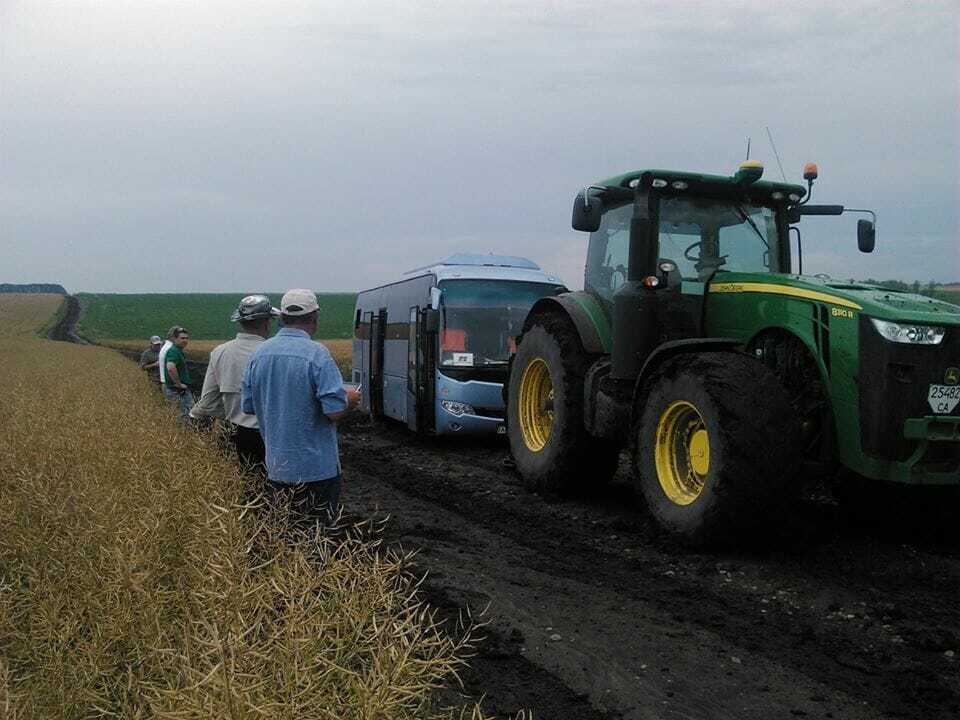
    I saw firsthand what happens when roads are not maintained when traveling through Eastern Europe as part of the Iowa Farm Bureau’s Black Sea Study Trip. Words alone can’t adequately express the horrible road conditions we traveled from village to village throughout Ukraine. There were so many potholes that our bus driver couldn’t go around them, so he drove on the shoulder. As we watched semis travel these same roadways, I noticed unusual tire spacing in an effort to span the potholes. Each truck driver also carried an unusual number of spare tires. Just imagine the extra expense of all that tire repair!

    Bad-Road Ukraine

    Traveling from farm to farm in Ukraine was even more difficult as the roads were dirt paths. After a small rainfall – perhaps a tenth (inch) or two (tenths), our bus would get stuck. A bunch of us Iowa farmers tried to push a tour bus up a muddy road, we but had to concede and call a local farmers to pull us to the farm with his four-wheel-drive tractor.

    My concern is that we’re going to have similar experiences here in Iowa. Many of our rural roads are being downgraded, which means they will get very little or no gravel. Yes, that means you’ll find dirt (or mud) roads in the country! It also means that after the snow melts you’ll find more roads embargoed, or closed. All Iowans, including seed delivery trucks and farmers, will be detoured when trying to make deliveries. Re-routing means taking less direct routes that take more time – and more gas.

    Wet weather, combined with the weight of the materials being delivered by semi, caused severe damage to the roads when the wind farms were being built in Franklin County Iowa. Those of us with ground near around where the wind farms were built can tell you what a struggle it was to drive down country roads while the turbines were being built.

    Roads were rebuilt daily around the wind farm construction, but they were still difficult to navigate. As a result, I had an extremely difficult time getting my crops to market that year. I can only imagine how many farmers will be affected if major work is doesn’t soon to roads and bridges.

    wind-farm1

    While we all agree that repairs are needed, there isn’t agreement as to how these repairs should be financed. My Facebook news feed has been filled with lots of opinions on this! Some folks are arguing that tractors, which travel for short distances between fields, should pay fuel tax. Others like myself say it’s unfair to charge road-use tax to off-road vehicles. The amount of fuel that farmers use traveling from field to field is so small that I doubt tax money collected from tractors in Franklin County would come close to fixing one bridge. It would be extremely complicated and time consuming to track fuel used by Iowa tractors on the road.

    If in-field vs. on-road fuel usage by tractors could be sorted out, I’d be more than happy to pay tax on it provided our roads and bridges would be fixed with that money. (Road tax is a protected fund, which is only supposed to fix roads and bridges.) Farmers are already paying thousands of dollars in taxes that should be allocated toward bridges and roads.

    Also keep in mind that the semi trucks, which farmers use to haul grain, run on fuel that has been taxed. Fuel taxes were established to fund road and bridge repair. Don’t these semi truck drivers deserve to have safe bridges and roads on which to operate?

    Property tax on farm land is a huge source of tax that funds much of our county budgets including roads. We have so many regulations constraining our county governments, that they have very little say in how the money is spent. We need roads, but we also need government reform. (I feel another blog post coming on here!)

    Is there money in the Road Use Tax Fund that could be used better? This is the question I’ve heard raised for the last four years, and I believe the answer is “yes.” Decorative bridges are being built when other bridges would have cost much less money. Some decent roads are being rebuilt while others that are in worse condition are being overlooked. There is talk of widening our interstates to allow for more traffic and to make them safer. All good arguments, but while our leaders are arguing, many very needy bridges and roads are not getting fixed.

    Even with more funds available, “prioritizing” will remain problem. Someone still has to decide which roads to fix or build. This is a good place to talk about the formula: How is the money split between different government entities? What do cities get? What do counties receive? What about little towns in rural areas. There current formula for repair dollars is weighted, so the most money goes to areas of higher population. Even with new funding, it will not be shared where it is currently needed most.

    I am not in favor of big government. Far from it! But the U.S. government has certain obligations that include: securing our borders, building infrastructure and protecting the citizens of our country! Government officials would have time and money to take care of their own business if they’d let me mind mine!

    Larry Sailer, Musings of a Pig Farmer

    February 24, 2015
    Agriculture, General, Industry News
  • Latham Hi‑Tech Seeds

    3 Seasons Greatly Impact Farming & Ag Businesses: Planting, Harvesting and Bill Making

    IMG 0567

    IMG_0567Just hearing headlines like “Water lawsuit likely to change farming rules” and “New Senate Bill Proposes GE Labeling” is enough to cause any farmer or seed business owner to lose sleep at night due to concerns about consequences of regulations. Just think how much impact 175,000 bills, which are being filed across the nation this legislative session, could have on our livelihoods!

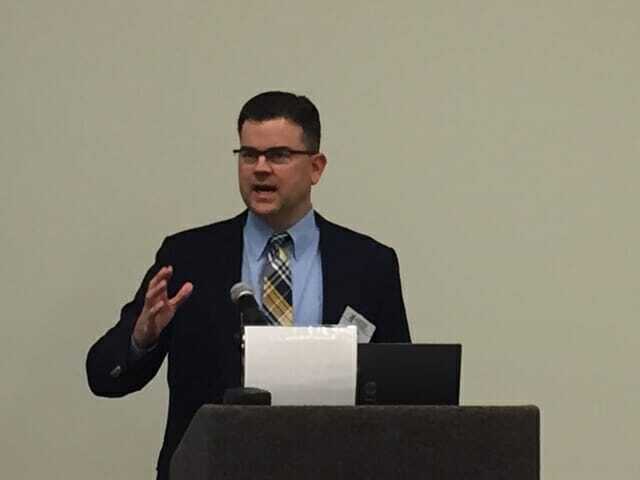
    Serving as North Central Regional Vice President for American Seed Trade Association and as a member of the ASTA Legislative Committee has opened my eyes to the importance of consistency of state laws and regulations. Last week I provided a legislative update during the Iowa Seed Association’s annual convention. This morning I delivered a similar presentation to the Kansas Seed Industry Association, where I shared this staging statistic: The ASTA expects that our members will be actively involved in 150 to 175 bills that have direct impact on the seed industry this legislative session!

    Some federal issues that ASTA is following closely include:

      • Waters of the U.S. – The Environmental Protection Agency (EPA) and the U.S. Army Corps seek to redefine “Waters of the United States” (WOTUS) under the Clean Water Act (CWA). Their new definition expands CWA to ditches, intermittent streams and manmade canals. As a result, waters that have been adequately regulated, monitored and protected for years at the state level would become federalized. Farm Bureau is on record, stating the proposed rule will make it more difficult for farms to remain competitive and profitable. #DitchtheRule
      • Biotech Policy and Food Labeling – Those who cause others to fear their food are also promoting food labeling legislation. Food terms like Organic and non-GMO are greatly misunderstood. Allowing 50 different state GMO-labeling laws is especially confusing and costly, so ASTA has joined a coalition headed by the Grocery Manufacturers Association to introduce federal legislation that will neutralize the need for a state-by-state approach. It promotes allowing the U.S. Food & Drug Administration (FDA) to continue to set national standards.
      • Pollinators & Endangered Species Act – Practical solutions are needed to increase pollinator forage. These are complex challenges, requiring on cooperation between public and private entities to increase forage and habitat areas. Narrowly focusing on pesticides is not the solution.
      • Renewable Fuels Standard (RFS) – Last year the U.S. Environmental Protection Agency proposed a nearly three billion gallon reduction in production targets for the Renewable Fuels Standard. On November 21, the EPA announced that it would not finalize the 2014 levels for the RFS until 2015. There is no clear direction emanating from the EPA on which direction the agency will take.
      • SNAP – Formerly known as “food stamps,” the Supplemental Nutrition Assistance Program (SNAP) cost almost $80 billion last year – twice the amount it cost just five years ago! Page 2 of the FY2015 USDA Budget Summary shows that U.S. Farm and Commodity programs only receive 11% of Farm Bill funding. SNAP accounts for 80% of the Farm Bill.

    Team Latham

    February 18, 2015
    Agriculture, General, Industry News
  • Latham Hi‑Tech Seeds

    It’s Back to the Drawing Board for Farmers!

    Chalkboard

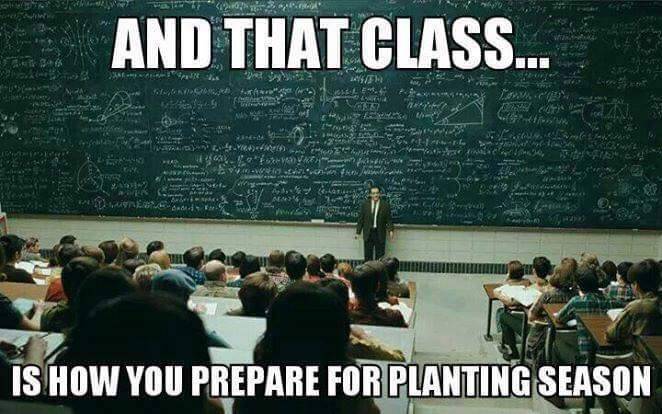
    chalkboardEven if you’re not a sports fan, chances are you’ve seen basketball coaches call a time out and draw up plays as they strategize to beat their opponents. Hollywood movies have taken us inside a football locker room where coaches have drawn up game-winning plans. Likewise, farmers develop a playbook for each season.

    This past week Mohn Family Farms shared a photo of a huge chalkboard filled with facts and figures, implying that farmers must take a lot of information into consideration when preparing for the planting season. Also this week on Rural Route Radio, broadcaster Trent Loos asked why farmers don’t raise something else if they’re certain to lose money on a crop before it even goes in the ground.

    I’ll begin by trying to answer Trent’s question first… “Switching gears” by planting another crop or raising another type of livestock may seem like a logical choice until a person takes a closer look at what that would actually entail. Different types of crops and different species of animals require different types of equipment.

    Until the 1950s and 60s, most farms were quite diversified. It was common for a single farm to raise chickens for meat and eggs, dairy cows for milk, beef cows, hogs and crops including corn and alfalfa for hay. Keep in mind that families also were larger, so available manual labor meant farmers didn’t have to make very big investments in equipment.

    Farming practices and family dynamics changed over time. Equipment replaced farmhands. To become more efficient and to prevent money from being tied up in underused assets, many farmers like me became more specialized. I’m now set up with equipment to raise corn and soybeans. If I were to change to another crop, like alfalfa, I’d need additional equipment to harvest and bale hay. I’d also need a different building for storage since bales won’t fit into my grain bins.

    Deciding to raise livestock can’t be a spur-of the-moment decision as it requires certain facilities and possible pasture ground. I’ve given some thought to raising beef cattle, sheep and turkeys. All of these would require a sizable capital investment as I don’t have the facilities needed to house these types of animals. Even though sale prices are strong now for many of these animals, keep in mind that markets are cyclical. I’m looking for opportunity, but I have to be realistic.

    If I’m being realistic, why would I plant a crop if I’m expecting to lose money on it? I was asked that great question last fall when I was speaking to a class of sixth graders without farm experience. Here’s my answer, “Farmers are by nature optimists with much faith.”

    I have faith that when I plant a seed, a plant will grow. When you do the math, you’ll see that I would lose more money by not planting anything at all. Here are example costs on a per acre basis:

    Rent $250
    Fertilizer $200
    Seed $120
    Crop Protection $35
    Total $605

    An average corn yield is 175 bushels per acre (bu/A). If we take that yield times the commodity price of $3.50 per bushel, I would pretty much break even given that I already have the machinery and equipment needed. Now if I don’t plant any corn, I still owe rent and am out $250 per acre.

    Please note this is really simplified version of input costs, and all farmers face different situations. Some farmers own their equipment while others have equipment leases; some farmers rent some ground while others own all of their ground. The point of this exercise is to show that farmers take the risk of planting a crop based on the hope of a much better outcome.

    Now let’s talk about that chalkboard…

    I start thinking about planting my next crop before the current crop is even harvested. I consider how what I did for the current crop is working: How are my seed varieties performing? Did I place them correctly? There are hundreds of seed choices suitable for different situations. Considering seed options could fill one chalkboard!

    Different soybean varieties and corn hybrids have different levels of resistance to types of insects and disease, which makes them more “defensive” in nature. Defensive genetics can handle stress like plant disease better and tend to be consistent performers year after year, but you’re giving up the potential for top-end yield when you plant them. Other racehorse varieties will give you fantastic yields when growing conditions are ideal for that variety, but yields will be less than desirable in challenging growing conditions. That’s why it’s important to consider the options when selecting seed and manage risk with a crop plan.

    Some types of soybean varieties and corn hybrids perform better on different types of ground. There are hundreds of soil types in Iowa, and my farm has many different soil types in the same field! How do you pick a variety that will give you the maximum yield across that whole field? Another chalkboard filled.

    New technology has produced a planter that will plant different varieties as a farmer goes across his field, but that technology costs. We could fill another chalkboard by doing the math!

    Fertilizing fields and treating for pests brings government regulation into play. All pesticides must meet certain requirements for safety. If you use “natural” fertilizer from your livestock, plan on another chalkboard to meet those regulations! Farmers must take soil and manure sample tests. Then those test results must be matched with the soil types.

    Then there is the decision of tillage: no tillage, minimum tillage or vertical tillage. Should you plant cover crops?

    All of these factors must be considered before farmers plant the next crop, so… one chalkboard isn’t big enough!

    Larry Sailer, Musings of a Pig Farmer

    February 17, 2015
    Agriculture, General, Industry News
  • Latham Hi‑Tech Seeds

    Sparking Conversations around the Kitchen Table

    IFFP iowa cutting board

    The kitchen is the heart of every home, isn’t it? Kitchens tend to be cozy and welcoming. It’s easier to open up when we’re sitting close to one another, chatting over coffee or sharing a hot meal.

    The kitchen is where many important every day transactions take place from doing homework to paying bills. It’s also where we reconnect with family members and friends. Because the kitchen table is where some of life’s most important conversations take place, last week the Iowa Food & Family Project (IFFP) encouraged farmers and consumers to engage in “kitchen table conversations” in its tradeshow booth during the Des Moines Home + Garden Show.

    Home + Garden Show attendees had the opportunity to visit with Iowa farmers like Cristen Clark of Runnells about topics ranging from food labels and sustainability to what farmers doing to prevent erosion and improve water quality.   On Saturday morning, Iowa Girl Eats blogger Kristin Porter autographed copies of the Let’s Cook cookbook. As a Des Moines native, Porter hosts consumers on a journey through agriculture during which they meet with Iowa farmers to increase their confidence about choosing safe and healthy foods for their down dinner tables.

    As a member of the IFFP advisory committee, I had the pleasure of working in the booth last Friday morning. Yes, working this tradeshow was a real pleasure!

    Walking through the Iowa Events Center was like stepping into spring. A large Adirondack chair with potted flowers welcomed attendees inside. Display after display gave show-goers ideas for native landscapes, backyard patios featuring pizza ovens, and even tablescapes that take setting a beautiful table to a whole new level with themed centerpieces, linens, decorations, serving dishes and flatware to create a unique and positively memorable guest experience. Seeing all those spring colors was definitely a mood lifter!

    Even the hardiest Midwestern can begin to suffer from cabin fever this time of year, so we’re bringing a “slice” of the Home Show to you! Enter for your chance to win this uniquely Iowa cutting board, just like the ones awarded each day of the Des Moines Home & Garden Show by the IFFP. To be entered in our online giveaway, follow the steps within the widget below.

    A Rafflecopter giveaway

    Team Latham

    February 16, 2015
    Agriculture, General, Industry News
  • Latham Hi‑Tech Seeds

    Be Aware of Unintended Consequences of Well Intentioned Bills

    Legislation

    legislationThe Iowa legislative session is in full swing in Des Moines, so I’m hearing all kinds of debate about so many different issues at both the state and federal levels. Today I’d like to explore some of the unintended consequences of these bills, and in some cases, the consequences whether or not the bill passes.

    On the federal level, the Obama Administration proposes the creation of a new stand-alone food safety agency. Who could be against food safety, right? On the surface, this proposal sounds like a good deal. When you dig deeper, however, it looks like this proposal will really grow government. The proposal doesn’t call to eliminate any bureaucrats, so it doesn’t appear it will gain efficiencies or streamline processes. Instead, it’s more likely to become one more layer of regulations.

    A proposal made in Iowa that’s creating a lot of chatter is raising the sales tax to make more money available for the Natural Resources and Outdoor Recreation Trust Fund. Again, this sounds great… until you learn more. It’s not clear whether this money would be spent to build more bike trails or maintain state parks. What is clear is that it would raise taxes and create more government as part of this current conservation bill “protects” private ground.

    Putting private ground into a protected program that limits its use could create difficult challenges for a future owner. I’m also concerned it sets precedent for a land grab like the one underway in New Jersey. Just check out the “Green Acres” mission as outlined by the NJ Department of Environmental Protection:

    To achieve, in partnership with others, a system of interconnected open spaces, whose protection will preserve and enhance New Jersey’s natural environment and its historic, scenic, and recreational resources for public use and enjoyment.

    Don’t be fooled by the use of “partnership.” This infringes upon personal property rights, and farmers often have to sacrifice farmland for “the public good.” U.S. transportation and energy infrastructure systems are often built with use of eminent domain, which gives government the authority to take private property for public use such as an interstate. Right here in Franklin County Iowa, we’re in the midst of a battle to put a huge power line all the way down the west side and then across the south side called the Rock Island Clean Line (RICL). Eminent domain is one of those issues that is easily ignored – until it affects you!

    Another bill resurfacing this year in Iowa is deals with legislating puppy mills. Members of the American Kennel Club, writing on behalf of Iowa’s 64 dog clubs and other responsible breeders, say this legislation would unfairly restrict raising quality, healthy purebred dogs and would prohibit members from being involved in animal rescues.

    If you have watched late night TV, you’ve seen commercials with all the sad looking puppies. It must be the fault of the people who make big bucks raising puppies, right? Truth is, this proposed bill would penalize the people who are already taking proper care of their animals. It would establish “a series of fees” for breeders, animal shelters, pet stores, research facilities and others dealing with animals to support requirements in the proposal.

    Backers of the “puppy mill bill” will tell you they want to make sure animals are taken better care of, but the reality is that increased fees and unlimited paperwork are the first step that animal rights activists take to gain power. Many animal rights groups, like HSUS, really want to eliminate pets and livestock altogether. That’s why it’s so important to follow the money and find the motive. See who is backing this legislation and look into the end goal of these animal rights groups.

    Last week I read about a proposal to charge a person with murder for killing a police dog. This is a very emotional issue, but is it crossing the line? How is killing a police dog technically different from killing any animal? My fear is this opens the door, folks!

    Too often good intentions lead to bad regulations. We must learn lessons from policy failures like the No Child Left Behind education program and the school lunch program. On the surface, new school lunch rules were a great idea. The reality is that “one size fits all” rules don’t take into account the availability of certain foods based on region of the country nor a difference in kids’ activity levels. Kids come in different sizes with different calorie requirements, so school lunch portions should take them into account.

    We must watch what is happening in our government: How can our laws and regulations be interpreted? Who will interpret these law and make the rules? Whomever it is will have his or her own opinions – Opinions that were formed as they grew up and went to school. Their opinions will depend on whether they were raised in the city or on a farm. Hmm… Maybe I need to write about education again!

    Larry Sailer, Musings of a Pig Farmer

    February 10, 2015
    Agriculture, General, Industry News
  • Latham Hi‑Tech Seeds

    Enlist™ Soybeans Announces Quality Standards for Stacking Traits

    Latham Enlist E3 Logo

    enlist_logoDow AgroSciences last Friday announced that Enlist soybeans will be stacked only with advanced glyphosate traits, which means the company will NOT allow stacking with the first generation of the Roundup Ready® trait.

    “It’s been two years since we’ve offered any Latham® soybeans with first-generation Roundup Ready 1 because soybeans with the Roundup Ready 2 Yield technology, on average, perform 5 to 7 bushels better,” said John Latham, president, Latham Hi‑Tech Seeds.

    The market has continued to move toward advanced glyphosate traits since they were introduced because they outperform the original Roundup Ready trait. Technology with newer glyphosate traits, including Roundup Ready 2 Yield® and Enlist E3™ soybeans, show no yield drag or lag.

    “Latham Seeds, as an independent and family-owned seed company, is committed to providing farmers with choice,” says Tom Lizer, general manager, Latham Hi‑Tech Seeds. “We’re planning to bring options to market like Enlist, Xtend and Balance GT if they prove to contain the best genetics for our marketing areas and are good tools to help our customers fight weed resistance.”

    Upper Midwest soybean growers can learn more about the Enlist herbicide system and get a look at the Enlist family of traits during Latham’s Seed-2-Soil® Field Day Friday, August 28, at our company headquarters in Alexander, Iowa.

    Team Latham

    February 5, 2015
    General, Industry News, Seed Technology
  • Latham Hi‑Tech Seeds

    Put the Full Court Press on Cancer

    World cancer day

    SA10519_WCD_Logo_4cMore than one in three people will develop cancer during their lifetime. Even if you’re one of the lucky ones who never develops this disease, everyone knows someone whose life has been affected by one form of it another. That’s why, on World Cancer Day and during National Cancer Prevention Month, we’re recognizing family members and Latham® customers who know first-hand what a gift “hope” is.

    Last Saturday we had the honor of recognizing Latham customer Tom Fuchser (pronounce Few-sher) on center court during the ISU vs. TCU (Texas Christian) men’s basketball game in Hilton Coliseum, Ames. Tom was diagnosed with cancer in June 2014 and is undergoing treatment for neck, pelvis and prostrate cancer.

    Latham Hi‑Tech Seeds is one of three Iowa companies that sponsors the Cyclone Charity Stripe, which donates $100 to the Coaches vs. Cancer program each time ISU scores a free throw. This year sponsors teamed up to present the American Cancer Society with a check for $15,000. We also support the American Cancer Society at the local level through our annual sponsorship of the Franklin County Relay for Life, and in 2014, Bill and Linda Latham were honorary co-chairs of this event.

    Charity Stripe - group photo - tcu 2

    Later this month we’ll celebrate five years of renewed life for my father-in-law, Bill Latham, who underwent a stem cell transplant on Feb. 20, 2010, after being diagnosed in October 2009 with Acute Myelogenous Leukemia (AML). My mother-in-law, Linda Latham, is a 14-year breast cancer survivor.

    In these cases, early detection and treatment were key to recovery. No wonder early detection and treatment are two of four main areas for education and action as identified by World Cancer Day 2015:

    1. Choosing healthy lives: Lower the risk for cancer by avoiding tobacco, limiting alcohol consumption, eating right and getting plenty of exercise, as well as protecting yourself from the sun and other sources of UV rays. NOTE: Farmers are at higher risk for skin cancer, so click here for tips to prevent sun cancer.
    2. Early detection: Know the warning signs and symptoms of cancers because the benefits of early detection are indisputable. The survival rate for early detection of breast cancer is 98 percent! ­An estimated 2,150 men will be diagnosed with breast cancer this year.
    3. Achieving treatment for all: All people have the right to access proven and effective cancer treatments and services on equal terms, and without suffering hardship as a consequence.
    4. Maximizing quality of life: People with cancer and their caregivers deserve high-quality, compassionate care during treatment and survivorship. This includes care for the emotional, mental, and physical effects of cancer.

    Help “put the full court press on cancer” by taking action on a personal level!

    MelonomaTips

    Team Latham

    February 4, 2015
    Agriculture, General, Industry News
Previous Page
1 … 35 36 37 38 39 … 95
Next Page

Latham Hi‑Tech Seeds

131 180th Street | Alexander, IA 50420

(641) 692-3258

SIGNUP FOR OUR NEWSLETTER
  • Contact
  • Legal
  • Seedware Login
  • Latham Gear

© 2026 Latham Hi‑Tech Seeds. All rights reserved. | Privacy Policy

Latham® Hi-Tech Seeds is a trademark of M.S. Technologies, L.L.C., 103 Avenue D, West Point, IA 52656.