Latham Hi-Tech Seeds

(641) 692-3258

  • Home
  • Products
    • Corn
    • Soybeans
    • Alfalfa
    • Corn Silage
    • Seed Guide
  • Performance
  • Find a Rep
  • Media
    • Blog
    • News
    • Videos
    • Podcasts
    • TECHTalk
  • About Us
    • Company History
    • Our Mission
    • Careers
    • Become a Rep
    • Sowing Seeds of Hope
  • Contact Us
  • Latham Hi‑Tech Seeds

    American Meat vs. American Agriculture

    MUSINGS OF A MIDWEST PIG FARMER
    by Larry Sailer
    Feb. 21, 2012
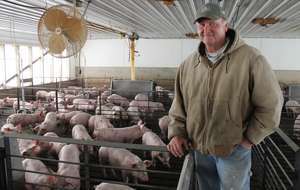
    Photo courtesy of AgriNews.com

    With less than 2% of the world’s population engaged in production agriculture, farmers shoulder a lot of responsibility to feed a growing world.  It’s been said repeatedly that we’ll have to double crop yields by 2030 in order to meet food/feed demand.  Population growth and rising incomes are driving increased demand for high-value animal protein, as well.  That’s why it continues to amaze – and perplex – me how and why people continue to criticize food production and pit consumer against farmer and even farmer against farmer.  It seems the definition of “sustainable agriculture” has become convoluted.

    The complexity of this issue really hit home for melate last week when I stepped into a classroom at CAL (Coulter-Alexander-Latimer) High School in rural Franklin County, Iowa.  CAL, like many other schools nationwide, showed a screening of the Graham Meriwether’s documentary entitled American Meat.  This film criticizes many modern production practices and encourages farmers to raise livestock  on pasture rather than inside buildings.

    “There’s no reason for a confinement house in the country, in the word, anywhere!” says Joel Salatin of Virginia in American Meat.  As someone who’s been engaged in farming for 50 years, I can think of several reasons for raising livestock in buildings.  For starters, let’s consider the Midwest’s climate and weather patterns.  The average temperature of an Iowa winter is about 34 degrees, and often the mercury dips below the freezing point.  How comfortable is it for pigs to root through snowdrifts during a freezing, cold Iowa winter?

    My family raised pigs outside for a number of years, and in doing so,we experienced more problems with disease, pests and weather.  Because of Iowa’s weather patterns, we farrowed outdoors in spring and fall.  The majority of pigs were raised this way, so the worst market prices were whenthe porksupply was the largest in the fall and in the spring.  Moving our pigs inside allowed us to farrow year roundand recognize better market prices.  Indoor hog operations also allow us to raise a leaner, more consistent product that was driven mainly by consumers.  During the 1980s, there was a public perception that chicken was healthier than pork.  Today’s pork is actually leaner than chicken, and because of this, our hogs don’t have enough natural insulation (i.e. fat) to handle inclement weather.  Lean genetics were bred primarily into hardy Large White pigs, but this breed also gets sunburn and is better suited for indoor environments.

    “We know pigs are ‘happier’ in warm, dry buildings,” writes Missouri hog farmer Blake Hurst in his Feb. 19 editorial to the New York Times.  Hurst’s editorial refutes the Chipotle restaurant’s recent ad campaign saying the company uses only “happy pigs.”  The day after the Grammy Awards, during which Chipotle’s ad first aired, McDonald’s announced it would require its pork suppliers to end the use of gestation crates.  While crates restrict a sow’s movements, they also serve their purpose.  Gestation stalls ensure sows get the nutrition they need to produce healthy piglets.  Otherwise, sows fight for feed.  The stronger, more aggressive sows get the most food and often get too fat.  The more timid sows are often undernourished during the gestationperiod, which can result in underdeveloped offspring.

    [youtube]http://www.youtube.com/watch?v=vbdB9WOICyo&feature=player_embedded[/youtube]

    I love opportunities to talk with consumers about how we raise pork and why.  In fact, I did just that today.  Earlier today I was the guest speaker for the Morning Exchange Club of Waterloo (similar to Lions, Rotary and Kiwanis).  They got to know me, an Iowa hog farmer. And they had an opportunity to get their questions answered.

    “Know your farmer” is a statement made in the American Meat documentary.  And it’s a statement I can agree with… in my own context!  Americans have the privilege of living in the “land of the free.”  This means we all have the freedom to choose.  It also means that we operate under a free market economy.  So, let the market place determine what foods get produced and how they are produced.  Farmers’ markets and the local foods movement have their place as do larger scale operations.  There’s enough demand – and enough need – for all farmers.

    Larry Sailer, Musings of a Pig Farmer

    February 21, 2012
    Agriculture, General, Industry News
  • Latham Hi‑Tech Seeds

    Blogs from Brazil by April Hemmes

    Brazil’s Vice President of Government Affairs was the evening’s hostess. She’s pictured here with April Hemmes.

    Guest blog by
    April Hemmes, Hampton, Iowa

    Franklin County farmer April Hemmes is traveling through Brazil with a group of Iowans.  You can get a sneak peek at Brazilian culture and agriculture here.  Read below for a daily account of her journey, and watch for more travel tales to come this week!

    Wednesday, Feb. 15, 2012

    I’m traveling in Brazil with Iowa Secretary of Agriculture Bill Northey and Delaware Secretary of Agriculture, Ed Kee. These gentlemen are friends, who decided to form a delegation from both states to learn about agriculture in Brazil.

    Floating town on the Amazon

    Today we arrived in Manaus, which was a 5-hour flight from Miami. Manaus, which is located along the Amazon River, was formed when rubber plantations were big here. The Rio Negro and another tributary of the Amazon converge in Manaus. The rivers run side by side, one is black water and one white. It’s truly amazing to see! The reason for difference in appearance is because the Rio Negro is denser and warmer in temperature with a faster current.

    The Amazon is huge; it’s 6 miles across in places. (Yes, 6 miles!!) And we were told the Amazon is actually longer than the Nile because GPS can trace the start of the original tributary farther into the rainforest.  Huge ships haul goods in and out. Ships filled with goods head up river to municipalities, and it takes 7 days to reach some cities.

    Making a rubber ball

    A boat stopped at the rubber plantation where we got to see how rubber is produced. A rubber tree is tapped at night and latex drips into a can.  Then, over an open fire, the canned drippings are stirred until a big, black rubber ball forms.

    Some of us walked around the block to see the big church in town. Many street vendors were selling all sorts of goods. Manaus is a city where the ratio of women to men is 6 to 1. Since I’m the only women on this trip, I have the better ratio of 37 to 1!

    Tomorrow we fly to Brasilia, the capital city of Brazil. It’s a totally planned city.  They took a clear tract of land and then moved the capital there in the 1950s.

    Thursday, Feb. 16, 2012

    Manaus Opera House

    This morning we stopped by the Manaus Opera House. It’s truly beautiful. All of the materials were brought over from Europe. Located inside the Amazon Rainforest of Brazil, it hosts the Amazonas Opera Festival every year from March until May.  It’s also home to the Amazonas Philharmonic Orchestra.

    After a quick stop at the opera house, we traveled over a brand new bridge crossing the Rio Negro. This bridge is almost 2 miles long – at the most narrow point of the river! This bridge opened up the southern side of the river for commerce & building. Before the bridge was built, people from Manaus had to wait 5 hours to cross the river in a ferry.  Now they can cross in just minutes.

    As we headed south, it was apparent we were heading deeper into the jungle. Our destination was a banana plantation. The plantation owner said that after clearing the land they had to fertilize it for 6 years until it could sustain banana plants. After one shoot produces a bunch, they are cut off and another shoot will produce the next bunch. New plants are germinated from rhizomes of an existing plant. The soil is very acidic so it takes calcium (lime) to make it productive, but this is very expensive. When fresh bananas aren’t as valuable, they make their bananas into a gummy candy. We were treated to some, and it’s very tasty!

    Friday, Feb. 17, 2012

    People in the corn field that should yield 185-200 bu/A

    Today we left Brasilia for a lovely 5-hour bus ride to a farm owned by John Carroll, an Illinois farmer who owns 30,000 acres here.

    During the ride, our guide gave us a history of the area. Brasilia is the capital of Brazil. It’s a planned city laid out in the shape of a cross. The city was built between 1955 and 1960. It was designed for 500,000 people but has grown to 2.5 million.

    Other random facts we learned today:

    • Hunting is forbidden here except by indigenous people.
    • The Brazilian government has made it very difficult foreigners to buy land here.

    John Carroll shared many of the regulations by which he has to abide.  He also said he first thought he would just raise soybeans but found cotton was a great crop due to favorable growing conditions. Cotton can be planted continuously as long as no trash is left on the field because of the Boll Weevil.

    “Cotton spends the first 60 days figuring how to die and then we spend the last 60 days figuring how to kill it,” said John.  Next year he will plant 50% of his acres to cotton with the rest corn and soybeans.

    Corn is planted here at populations of 29,000 – 30,000; soybeans are planted at 130,000.

    John explained that it took 6 to 7 years for his land to get to fertility. They found it came into production sooner by saturating the ground with P & K rather than just giving the crop what it needed for that year. He also mentioned that one of the biggest problems they have with the soil is aluminum toxicity, so they apply lime.

    Entrance to the farm headquarters

    Corn harvest will start next month, followed by soybeans and then cotton for the next three months. John hires the corn and soybeans harvested. Harvest crews travel all over the country much like a wheat run in the U.S.

    Contiguous farms in Brazil consist of 8,000  to 11,000 acres.  The Brazilian government requires land owners to leave 20% in its natural state, but higher percentages are required the closer you get to the rainforest. Farmers can also mitigate the land, so they have large areas of brush land they can buy.


    Team Latham

    February 20, 2012
    Agriculture, General, Industry News
  • Latham Hi‑Tech Seeds

    The Rush is on for Maui Gold

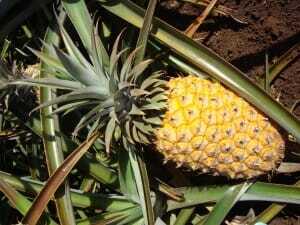
    Maui Gold1
    Photo courtesy of Maui Gold Pineapple

    Leave your picks, shovels and gold pans at home.  You only need a sweet tooth to enjoy the gold rush that’s striking the Hawaiian island of Maui: Maui Gold® pineapple.

    One week ago today a group from Latham Hi‑Tech Seeds had the pleasure – and I do mean pleasure – of touring the Maui Gold Pineapple Company.  We began with a walk through its production facilities where we saw employees hand-sorting pineapples according to color.  The greenest pineapples are shipped to the mainland since the firmer fruit withstands shipping better.

    Our next stop along the tour illustrated just how efficient the Maui Gold Pineapple Company is; there is very little waste.  Pineapples that don’t meet size requirements for shipping are used locally.  Before the smaller fruit are put in a large grate, however, their crowns are removed.  These crowns are then used to seed the next pineapple crop, plus removing the crowns allows more fruit to fit in each crate.

    After touring the production plant, we boarded a bus for a field tour like no other!  Maui Gold pineapples are grown across 1,350 acres on the slopes of Haleakala.  This location in upcountry Maui provides the perfect growing conditions for this particular variety of pineapple: warm, sunny days, cool nights, fresh water and rich, volcanic soils.

    A pineapple is perfectly ripe in the field for only 48-72 hours. Once picked, pineapples will not ripen further.

    Since quality is the pineapple company’s primary concern, Maui Gold pineapple is harvested within a 2-3 day window.  Maui Gold Pineapple Company is the only pineapple grower in Hawaii with employees dedicated to assessing sweetness and consistency in the weeks prior to harvest.  As a result, Maui Gold pineapples are always handpicked at the optimal stage of ripeness.

    If you’re like me, you’re a bit skeptical about a company’s claim to be the best tasting pineapple.  But Maui Gold made a believer out me because you can literally taste the difference.  The Maui Gold variety was developed to be lower in acid and sweeter tasting for fresh consumption.  Pineapple that is more suitable for canning, however, is completely different.  The high volume canning industry prefers plants that are naturally hardy and highly acidic.

    It takes 18 months to grow a Maui Gold® pineapple.

    One can honestly taste the nuances between pineapples.  Our guide, Steve Potter, selected three pineapples fresh from the field.  Each pineapple was in a different stage of ripeness.  We started by tasting the least ripe pineapple, which is probably the most similar to what we’d buy here in the grocery store.  We thought it was good until we tasted the second pineapple, which was much sweeter.  Steve handed us a slice of the third pineapple and said, “You’ll taste hints of coconut in this gold pineapple.”  I was skeptical, but he was right!  I took a bite and couldn’t believe the difference.  It was almost like biting into a piña colada.

    Speaking of pina colada, I know understand where it gets its name.  The name pineapple comes from the combination of the Spanish word “pina” due to its resemblance to a pinecone, and the English word “apple.”  The English called it an apple because of its tasty fruits.

    If you’d like to try these tasty fruits from the comfort of your own home, you’re in luck!  You can order Maui Gold® pineapples online.  You can also get a taste of the tropics by trying Hawiian cole slaw.  It was served aside a grilled fish sandwich at the Haliimaile (pronounced hi’lee-my’lee) General Store where we enjoyed lunch following the tour.  Another common food in the Hawaiian islands is pineapple salsa, which I’m eager to make sometime soon with fish or Hawaiian chicken kabobs.  In the meantime, I’m going to try my hand at making a Pineapple Upside Down Cake with Rum-Caramel Sauce.

    Team Latham

    February 17, 2012
    Agriculture, Desserts, General, Industry News, Recipes
  • Latham Hi‑Tech Seeds

    Latham Customers “Hang Loose” in Hawaii

    While it sounds so cliché, time sure does fly when you’re having fun! It’s hard to believe that already one week has passed since we boarded a plane for Maui, Hawaii.  Thursday, Feb. 9, was a travel day.  Upon arrival in Lahaina, we dipped our toes in the Pacific Ocean and walked along the volcanic sand beach.  Then we enjoyed an oceanview dinner while watching whales flip and spout near the shoreline.

    The next morning we boarded a charter bus tour for a tour of Monsanto’s production and research facility in Kihei.  It was interesting to learn about the key role Hawaii’s seed crops play in the development of new corn hybrids.  Because farm fields in Maui can produce up to four crops each calendar year, a new hybrid can be developed in about half the time it would take if a seed company relied solely on growing conditions found on the continental U.S.

    Saturday was a “free day,” so many group members enjoyed an all-day trip along the Road to Hana while others chose to go whale watching or snorkeling.  Some even rented Harley’s and biked around the island.  My family and I chose to board an Atlantis submarine that took us below the ocean to a depth of 127 feet where we viewed white-tipped reef sharks, Hawaiian green sea turtles and hundreds of tropical fish.  (NOTE: I really enjoyed this submarine tour. It provided the same views as scuba diving without the pain of not being able to clear my ears.)

    Sunday morning we met in the hotel lobby at 2:15 a.m. (6:15 a.m. CST) to take a long, winding, 38-mile bus ride to Haleakala National Park.  The road we traveled is one of the world’s steepest, going from near sea level to the 10,023 summit.  We finally arrived inside the park where we viewed an amazing sunrise.  No wonder Haleakala means “house of the sun” in Hawaiian.  It truly looked as though you could step off the crater and onto a cloud.

    Forty members of our group enjoyed biking (more like “braking”) down from the base of Haleakala National Park to headquarters of the Haleakalah Bike Company.  “The original Freestyle Haleakala Downhill” included a 3,000-foot drop in 10 miles, curving around 29 switch backs.  It was after noon when many bikers returned to the hotel, where they enjoyed the afternoon and evening on their own.

    Monday was another “free day.”  My family chose to snorkel Molokini Crater.  It was fab-u-lous!  This tour truly lived up to its ad:  Snorkel a beautiful reef teeming with colorful marine life and experience one of the best whale watch’s on Maui. Enjoy a freshly prepared BBQ lunch served hot off the grill.  After lunch, we cruised to Turtle Town where our son had the experience of a lifetime.  He came face-to-face with two Hawaiian Green Sea Turtles and snapped, what we hope will be, a blue-ribbon winning photo at this summer’s Franklin County Fair.  As we headed toward shore, we saw many Humpback whales and had the pleasure of watching a calf breach.

    Monday evening our entire group enjoyed a luau including a Hawaii-style pig roast, where a large pit was dug into the ground and lined with banana leaves.  Hot lava rocks were placed into the pit, and then a seasoned pig was placed inside and covered with additional banana leaves.  The food was good, but I believe the cultural dances were even better.  The fire dancing finale was captivating (and in my humble opinion) any video can’t do it justice.

    After spending five nights and six days in a tropical paradise – plus enduring 16 straight hours of travel – yesterday afternoon we returned home.  Now it’s back to reality… and back to work!  I’m working on a blog for tomorrow that will feature a couple of tasty Hawaiian recipes, including one from Maui Gold Pineapple.

    Team Latham

    February 16, 2012
    Agriculture, General, Industry News
  • Latham Hi‑Tech Seeds

    Hawaii’s Seed Crops Experience Exponential Growth

    Last Friday guests of Latham Hi‑Tech Seeds had the opportunity to visit Monsanto’s research and production operations based in Kihei, Maui.

    Move over sugar cane, pineapples and tropical flowers…  seed crops are now the highest value commodity in Hawaiian agriculture.  The value of Hawaii’s seed industry set a new record high of $247.2 million for the 2010-2011 season.

    Since its roots were established 40 years, Hawaii’s seed crop industry has experienced exponential growth.  Hawaii’s seed crop industry has grown an average of 14% in value since 1968.  The seed industry serves as one of state’s few stable sectors for jobs, according to a study commissioned by the Hawaii Farm Bureau Federation.  The seed crop industry provides 22.7% of all agricultural jobs in the state.

    Hawaii’s seed crop industry also contributes substantially to the state’s public policy objectives:

    • Economic diversification
    • Maintaining prime lands for ag use with any incentive to convert these lands to alternative use
    • Creating Hi‑Tech jobs

    The rapid adoption of Hi‑Tech crops has also fueled growth of Hawaii’s seed crop industry.  Its climate allows research operations to play a critical role in the development of new corn hybrids.  Farms fields on Maui can produce up to four crops in just one calendar year!  That means a new hybrid can be developed in about half the time it would take if a seed company relied solely on more temperate growing conditions found on the continental U.S.

    Last Friday Paul Koehler and David Stoltzfus who work for Monsanto in Kihei, Maui, explained to a group from Latham Hi‑Tech Seeds the key role Hawaii plays in hybrid development:

    1st generation (parent seed increase) in Hawaii
    0.3 acres of parent line increase planted in Hawaii, harvested and planted again

    Second generation (parent seed increase) grown in Hawaii
    35 acres of parent seed increase, harvested and sent to South America

    Hybrid seed production grown in South America
    3,500 acres of hybrid seed production planted in South America, harvested and sent to North America

    Hybrid seed sent to North America
    600,000 acres of hybrid seed planted in North America as a full-scale commercial release

    Developing new hybrids that help farmers produce more crops while conserving more natural resources is going to be critical to meet growing global demands.  The world’s population is expected to grow by 40% in the next few decades.  That means farmers will need to grow as much food in the next 50 years as they did in the past 10,000 years combined!

    And that’s why seed companies like Latham and Monsanto are on a mission to help farmers produce higher yields.  It’s also why Monsanto invests more than $3 million a day on R&D. As a result of these investments, Genuity® products are providing increased yields, reducing chemicals into our water supply and helping to feed a growing population

    Team Latham

    February 15, 2012
    Agriculture, General, Industry News, Seed Technology
  • Latham Hi‑Tech Seeds

    Farm Bill Debates Goes Beyond Farming

    MUSINGS OF A MIDWEST PIG FARMER
    by Larry Sailer

    Photo courtesy of AgriNews.com

    A few days ago, I heard Judy Woodruff interview U.S. Secretary of Agriculture Tom Vilsack about America’s Agricultural Success.  She says, “Amid all the worry about how long it will take the economic recovery to kick into high gear, there’s a little-noticed sector that’s doing very well, thank you: American agriculture.”

    Sec. Vilsack credits agriculture’s success to “an extraordinary investment in infrastructure…  Farmers are buying lots of new machinery, like large tractors with sophisticated GPS systems, leading to new hiring on the part of companies like John Deere, which recently added 250 people at a plant in Ankeny, Iowa, that manufactures cotton pickers.”

    Auto-steer tractors are just one example of how agriculture is fueling the economy.  Biotechnology is also important an important economic contributor.  Technology has redefined agriculture in other ways, as well.  Agriculture technology, ranging from the Internet and SmartPhones to Genuity® SmartStax® RIB Complete CornTM and Genuity Roundup Ready®2 Yield Soybeans, has led to greater business efficiencies and even increased yields.

    With this in mind, it’s easy to understand why Woodruff would say there are many more facets to agriculture’s success story.  I find it disconcerting, however, that she specifically mentions “two particular bright spots” in the ag sector as the federal department’s housing and food assistance programs.  Neither of these so-called “bright spots” are directly related to farming, yet they make up the lion’s share of the USDA’s budget.

    Woodruff’s interview with Sec. Vilsack opened my eyes that the Farm Bill debate is not just about farming.  The Farm Bill is a very complex program that has a huge budget and will need to involve a lot of hearings and a lot of give and take to build into the new program.


    Larry Sailer, Musings of a Pig Farmer

    February 14, 2012
    Agriculture, General, Industry News
  • Latham Hi‑Tech Seeds

    Breakfast Bowl 2012: Latham Wants to be the “Fan Favorite”

    Every second counts!  And that’s why Latham Hi‑Tech Seeds hopes to take 10 seconds off the clock by receiving the most number of votes in a Facebook poll being sponsored by Franklin County Farm Bureau.  Please vote – and encourage your friends & family to vote – between Feb. 13-24.

    This poll is just one of the ways Franklin County Farm Bureau is celebrating Food Check-Out Week, Feb. 19-25.  This year’s theme is “Stretching Your Grocery Dollar With Healthy, Nutritious Food.”

    To help illustrate this theme, Franklin County Farm Bureau is hosting a “Breakfast Battle ” on Feb. 24 beginning at 8 AM at Fareway in Hampton. Three-person teams, including one from Latham Hi‑Tech Seeds that is being captained by yours truly, will battle it out to see which one can purchase enough items for breakfast, lunch and dinner for a cost of $45-50 dollars in the quickest amount of time.

    The Breakfast Battle is being planned as a fun event for participants to have fun, while getting people together all in an effort to make a difference for those who are less fortunate.  Franklin County Farm Bureau will pay for all of the groceries purchased during this competition.  The grocery items will then be delivered to needy families throughout the county with the help of the Franklin County Food Pantry in Hampton and the Immanuel UCC Food Pantry in Latimer.

    “Today, we have so many choices when we purchase food at the grocery store,” says Jim Dannen, Franklin County Farm Bureau President. “We, as farmers, want to show people not only on where their food comes from, but help consumers choose foods that are healthy and wholesome. Eating healthy on a budget takes planning.”

    Let the planning begin!  I’d appreciate any tips you can provide to help me plan three meals within the $45 to $50 budget.  Feel free to send me your ideas at shannonl@lathamseeds.com.  Also feel free to share some recipes with me to assist with my grocery shopping list!  

    Team Latham

    February 13, 2012
    Agriculture, General, Industry News
  • Latham Hi‑Tech Seeds

    Support Science, Not Sensationalism

    One year ago the U.S. Department of Agriculture’s decision to approve Roundup Ready® Alfalfa renewed a debate about the safety of genetically modified crops and the use of glyphosate in the environment.  During this same time period, retired Purdue University professor Don Huber proclaimed the discovery of a plant pathogen “… that appears to significantly impact the health of plants, animals and probably human beings.”

    With his “15 minutes of fame” expiring, Huber appears to be fanning the flames of his theory in hopes this issue will reemerge like a phoenix from the ashes.  Recently I heard him being interviewed on the radio program, “Coast to Coast,” and was amazed by the sensational, unscientific claims he was making.

    Huber’s claims were not – nor have they ever been – substantiated.  That’s why it concerns me greatly that many well meaning Americans will hear Huber speak and be scared into thinking biotechnology, and specifically Roundup Ready crops, should be eliminated.

    To the contrary, there is much scientific evidence that supports the safety and beneficial impacts of GM crops.  Increased yields, reduced production costs and reduced pesticide use are a few of the benefits outlined in Case Studies in Benefits and Risks of Agricultural Biotechnology by theNational Center for Food and Agricultural Policy.  In April 2010, the National Research Council of the U.S. National Academy of Sciences issued a report concluding U.S. farmers growing biotech crops are realizing substantial economic and environmental befits including lower production costs, fewer pest problems, reduced use of pesticides and better yields as compared to conventional crops.

    I can personally attest that U.S. farmers are benefitting from lower production costs and fewer pest problems thanks to Roundup®.  Farmers also benefit by having more flexibility at application time and wider window in which herbicide can be applied to effectively kill weeds.  Plus, we no longer have to take the time – and do the back-breaking work – of walking soybean fields to pull weeds.

    Farmers aren’t the only ones benefitting from Roundup usage.  The environment benefits from reduced pesticide applications.  Plus, consumers are benefitting from increased agricultural productivity.  Biotech crops simply yield more than conventional crops.  In fact, farmers today grow twice as much food as their parents did – using less land, energy and water.  Increasing crop yields even more is going to become increasing important to keep up with the growing world population.  Did you know more food will have to be produced in the next 50 years as the past 10,000 years combined?

    I like to eat.  I like to wear clothes.  I like farming, too.  For all these reasons, I’m siding with science instead of sensationalism!

    Team Latham

    February 7, 2012
    Agriculture, General, Industry News
  • Latham Hi‑Tech Seeds

    DOL Puts Child Labor Regs “On Hold”

    One passionate person can make a significant difference, and a group of impassioned people can change the course of the U.S. Department of Labor.  Due to an outpouring of response from family farmers and elected officials nationwide, the DOL announced Feb. 1 that enactment of its new child labor regulations are on hold.

    The U.S. Department of Labor’s new rules would have prohibited children from working with animals and from working for a L.L.C. or any top of legal family farming entity.  While some rule proponents have pointed out there is a parental exemption, many within the agricultural community believe it’s a grey area.  A new “parental exemption” rule is expected to be proposed this summer. According to the DOL, this exemption would allow children of any age who are employed by their parent, or a person standing in the place of a parent, to perform any job on a farm owned or operated by their parent or such person standing in place of a parent.

    Responding to the DOL’s announcement about rethinking the “parental exemption,” Missouri hog farmer Chris Chinn said, “It is clear to all of us in the agricultural community that merely ‘tweaking’ the rule will not fix something that we believe is fundamentally flawed.”

    Like Chinn, Congressman Tom Latham of Iowa believes the DOL needs to recognize the unique circumstances of family farm youth and multi-generational family partnerships in agricultural operations.  In December, he authored and introduced bipartisan legislation that expresses the sense of Congress that the Department of Labor.  Congressman Latham says, “ The face of modern agriculture has changed in many ways since the 1970s when these labor regulations were first enacted, and there’s no doubt that they need to be updated. But the Department of Labor must be sensitive to the needs of family farms that use alternate legal structures to stay in business.”

    Several other Iowa officials have voiced concerns over the DOL regulations, as well.  In November 2011, Gov. Branstad and Iowa Secretary of Agriculture Bill Northey sent a letter to U.S. Labor Secretary Hilda Solis asking the DOL to give Iowa farmers a fair opportunity to comment.  They also called the rule “a prime example of federal overreach” and were pleased to hear the DOL is reconsidering its burdensome regulations.

    “As I grew up on a family farm, I learned the value of a strong work ethic by working alongside my family,” said Gov. Branstad in a Wallaces Farmer article on Feb. 4.  “I firmly believe Iowa farm families are better at ensuring the safety and well-being of their children than bureaucrats in Washington.”

    Iowa Secretary of Agriculture Bill Northey, in the same Wallaces Farmer article, added, “It is important we continue to provide opportunities for young people to learn about agriculture and gain experience by working on farms in a responsible manner.  This announcement by the Department of Labor shows that they are responding to the comments they received and hearing the concerns of the farming community.”


    RELATED POSTS:

    1. Comment by Dec. 1 on how proposed changes to “child labor” regulations would impact your farm
    2. Farm cores help build character & work ethic. If you agree, please contact the Department of Labor by Dec 1
    3. FFA & 4-H projects could be affected by proposed “child labor” rules
    4. Child labor? Oh, please! Every day is “bring your child to work day” on the farm.”
    5. Teen Farm Labor is Vital in Rural Areas
    6. Gray Area” vs. “Grey Matter


    Team Latham

    February 6, 2012
    Agriculture, General, Industry News
  • Latham Hi‑Tech Seeds

    Sailer Tells His Story through Social Media

    Photo courtesy of AgriNews.com

    Educating consumers about agriculture isn’t new to farm organizations, but communication methods have changed over the years.  Just ask Larry Sailer, who raises corn and soybeans near Iowa Falls, Iowa.  Sailer (pronounced Cy-ler) has been in the hog business for 50 years.  During this time, he’s been active in farm organizations.  He currently serves on the Franklin County Farm Bureau board and volunteers with the National Pork Checkoff’s Operation Main Street Program.  He’s also involved with Farm Bureau’s Ag in the Classroom project.

    “Anything you can do to start a conversation with consumers about food and agriculture is good,” said Sailer in the Dec. 11, 2011, Agri-News article.

    With this goal in mind, Sailer is a staunch supporter of “America Needs Farmers.”   America Needs Farmers (ANF) is a collaborative effort between the Iowa Hawkeyes and the Farm Bureau Federation.  “We want to know what questions consumers have about what farmers do and why we do it,” he says.

    Another way Sailer has helped explain modern agriculture to non-farmers is through the 2011 Harvest Tour for bloggers, which was sponsored by Franklin County Farm Bureau, Latham Hi‑Tech Seeds and debworks.  Participating bloggers had so many great things to say about their experiences riding combines, touring Latham’s seed production plant and shopping Main Street that they attracted national media attention.  Franklin County’s inaugural bloggers’ tour became the “Starting Point.”

    When CNN visited Des Moines on Jan. 2 to cover the Iowa Caucus, the conversation turned to how Iowa farmers use the Internet.  That conversation made it increasing evident to Sailer why connecting with consumers – and helping dispel myths – is more important than ever.

    “CNN introduced me as ‘a real Iowa farmer’ like I was an endangered species or an apparition,” says Sailer.  “Why is so hard to believe that farmers carry Smartphones or that the Internet is available in rural America?  Farmers chat online daily.  We blog, tweet and post Facebook messages, too.”

    Thanks to his iPad, Sailer stays abreast of breaking news throughout the day and keeps in contact with farmers and ranchers across the globe.  “If I’m sitting in line at the grain elevator, for example, I’ll open my iPad.  I’ll pour over farm data or log onto Facebook or Twitter.  I use social media as a way to communicate and share ideas in a virtual coffee shop.  It’s also a great way to start a dialogue with consumer whose interest is piqued.”

    Sailer has more than 1,500 friends on Facebook.  His favorite Facebook posts are those featuring photos from farmers and ranchers out west.  He also regularly visits websites like AgChat.com and FacesofAg.com.  In addition, he reads many ag-related and local community blogs including TheFieldPosition.com, Farm Fresh Blog, Need a little advice, Common Sense Agriculture’s Blog, Darin’s Ramblings, Wag’n Tales and A Glorious Life of an Idaho Farmwife.

    Soon he’ll add one more bookmark to his list… Watch for Sailer’s weekly blog post to run every Tuesday on TheFieldPosition.com beginning Feb. 7!

    Larry Sailer, Musings of a Pig Farmer

    January 31, 2012
    Agriculture, General, Industry News
Previous Page
1 … 62 63 64 65 66 … 85
Next Page

Latham Hi‑Tech Seeds

131 180th Street | Alexander, IA 50420

(641) 692-3258

SIGNUP FOR OUR NEWSLETTER
  • Contact
  • Legal
  • Dealer Center
  • Seedware Login
  • Latham Gear

© 2025 Latham Hi‑Tech Seeds. All rights reserved. | Iowa Web Design by Webspec | Privacy Policy

Latham® Hi-Tech Seeds is a trademark of M.S. Technologies, L.L.C., 103 Avenue D, West Point, IA 52656.