Skip to content
Latham Hi-Tech Seeds

(641) 692-3258

  • Home
  • Performance
  • Products
    • Corn
    • Soybeans
    • Alfalfa
    • Corn Silage
    • Seed Guide
  • Find a Rep
  • Media
    • Blog
    • News
    • Videos
    • Podcasts
    • TECHTalk
  • About Us
    • Company History
    • Our Mission
    • Careers
    • Become a Rep
    • Sowing Seeds of Hope
  • Contact Us
  • Latham Hi‑Tech Seeds

    Ask the Agronomist: Sudden Death Syndrome

    Ask the Agronomist Feature Photo 01

    Thanks for checking out our “Ask the Agronomist” feature! Here, we’re answering some questions we’ve been getting about Sudden Death Syndrome.

    Q: We’ve received a question from a farmer this week saying “Sudden Death Syndrome is breaking bad in my soybean fields. Why does it appear to be affecting more fields this year and what can I do about it?”

    A: Sudden Death Syndrome appears after flowering in the growing season, and usually we see issues in early August. Cool, wet planting conditions, like what the Upper Midwest experienced earlier this year, can increase severity of sudden death later on in crop development.

    Q: What symptoms should we be looking for?

    A: Farmers should first be scouting for yellow blotches on leaves. These will progress into larger patches, but keep in mind that leaf veins remain green while the rest of the leaf will eventually turn brown and leaflets will fall off. However, petioles will remain on the stem. SDS can cause rotted root systems, too.

    Q: Are there certain soil types or fields more prone to SDS?

    A: There isn’t a certain type of soil that is more prone, but there are specific areas of a field that can more easily develop SDS. High moisture areas such as low spots can have higher severity, and it is also often correlated with compacted soils in margins of a field or low-lying bottoms.

    Fields with a history of SDS should be planted when soils are warmer and drier. No-till practices allow soils to remain cooler and wetter during the spring, so these fields are more at risk as well. Sometimes, tillage on a field with a history of SDS is a good practice as long as those fields aren’t worked in wet conditions.

    Q: What can farmers do if they begin to notice SDS in their fields this year?

    A: Unfortunately, there is not much that can be done to stop SDS once it begins. Prevention is the best defense against SDS. Prevention tactics include: responsible tillage practices to reduce soil compaction, waiting for soils to dry up towards the end of planting seasons, and testing for presence of soybean cyst nematodes. Soybean Cyst Nematodes (SCN) are associated with SDS.

    Q: What can be done if farmers test their soils and find a soybean cyst nematode presence?

    A: The best way to combat SCN is to plant resistant varieties, or avoid susceptible varieties. Be sure to keep Latham IRONCLAD™ soybeans in mind when mapping out which varieties will be used on different fields.

    To bear the IRONCLAD™ name, each soybean variety must be SCN resistant, phytophthora root rot resistant, and an iron deficiency chlorosis rating of 2.2 or better. Depending on the geographic location needs, IRONCLAD™ varieties must protect against either white mold or SDS with a rating of 2.2 or higher.

    Q: If there is no cure for SDS, why should farmers be scouting for it?

    A: An ounce of prevention is worth a pound of cure. Scouting for SDS is important to determine if management practices were at fault and to help select the right seed for each field next year based on SDS score and Soybean Cyst Nematode tolerance.

    Walking fields and taking notes will help farmers determine an action plan for next year. What we’re seeing now in the fields can have an impact on what we see in the future.
     

    August 4, 2025
    Agronomics, Crop, Disease, General, Soybeans
  • Latham Hi‑Tech Seeds

    Boy Next Door Stayed True to Latham Roots

    Celebrating Greg Jaacks’ Retirement

    Greg Jaacks was literally the boy next door. He and his three siblings – Jeff, Kim and Steve – grew up in the little house beside Willard and Evelyn Latham, who employed Greg’s dad, Marvin Jaacks, at Latham Seeds. 

    Marvin had moved his family to a larger house a few miles away and rented his own ground to farm. To accommodate the growing Jaacks (pronounced “Jakes”) family, Willard offered to add on two bedrooms to the small house next to his own. That was just the incentive Marvin needed to return to Latham Seeds.

    The connections run deep between the Jaacks and Latham families. 

    “Willard gave me my first haircut as a little boy in their basement,” Greg recalls. Willard and Evelyn’s oldest son, Bill, held baby Greg during the haircut. 

    Greg helped at Latham Seeds as needed while he was in high school. Upon graduating in May 1975, Greg took a full-time job with a local farmer. He loved everything about the job, from tilling soil and baling hay to shelling corn and feeding cattle. One thing he didn’t like was the pay. Greg worked 10 hours a day, six days a week for $75 flat. He wanted his own place but needed to make more money first. 

    “I asked my dad if I could get on his crew at the (Latham) plant,” Greg says. “He told me I’d have to find out for myself. He said I’d better go talk to Willard.”

    Greg mustered up the nerve to knock on Willard’s front door. Evelyn answered and welcomed him inside. Willard told Greg he could start work the following Monday if he got a haircut and shaved his beard — which he promptly did.

    “As long as you gave Willard what he was expecting, as long as you kept your promise and did your job, he was good to you,” Greg says. 

    Greg is grateful he got to work beside his dad, Marvin, for nearly 22 years at Latham Seeds. 

    “He really was my best friend,” Greg says of his dad. “It’s been a good, solid job here at Latham. When I started here, that’s what my grandpa said: Latham’s a good solid place to work.” Greg’s grandpa was a local farmer, who also worked on Marvin’s crew during the winter months.

    Greg and his wife, Donna, have two daughters, Trisha and Sandy. In retirement, Greg and Donna are looking forward to attending more of their grandchildren’s activities and watching them play sports. Greg is also planning to fish, ride his Harley and watch a lot NASCAR. 

    As he says goodbye to Latham, Greg is sharing a cherished recipe of his mom’s — Ham Loaf  — which reminds him of his childhood on the farm.

    Jollene’s Ham Loaf

    • Large bowl
    • Loaf Pan or Baking Sheet

    HAM LOAF

    • 1 pound ground ham
    • 1 pound fresh pork burger
    • 1 pound ground beef
    • 2 eggs (beaten)
    • 1 cup milk
    • 1 cups graham
    • cracker crumbs

    SAUCE

    • 1 can tomato soup
    • 1 cup brown sugar
    • 1 cup Scant vinegar
    • 1 teaspoon dry mustard

    OPTIONAL

    • onion (finely diced)
    • ⅛ teaspoon black pepper
    1. Preheat oven to 350 degrees.
    2. Combine all meat ingredients; form into loaf.
    3. Line baking sheet with parchment paper or grease a loaf pan

    4. Pour sauce over meat and bake for one hour, or until the inside of loaf reaches 160 degrees.
    5. Rest for 5 to 7 minutes before slicing.

    COOK’S TIP:

    1. To freeze leftovers, slice into individual portions and tightly wrap with plastic. Place in an airtight container or Ziploc. freezer bag. Leftovers can easily be made into “do-over” sandwiches..

    Shannon Latham

    June 26, 2025
    Beef, Food & Family, General, Latham News, Pork
  • Latham Hi‑Tech Seeds

    Fire Up the Grill – Celebrate May Beef Month!

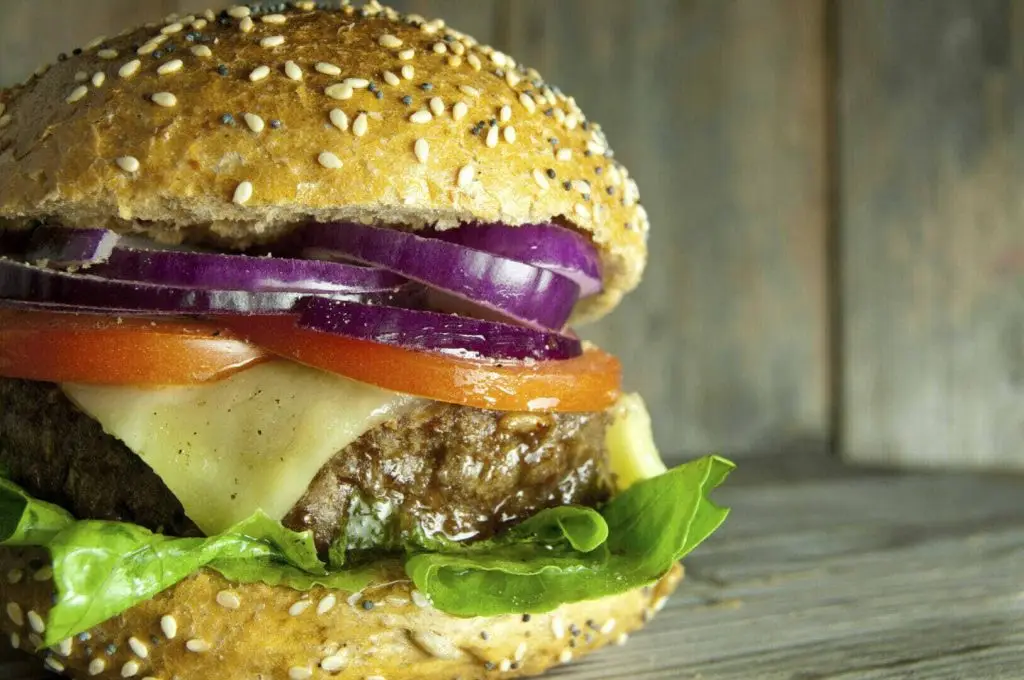
    Celebrate the return of seasonal spring temperatures by firing up the grill! May is Beef Month, and Memorial Day weekend is the perfect time to enjoy an All-American juicy hamburger or a thick, delicious, mouth-watering steak.


    Whatever you’re grilling, don’t underestimate the power of the sides!


    Here are few of our favorites, shared by none other than our own Latham® Dealers.

    Baked Beans Supreme:

    https://lathamseeds.com/2024/08/a-sunny-disposition-is-key-to-this-familys-happy-heart/

    Broccoli Raisin Salad:

    https://lathamseeds.com/2023/06/milestone-memories-mark-this-familys-legacy-with-latham-seeds/

    Grandma V’s Fruit Salad:

    https://lathamseeds.com/2023/08/farming-and-freedom-the-best-of-both-worlds/

    Sweet & Savory Cauliflower:

    https://lathamseeds.com/2025/05/these-farmers-lend-a-hand-to-others-in-need/

    Potato Salad:

    https://lathamseeds.com/2025/05/looking-ahead-to-the-future-of-farming-and-a-side-of-potato-salad-2/

    Heat and Sweet Burger

    • 1 pound ground beef
    • 1/8 cup jalepenos (chopped)
    • 1/4 cup shredded cheddar cheese
    • Burger seasoning of your chocie
    • Raspberry all-fruit spread
    • Pepperjack cheese (sliced)
    • Rolls
    1. Combine ground beef, jalepenos and shredded cheese in a bowl.
    2. Season the beef to your liking. I recommend Tony Chacheres cajun seasoning.
    3. Form into patties (1/3 or 1/4 pound, your preference).
    4. Grill to medium-well. Place pepperjack cheese on at the end to melt the cheese over the patty.
    5. Recommended: lightly toast the bun.
    6. Spread raspberry fruit spread on the bun, add the patty.

    Shannon Latham

    May 21, 2025
    Beef, General, Recipes
  • Latham Hi‑Tech Seeds

    A Lifetime of Raising Cattle Comes Full Circle For This Beef Producer

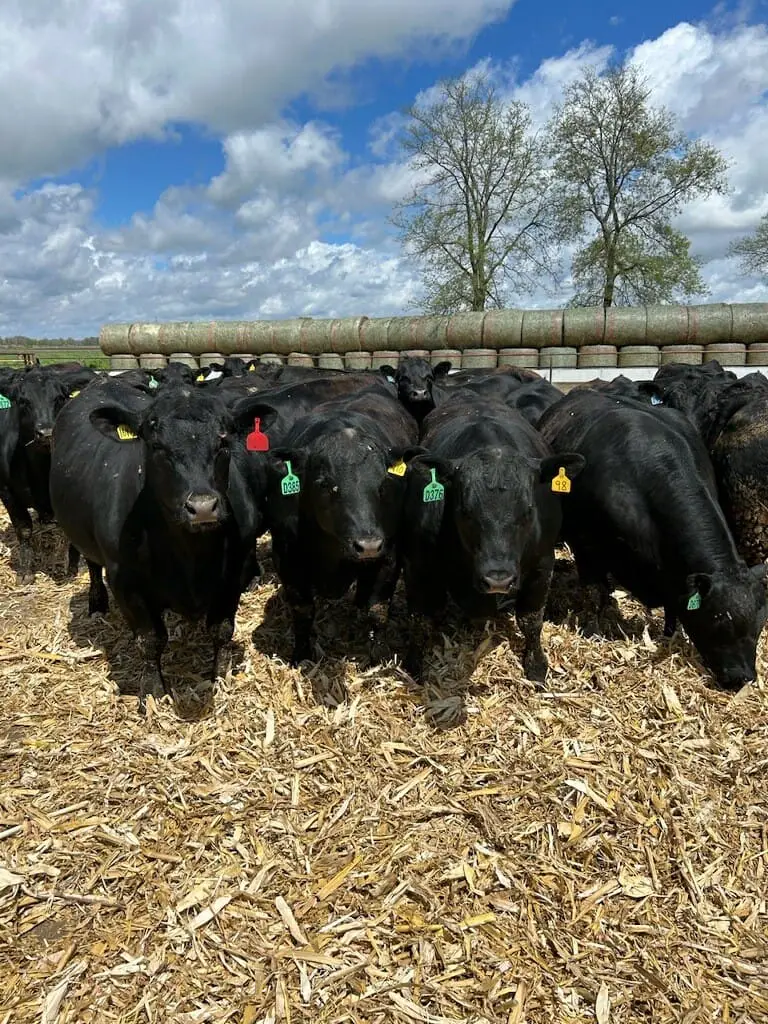
    Raising cattle has always been a big part of Nick Peterson’s life, beginning when he was a young boy helping on his grandparents’ farm near Charles City, Iowa. Later, when he was in his 20’s, Nick worked full-time on the family farm, which had 400 acres of crop ground some hogs, too. But it was the 1,000 head of cattle that took most of Nick’s time. It was also the start of what would eventually evolve into his own beef operation today.

    “My background has always been raising fat cattle,” says Nick, who is also a Latham® dealer. “My grandparents farmed my entire life, but they never sold any grain. We just needed to get feed for our cattle and that was it. So, me becoming a seed dealer is an interesting thing, I guess!”

    After 14 years on the family farm, Nick decided to venture out on his own. He and his wife, Lisa, moved to her family farm in Nashua, Iowa, rebuilt the house and buildings, and put a feed lot there. As fate would have it, Nick knew the McGregor family down the road because he’d worked for them when he was fresh out of high school. The connection resulted in a partnership of sorts, as Nick started “owning my own stuff” and buying more cows.

    Between them, the Petersons and McGregors now have about 120 steers, along with western ones, and they’re “all mixed in together,” he says with a laugh.

    “It made it way easier for me to start out on my own,” Nick says of the business arrangement. “It can be hard for a young guy to do that. Bankers don’t really want to let you build a feed yard and then give you $2 million in a line of credit to go buy some cattle.”

    Today, Nick’s shop and seed dealership are located on the farm. He and Lisa have two girls, Jenna and Ava. Lisa is the branch manager at First Waverly Bank in Plainfield. Nick has served on the Chickasaw Cattlemen’s board for years, following Scott McGregor’s longtime example of advocating for beef producers on the local and national levels.

    Shannon Latham

    May 15, 2025
    Beef, General, Recipes
  • Latham Hi‑Tech Seeds

    The Early Riser Advantage: How Corn Emergence Impacts Final Yield

    Every farmer I know is interested in extra yield. I am, too!

    While there are thousands of variables that affect corn yield, we can conduct on-farm tests to see what matters most. That’s why I’ll conduct flag tests this spring to track corn emergence dates and see how it affects yield this fall.

    Here are the steps I’ll take to conduct this test:

    1. Measure off 1/1,000th of an acre that is representative of the field.
    2. Place a colored flag beside the first set of corn seedlings as they spike.
    3. Return to the field 24 hours later and mark the next group of emerged plants, using a different colored flag.
    4. Return every 24 hours to mark the subsequent waves of emerging corn plants until the test row has fully emerged.
    5. Harvest the plants according to the day of emergence. Record test weight and yield differences to see if it was affected by the emergence date.

    We’d like to see every corn plant emerge within 24 hours of each other. Many studies show that plants emerging on Day 2 of emergence can have a 10% yield loss compared to the first plants that emerged. The yield decrease can be close to 40% for plants that emerge on Day 3, and those plants that emerge on Day 4 can have a yield loss of more than 80%.

    The reason behind some yield loss is because the bigger corn plants take water and nutrients away from the smaller “brother plants.” Plants that emerge first get established sooner, and they do not leave much to feed the runts.

    Planting Conditions Are Crucial

    We all want to see picket-fence corn stands, so we must do all that we can to help corn seedlings emerge consistently. As part of Latham’s Premier Agronomy Center this season, we will plant learning blocks using TuneUp + Corn with ether to see how it helps seedlings emerge more uniformly.

    Trying to cut corners to save time during the planting season can affect your harvest.

    To avoid paying the price at harvest, keep these best practices in mind:

    • Prepare your planter before you hit the field. Make sure the disc openers and scrapers are in optimal condition.
    • Look at the closing system on your plant to ensure it’s closing the seed trench well.
    • Add some sort of starter to help those plants get out of the ground easier.
    • Make sure the field conditions are fit for planting because the stand is greatly affected by field conditions at planting. 
    • Don’t push soil moisture and temperature.
    • Consider the forecast as weather events also can affect emergence.
    • Take time to check planter depth and seed spacing with your handy, dandy Latham® seed depth indicator.

    These are just a few things I try to be mindful of in the spring because I know it impacts fall yield. Let’s help our crops get off to a good start, so we can fill our bins with as many bushels as possible this fall.

    Make it a great spring and be safe!

    Here is a Prokosch family favorite recipe that keeps their whole crew warm.

    Ham Potato Soup

    • 3½ cups peeled, diced potatoes
    • 3¼ cups water or stock
    • ¾ cup diced or cubed ham
    • ⅓ cup celery, diced
    • 1 onion, chopped
    • Watkins chicken soup seasoning
    • Pepper, to taste
    • 5 tbsp butter
    • 5 tbsp flour*
    • 2 cups milk
    1. Add potatoes, water/stock, ham, celery, and onion to stockpot. Bring to a boil, and simmer until potatoes are tender.

    2. Add Watkins seasoning and pepper to taste.

    3. In a separate pan, melt butter and add flour. Stir and cook until thick. Then slowly whisk in milk, tablespoon at a time.

    4. Add milk mixture to the stockpot, but do not boil. Adjust seasonings to taste.

    COOK’S TIP: *We make this with gluten-free flour and oat milk.

    Agronomy

    May 9, 2025
    Food & Family, General, Pork, Recipes
  • Latham Hi‑Tech Seeds

    Enjoy Easter Leftovers with “Round 2 Recipe” Ideas

    Scallopped eggs

    What’s not to love about this weekend? Easter lilies are so fragrant and vases of tulips are so vibrant. I’m looking forward to my family’s traditional holiday feast of baked ham, roasted turkey, homemade mashed potatoes with lots of real butter, deviled eggs, plus assorted homemade pies. There most likely will be food left over, and I LOVE leftovers!

    Before you think I’ve lost my mind, let me set the record straight. I do not define leftovers as turkey with a squirt of mayo between sliced bread. Reheating a slice of ham doesn’t count either. When I refer to “leftovers,” I’m talking about turning these “precooked proteins” into fabulous weeknight dinners!

    My quick tips include cutting up leftover holiday turkey or ham. Then place 1½ to 2-cup servings per freezer bag, and then lay the bags flat in your freezer. Take out a serving at a time for a quick and easy meal.

    Below are Top 10 “Round 2 Recipe” ideas I compiled from recipes that have been featured previously on this blog and in the Let’s Cook cookbook, which was printed last year by the Iowa Food and Family Project:

    1. Garden Turkey Salad – If you click on this link, you’ll see the real title is “Garden Chicken Salad.” I often substitute chicken for turkey and vice versa. It’s all good!
    2. Turkey & Blueberry Salad – The beautiful photo of this salad just looks like spring on a plate. I’m hoping there’s leftover turkey this weekend, just so I can make this one soon!
    3. Asparagus & Ham Casserole – This recipe is perfect for a spring brunch including Mother’s Day.
    4. Ham & Asparagus Sandwiches – Doesn’t this sandwich look like spring on a plate? Plus, Ciabatta makes everything better IMHO.
    5. Put a new twist on the Rachel Sandwich by adding an egg like the Reub-egg-en Sandwich.
    6. Sausage and Deviled Egg Salad Sliders – I’m intrigued by this recipe and think it will be the perfect use for the breakfast sausage that’s in my freezer.
    7. Turkey Pot Pies – With spring fieldwork underway, this is a great go-to recipe.
    8. Turkey and Noodle Toss – Noodles… enough said!
    9. Southwestern Turkey Salad – This recipe tops my “must try” list for a summer potluck.
    10. Scalloped Eggs and Ham Casserole – This recipe from the Iowa Egg Council is featured below.

    What’s stopping you from trying a new recipe or two? I’ve read the average family eats nine different meals at home. NINE. If I left it up to my kids, they’d probably rotate between these five recipes: spaghetti pie, baked tacos, pizza casserole, and lasagna. But the foodie in me likes to try recipes that look and/or taste gourmet but are quick and easy to make.

    I’m often inspired by beautiful food photography in magazines, coffee table cookbooks and even my Facebook newsfeed. In fact, Facebook is responsible for me selecting today’s featured recipe for Scalloped Eggs and Ham Casserole. I hope you find it intriguing, too! Let me know how you like it if you try it.

    Scalloped Eggs and Ham Casserole

    • 6 hard-boiled large eggs (peeled and sliced)
    • 1 cup chopped cooked ham
    • ¼ cup chopped red bell pepper
    • 2 cups jarred alfredo sauce (divided)
    • 1 tablespoon butter
    • 1/3 cup Panko or soft bread crumbs
    • 1/3 cup finely shredded Parmesan cheese
    • Chopped fresh Italian parsley
    1. Preheat oven to 400 degrees Fahrenheit.
    2. Lightly grease a 1-quart casserole. Layer half of the eggs, ham, and red pepper in the casserole dish. Top with 1 cup of alfredo sauce.
    3. Repeat layers.
    4. In saucepan, melt butter. Stir in panko and cheese. Evenly sprinkle over egg mixture in dish. Bake, uncovered for about 20 minutes or until it’s bubbly and the top is golden. If desired, sprinkle with parsley.

    Shannon Latham

    April 17, 2025
    Food & Family, General, Pork, Recipes
  • Latham Hi‑Tech Seeds

    Which came first, the Easter bunny or Easter eggs?

    IMG 8991

    Decorating eggs for Easter is a tradition that dates to at least the 13th century. It is believed German immigrants brought the egg-laying hare to Pennsylvania in the 1700s. Their children made nests where this fabled creature could lay its colored eggs. As this custom spread across the nation, Easter morning deliveries expanded to include chocolate and other types of candy and gifts.

    It has been 60+ years since my mom hosted her family’s first egg hunt, and our tradition is still strong and growing through five generations. Mom also makes an Easter egg tree annually, so I asked her to help us make a fresh one. She cut a branch from her lilac tree, cemented it into a coffee can and painted the branches white. Then she showed our Italian exchange student how to carefully use a needle to make a small hole at the top of the egg and a larger hole at the bottom, so we could blow out the yolks. (Anyone else do this and then make an angel food cake?)

    When I was a kid, we couldn’t purchase Easter tree decorations at the store. We had to color real chicken eggs and then decorate the tree branches with silk flowers and ribbons. Now our tree contains a mixture of handmade and store-bought decorations.

    In years’ past, we dyed hard-boiled eggs that were then turned into my mom’s legendary potato salad. I remember standing on a kitchen chair as a little girl, so I could reach the kitchen counter where Mom would help me make an Easter bunny cake. Another one of my favorite memories is when a live bunny was left in my Easter basket.

    Now that my kids are adults our traditions continue to evolve. My daughter will tell you that Easter dinner isn’t complete without ham and a side of macaroni and cheese with corn. My cousin makes the absolute best homemade version of this, using our grandma’s recipe for frozen sweet corn. Today I’m sharing a similar recipe from our hometown church cookbook.

    Macaroni & Cheese with Corn

    • Large bowl
    • 2-quart casserole dish
    • 1 15.25 ounce can whole kernel corn, including water
    • 1 14.75 ounce can cream style corn
    • 1 cup uncooked small shell pasta or elbow macaroni
    • 1 cup Velveeta cheese (cubed)
    • ½ cup butter (melted)
    1. Preheat oven to 350 degrees F.
    2. Stir together corn, uncooked pasta, cheese, and butter in a large bowl until well combined. Transfer mixture to 2-quart casserole dish.
    3. Bake, covered, for 30 minutes. Uncover, stir, and continue baking for 30 more minutes or until pasta is tender.

    Shannon Latham

    April 10, 2025
    General, Recipes, Season, Sides, Spring
  • Latham Hi‑Tech Seeds

    Aaron Deike Joins Latham Seeds as Regional Sales Manager

    Latham Hi-Tech Seeds is excited to welcome Aaron Deike to our team as our newest Regional Sales Manager. With a strong background in agriculture and a passion for helping farmers succeed, Aaron brings both experience and enthusiasm to his new role.

    Growing Up Ag

    Aaron was raised just outside Wahpeton, North Dakota, where he was deeply rooted in agriculture from an early age. His father operates a third-generation family farm, raising corn, soybeans, wheat, alfalfa and cattle. 

    “Growing up on the farm really shaped who I am,” Aaron says. “It gave me an appreciation for hard work and the importance of farming legacies.”

    In high school, Aaron was active in football and wrestling, and he spent much of his free time outdoors hunting and fishing — hobbies he still enjoys today.

    The Road to Agronomy

    Aaron attended North Dakota State University, where he earned his bachelor’s degree in Crop and Weed Science. “I wanted to gain a deeper understanding of how plants and soil work together,” he explains. “My background on the farm made it easy to connect with the science behind growing crops.”

    That hands-on experience has translated into a passion for helping other farmers succeed. As an RSM, Aaron will work alongside Latham’s seed dealers to make strong, field-by-field recommendations and support customers in achieving their goals.

    A Family-Focused Future

    Aaron says what attracted him to Latham Seeds is the company’s commitment to its family-first values. 

    “I kept hearing how Latham puts people first, and that really stood out to me,” he says. “I’m looking forward to working closely with dealers and helping them continue their family legacies.”

    When he’s not in the field, Aaron enjoys relaxing at the lake, hunting, fishing and spending time with his friends and family.

    Family Favorite: Tuesday Hotdish

    Aaron is sharing a favorite recipe passed down through generations: Tuesday Hotdish (also called Shipwreck Hotdish when it isn’t served on a Tuesday).

    “It was my great grandma’s favorite dish to make every Tuesday,” he says. “It brings back a lot of memories from family dinners on the farm.”

    We’re thrilled to have Aaron on board and can’t wait to see the positive impact he makes across Latham Country. Welcome to the team, Aaron!

    Tuesday Hotdish

    Whenever this dish isn't served on Tuesday, it's traditionally referred to as "Shipwreck Hotdish." Why? The legend goes that whenever there was a shipwreck, passengers salvaged whatever they could and tossed everything together for dinner. See for yourself in this Hotdish recipe!

    • 2-quart casserole dish
    • 4 potatoes (peeled and sliced )
    • 1 lb ground beef
    • 1 tsp salt
    • 1/4 tsp ground black pepper
    • 1 onion (thinly sliced )
    • 1 15 oz can kidney beans (drained)
    • 1 10.75 oz can condensed tomato soup
    1. Gather all ingredients. Preheat the oven to 350 degrees F (176 degrees C). Grease a 2-quart casserole dish.

    2. Arrange potatoes at the bottom of the casserole dish. Crumble ground beef over potatoes, and sprinkle with 1/2 teaspoon salt and ground black pepper.

    3. Spread onions over meat and then beans. Pour undiluted soup over everything. Sprinkle with remaining 1/2 teaspoon salt.

    4. Bake for 30 minutes. Check, and continue baking for 1 hour.

    Shannon Latham

    March 27, 2025
    Food & Family, General, Latham News
  • Latham Hi‑Tech Seeds

    Putting Farmers First

    Latham Seeds has always put our customers first by sourcing genetics and traits from multiple suppliers. Our priority is offering top genetics  — with the traits Upper Midwest farmers need — at a competitive price. We’re committed to helping farmers grow their legacies while keeping rural communities strong, and we’re proud to market Latham products through a local farmer-dealer network. 

    We recognize some of our outstanding dealers by featuring them in our publications. This year’s seed guide cover features Jerry, Steph, and JP Paumen (pronounced Paw-men) of Dammann Seeds in Plato,  Minnesota. Dammann Seed Sales in April 2024 celebrated 75 years of their family-owned seed business.


    The parallels between Dammann Sales and Latham Seeds are quite remarkable. Jerry’s grandfather started the family business by conditioning and selling oats. When Jerry’s father returned to the farm after college, he focused on selling soybeans. Then in 1989, Jerry’s parents ventured into corn sales, which provided Jerry with an opportunity to come home. 

    The Paumens also are involved in their community, with Steph volunteering at school and at church. Jerry has served on the parochial school board, as well as coached baseball and trap. The couple belongs to the Minnesota Corn Growers and the Minnesota  Soybeans Growers Associations. They also are active in numerous local conservation groups. 

    It is an honor to work alongside Latham dealers like the Paumens,  and it’s a pleasure to work every day with multigenerational family farmers across the Upper Midwest. Like you, we appreciate the opportunity to carry on our family’s tradition of farmer helping farmer and neighbor helping neighbor. Thanks for all YOU  do to keep rural America strong — and growing.

    Hashbrown Hotdish

    • Hashbrown patties
    • 1 lb Hamburger
    • 1 Onion
    • 1 can Cream of Mushroom Soup
    • Frozen peas
    • American cheese slices
    • French Fried Onions
    1. Spray a 9×13 inch pan with non-stick cooking spray.

    2. Line the bottom of the pan with hashbrowns.

    3. Brown the hamburger and onions; drain.

    4. Mix 1 can cream of mushroom soup with half can of milk; then add the hamburger and onions.

    5. Spoon the soup-hamburger mixture on top of the hashbrowns.

    6. Top with frozen peas.

    7. Cover with American cheese slices.

    8. Cover with foil. COOK’S TIP: Spray the foil with no-stick spray to prevent cheese from sticking.

    9. Bake at 350 degrees for 50 minutes.

    10. Take off the foil, cover with French fried onions and bake uncovered for another 10 minutes.

    11. Let it rest for 5 minutes on the counter before serving.

    Shannon Latham

    March 25, 2025
    Food & Family, General
  • Latham Hi‑Tech Seeds

    From the Farm to the Statehouse: Meet Chad Ingels

    Chad Ingels is a dedicated pig farmer, conservation advocate and state legislator with deep roots in Fayette County, Iowa. Growing up on his family’s farm between Fayette and Maynard, Chad developed a strong work ethic and appreciation of agriculture from an early age. His love for farming was shaped by his parents and grandparents, who instilled in him the values of hard work and stewardship.

    A Life Dedicated to Agriculture

    Chad’s agricultural journey began as a member of 4-H, where he took on swine, horse and gardening projects. After graduating from Iowa State University with a degree in Horticulture, he found himself drawn back to the family farm. Despite facing challenges, including the hog market crash of 1998, Chad’s determination to continue raising pigs never wavered.

    He partnered with Niman Ranch to raise pigs the old-fashioned way — in bedded pens and outdoors — bringing his vision of sustainable and humane farming to life.

    “Raising pigs in a non-confinement situation is labor intensive but rewarding,” Chad says. “Each year, Niman Ranch hosts a hog farmer appreciation dinner where their customers come together with a lot of the farmers. The gratitude the customers show is almost overwhelming in some respects. It is great to learn how they use the pork and the positive feedback they receive from their own customers, the consumers.”

    Today, Chad raises corn, soybeans, oats and hay while also maintaining a sow herd. His dedication to conservation is evident in his no-till soybean practices, cover crop trials ahead of corn, and efforts to improve water quality. His partnership with Niman Ranch has been instrumental in sustaining his pig farming operation, providing him with the resources to continue farming responsibly and humanely.

    Passion for Conservation

    Chad’s commitment to conservation was sparked during his time with Iowa State Extension, where he worked on water quality improvement projects. Since then, he’s made significant strides on his own farm by implementing cover crops, no-till planting and split nitrogen applications. 

    “I think it’s important to be conservation-focused because it increases the resiliency of the soil during periods of drought or excessive rainfall,” Chad says, adding that conservation practices benefit the environment while supporting long-term agricultural sustainability.

    Serving Iowa in the State Legislature

    Since 2021, Chad has served in the Iowa State Legislature, representing parts of Fayette, Buchanan and Black Hawk counties. His involvement in local government began more than 20 years ago when he served on the West Central School Board. Today, Chad serves on several legislative committees, including Education, Health and Human Services; and Labor. He is also chairman of the Administrative Rules Committee and past chair of Veterans Affairs. 

    “Serving in the Legislature has been a great experience, and I am honored to represent my part of Iowa,” he says.

    Chad remains deeply committed to advocating for Iowa farmers and promoting responsible land stewardship through policy and leadership.

    A Family Tradition

    Chad’s passion for agriculture and public service is shared with his wife, Tammy, whom he met in high school band, and their three children, Colton, Kameryn, and Cullen. The Ingels family continues to stay active in their community, from attending high school sports to participating in Special Olympics events. In his spare time, Chad enjoys gardening and officiating high school basketball.

    As part of his commitment to tradition, Chad has shared a family favorite recipe for sausage casserole — a hearty dish that showcases his love for farm-raised pork. 

    Sausage Casserole

    • 1 lb Ground Seasoned Pork Sausage
    • 1 Medium Onion – diced
    • 3 Cups boiling water
    • 1 package Lipton's Chicken Noodle Soup Mix
    • 3/4 Cup Rice
    • 2 Cups Celery (chopped)
    1. Brown sausage and onion

    2. Add water and soup

    3. Mix in rice and celery

    4. Let simmer 20 minutes

    5. Put in greased casserole or 9×13 pan and bake for 1 – 1/2 hours at 350-degrees.

    6. Bake uncovered an additional 20 minutes.

    7. Stir several times while baking

      NOTE: chopped green pepper added to the meat is good!

    Shannon Latham

    March 13, 2025
    Food & Family, General, Pork
Previous Page
1 2 3 4 5 … 161
Next Page

Latham Hi‑Tech Seeds

131 180th Street | Alexander, IA 50420

(641) 692-3258

SIGNUP FOR OUR NEWSLETTER
  • Contact
  • Legal
  • Seedware Login
  • Latham Gear

© 2026 Latham Hi‑Tech Seeds. All rights reserved. | Privacy Policy

Latham® Hi-Tech Seeds is a trademark of M.S. Technologies, L.L.C., 103 Avenue D, West Point, IA 52656.