Latham Hi-Tech Seeds

(641) 692-3258

  • Home
  • Performance
  • Products
    • Corn
    • Soybeans
    • Soybean Blends
    • Alfalfa
    • Corn Silage
    • Seed Guide
  • Find a Rep
  • Media
    • Blog
    • News
    • Videos
    • Podcasts
    • TECHTalk
  • About Us
    • Company History
    • Our Mission
    • Careers
    • Become a Rep
    • Sowing Seeds of Hope
  • Contact Us
  • Latham Hi‑Tech Seeds

    Be Watchful of Corn Nematodes: Early corn planting leads to earlier scouting

    We’ve just experienced one of the most amazing months for crop planting in recent memory. The National Ag Statistics Service released a report April 25 stating corn planting in the upper Midwest is significantly ahead of both the 2009 planting and the five-year average.

    One benefit of early planting is that farmers should have more time this spring to check their fields for various pests. For this article, I’d like to focus on Corn Nematodes in particular, as these microscopic roundworms have been flying under the radar of farmers and crop scouts for years.

    Like Soybean Cyst Nematodes (SCN) in soybean fields, Corn Nematodes are capable of reducing corn yields without showing any particular above-ground symptoms.  If you suspect that you are losing bushels from this pest, consider taking some soil samples to determine which nematode species is present in your field and at what level they are present.

    The best time to sample for corn nematodes is 4 to 6 weeks after planting.  Most university labs and even several private labs can run a corn nematode analysis on soil samples.  To borrow a line from the SCN awareness group, “Take the Test & Beat the Pest!”

    Team Latham

    May 10, 2010
    Agronomics, General, Insects
  • Latham Hi‑Tech Seeds

    Chocolate Covered Cookie Dough Truffles… Need we say more?

    While I know it’s not Soy Foods Month any more, we couldn’t pass this recipe up. It was just too delicious.

    You’ll want to have a quiet hour to yourself to make these, so wait until everyone else is in bed or has left your house for the day. Not only does the peace and quiet help you focus on following the recipe, but “alone time” ensures there will be plenty for you to taste-test.  Otherwise, these delicious treats will be all gone and you will have only eaten one. (Well, plus the one or two you might eat in the process of making them!)

    If you don’t have the luxury of peace and quiet when you’re making these, that’s okay. Here’s a link to coloring sheets you can download provided by the Iowa Soybean Association. http://www.iasoybeans.com/soyedmaterials/soyedmaterials.html

    You can find the below cookie dough and other delicious recipes on www.tastykitchen.com.

    Team Latham

    May 7, 2010
    Desserts, General, Recipes
  • Latham Hi‑Tech Seeds

    Determining Stands

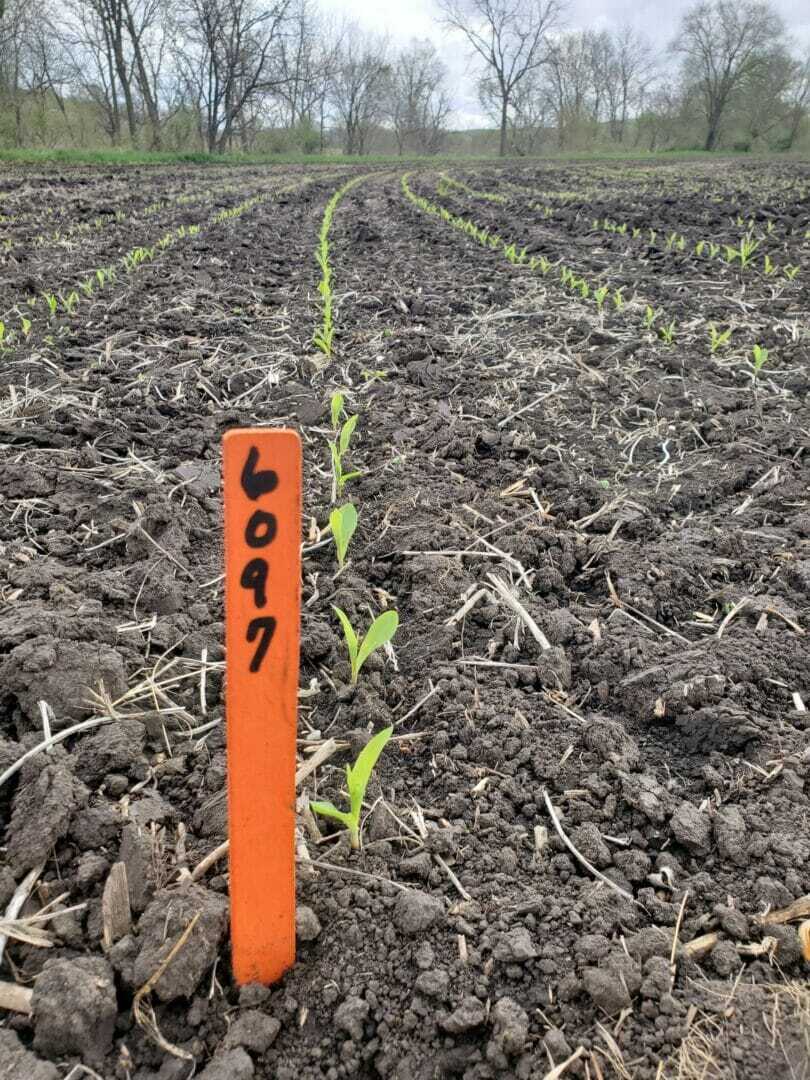
    Evaluating corn and soybean stands early is key to identifying problems – or potential problems – while there is still time to remedy them.  Three methods are commonly used to determine stand counts:

    1. 1/1,000th Acre;
    2. Wheel; and
    3. Hoop.

    (Click on any of the below charts to view the text in a larger font size).

    The 1/1,000th Method involves counting the number of plants in a length of row equal to 1/1,000th of an acre based on row width (See Table 1).  Multiply the number of plants by 1,000 to calculate the number of plants per acre.  Repeat the process in several locations in the field.

    The Wheel Method entails counting 150 plants and measuring the distance from start to finish with a measuring wheel.  To determine plant population, divide the number of feet traveled into the appropriate factor  (See Table 2).

    For the Hoop Method, toss a hoop in a field and count the number of plants inside it.  Repeat this in at least five locations throughout the field.  Multiply the average number of plants by the appropriate factor listed in Table 3 to calculate the number of plants per acre.  NOTE:  Having a hoop with a diameter of 28 ¼” allows you to simply multiply by 10,000 to determine the number of plants per acre.  You can make a hoop this size by cutting anhydrous tubing to 88 ¾ inches and joining it to form a circle.

    Source: Monsanto’s Agronomic Spotlight, 4/26/10, Illinois Agronomy Handbook. 23rd Edition. Pg. 31. Purdue Corn & Soybean Field Guide. 2007.

    Team Latham

    May 5, 2010
    Agronomics, Emergence, General
  • Latham Hi‑Tech Seeds

    No Contracts Needed to Plant Vistive® Soybeans

    Farmers don’t need a contract to plant Latham® Hi‑Tech Soybeans with Vistive technology this spring. They can also sell grain from Vistive soybeans if needed.

    Monsanto recently announced that it is temporarily lifting the processor contract requirement in an effort to meet current demand for Vistive soybeans.

    This recent announcement opens up in-season sales for Latham Hi‑Tech Soybeans L 2735 R2V, L 3153 R2V, and L 2458 RV. Noted as “R2V,” these two soybean brands feature the new GenuityTM Roundup Ready 2 YieldTM soybean technology. Due to continued strong demand for Vistive soybeans and the new RR2Y technology, Latham Hi‑Tech Seeds is raising L2735R2V and L3153R2V this spring and for the 2010-2011 sales year.

    Vistive growers benefit from good yield potential and also a premium of 60 cents per bushel that will add directly to their bottom line. Click here for a list of elevators and grain processor currently available to assist growers with the 2010 Vistive low-linolenic soybean program.

    Team Latham

    May 3, 2010
    Crop, General, Soybeans
  • Latham Hi‑Tech Seeds

    Teacher Appreciation Week

    Next week is Teacher Appreciation Week.  Since our children just love their teachers, we decided to look for ways to honor them.  A little Web surfing turned up a cute, relatively easy and inexpensive idea that I’d like to share with you as an idea for a teacher’s gift.

    Teacher’s Gift

    There really isn’t anything better than telling a teacher why they’re important to your child, so we love the idea of personalizing a notebook. Encourage your child to write a note on the first page of the notebook, letting their teacher know why they’re special. Here’s a link to a few ideas about how to make a cool notebook that your child’s teacher is sure to love – almost as much as the letter they’ll receive!).

    http://littlebirdiesecrets.blogspot.com/2008/08/fabulous-notebook-makeovers-and.html

    Apple for the Teacher

    When I hear “teacher’s gift,” visions of apples automatically flash through my mind. That’s why I’m also sharing a simple, recipe that includes Granny Smith apples. I haven’t yet taste-tested this recipe, so I’ll be eager to hear your comments. As a complement to the main dish, here’s a link to parmesan potatoes.

    Tender Pork Chops with Caramelized Apples and Onions

    Prep Time: 10 minutes

    Cook Time: 3 hours

    Servings: 4

    Ingredients

    • 2 Whole Yellow Onions
    • 3 Whole Granny Smith Apples
    • 1/3 cup Brown Sugar
    • 4 Whole Bone-in Pork Loin Chops
    • Kosher Salt and Freshly Ground Black Pepper

    Directions

    Preheat the oven to 325 degrees. Lightly grease a 9×13 baking dish. Place the onion slices in an even layer over the bottom of the dish. Top the onion slices with the apples. Sprinkle the brown sugar evenly over the apples and onions. Season the pork chops generously on both sides with salt and pepper. Arrange the pork chops in a single layer on top of the apples and onions. Cover the dish tightly with foil and bake in the preheated oven for three hours. Do not open the oven and lift the foil – the pork chops, apples and onions need to be tightly covered the whole time to work their magic (and not dry out). Serve with parmesan mashed potatoes and top with apples and onions.

    Team Latham

    April 30, 2010
    General, Industry News
  • Latham Hi‑Tech Seeds

    Now is optimal soybean planting time

    “Early planting” has taken on a new definition for many farmers this spring as unusually warm, dry weather allowed them to finish planting corn in record time. It’s also causing some farmers to question how early to plant soybeans.

    Benefits of early planted soybeans, defined as late April or early May planting, have shown to outweigh potential risks in some university studies. Research by Iowa State University shows the optimal planting dates for soybeans – if soil conditions are suitable – in the southern 2/3 of the state is the last week of April and the first week of May for the northern 1/3 of Iowa. Seventy-nine percent of the time planting in late April or early May resulted in higher yields than soybeans planted around May 20.

    When determining how early to plant, the potential benefit of yield gain must be weighed against the potential risks. Planting seeds in cool soils can delay emergence and predispose soybean plants to seedling diseases. The ideal soil temperatures for soybeans is 77 degrees Fahrenheit; germination may be delayed by three weeks if the soil temperature at two inches is about 50 degrees. Cool soil temperatures may also slow root development and make seedlings more susceptible to root rotting pathogens that can cause “damping off”.

    Early planting may also predispose soybean plants to infection by Sudden Death Syndrome (SDS). To reduce the risk of SDS infection, choose soybean varieties with good tolerance to that disease. Also be aware of whether the field in which the soybeans will be planted has a history of SDS.

    Webspec Admin

    April 27, 2010
    General, Season, Spring
  • Latham Hi‑Tech Seeds

    Tips to help detect and manage Soybean Cyst Nematode

    Taking soil samples now will help detect Soybean Cyst Nematodes (SCN) but also will help farmers manage a SCN problem. If need be, Iowa State University Plant Pathologist Greg Tylka recommends that farmers switch to soybean brands that are SCN resistant.

    “That single decision could pay dividends to the tune of 10, 15, 20 or more bushels per acre in yield by knowing if you have SCN and managing it properly with resistant soybean varieties,” said Tylka, last week in a news release distributed by the Iowa Soybean Association.

    Tylka says management does take effort, but it is well worth it. “You can’t go by what you’re hearing your neighbors say is happening in their fields,” he says. “(Even) two fields on the same farm could be completely different.”

    To hear Tylka discuss SCN in more detail, visit ISA’s Production Research Web site to listen to this podcast and others. You can also hear Tylka discuss both corn and soybean nematodes on July 30 during a special farm tour at Latham Hi‑Tech Seeds’ headquarters in Alexander, Iowa.

    CystX for broad-based SCN resistance: CystX provides broad-based SCN resistance and significant cyst soil population reductions. CystX varieties show an observed tolerance to Sudden Death Syndrome (SDS), have healthier root systems and possibly give higher test weights. For more information, click here.

    Team Latham

    April 26, 2010
    Agronomics, General, Insects
  • Latham Hi‑Tech Seeds

    How early is too early?

    Recent conversation on Farmers for the Future centered around a very good question: just how early is too early to plant corn?

    Since the 1970s, the time for planting corn in the spring has moved up 10 to 14 days. The ability to plant earlier is mainly attributed to advances in plant breeding and seed treatments, and perhaps, changes in climate.

    A recent article in “Top Crop Manager” states that planting dates vary from April 15-24 across the Corn Belt, depending on soil conditions. Although breeding and seed treatments have allowed for earlier planting, it’s still a good idea to watch the weather. Seed is most vulnerable during its first few days in the soil, so you certainly don’t want to put it in unfavorable conditions early on.

    One tip included in this article involves grabbing a clump of soil and watching how easily it crumbles. If the soil stays in a ball, conditions are not right for planting. If it crumbles easily, the soil is fit for planting.

    It’s also very important to look at farm insurance policies as they relate to planting dates. Make sure you have looked at the specifications for the “do not plant before” dates — if you plant outside those dates, your insurance coverage could be jeopardized.

    In the end, when you plant is truly is a judgment call based on weather and soil conditions. You know your fields better than anyone. And as the article states, it’s very rare that judgment leads a farmer too far beyond the limits.

    To read more of the “Top Crop Manager” article, click here. For a helpful table provided by the University of Nebraska Extension on planting dates, click here.

    Webspec Admin

    April 23, 2010
    General, Season, Spring
  • Latham Hi‑Tech Seeds

    America’s Farmers Honor Earth Day Every Day

    The first Earth day was celebrated 40 years ago, and since that date, a tremendous shift in favor of preserving our environment has taken place. Since much of the credit goes to our nation’s farmers, the National Corn Growers Association wrote in a recent article, we should acknowledge their contributions and increase grower awareness of the sustainability of their own operations.

    “It only makes sense that growers would work to preserve land, water and air,” said NCGA President Darrin Ihnen, a family farmer in Hurley, S.D. “We need to conserve these resources for the survival of our farmers, which most of us have passed from generation to generation.”

    According to USDA, today’s farmers produce 70 percent more corn per pound of nutrients than they did in the 1970s. Farmers are able to use less fertilizer because new high-tech equipment puts fertilizer directly over the plants’ roots instead of spreading it on the whole field, and in-seed technologies are constantly improving corn’s fertilizer-use efficiency.

    Production agriculture has become increasing more efficient and environmentally friendly.  A study released last year from Field to Market shows that producing a bushel of corn has seen a 69 percent decrease in soil loss, 37 percent decrease in land and energy use, 30 percent decrease in greenhouse-gas emissions and 27 percent decrease in water application from 1987 to 2007. And each year, reduced tillage methods save 3.5 gallons of fuel per acre of cropland.

    This Earth Day, April 22, farmers have a good tool to help them discover even more environmental efficiencies. Developed by Field to Market, the Fieldprint Calculator helps farmers assess the efficiency of their operations and improve their management of natural resources. You can check that out here.

    Source: NCGA

    Team Latham

    April 22, 2010
    Agriculture, General, Industry News
  • Latham Hi‑Tech Seeds

    Month-Long Window for 95% Yield Potential

    Despite the trend of farmers planting earlier and earlier, research results recently released by Iowa State University Extension agronomists show that farmers have nearly a month-long window to plant their crops and still realize 95 percent of the crop’s yield potential. The optimal start dates to begin planting corn, according to this study, range from April 11 in southern Iowa to April 15 in northwest Iowa.

    ISU agronomists conducted research on seven sites for three years – 2006, 2007 and 2008 – for a total of 21 site-years. Based on yield data obtained, recommendations have been developed to achieve maximum yield possible in relation to planting date for each of three regions across the state. Each region had a different window of time that optimized the yield, on average. A summary of these windows, as published in Integrated Crop News, follows:

    Northeast region (red):
    This region has the narrowest planting window due to the need to maximize the length of the available growing season. Grain yields begin to drop off more significantly here than the rest of the state if plantings are too late. We recommend planting between April 12 and May 2 (95-100 percent yield window) or between April 12 and 30 (98-100 percent yield window). The dataset is limited for plantings before April 12 in this region, hindering our ability to make recommendations prior to this date.

    Northwest and central region (yellow):
    This region has a flatter yield response to planting date than the other regions. In other words, planting date does not appear as important of a management practice here as in other parts of the state. We recommend planting between April 15 and May 18 (95-100 percent yield window) or between April 15 and May 9 (98-100 percent yield window). Again, information for this dataset is limited for plantings before April 15 in this region, diminishing our ability to make recommendations prior to this date.

    Southern region (blue):
    The yield response in this part of the state is presumably related more closely to rainfall patterns and soil moisture than the length of the growing season since this typically is not a limitation as it is in the northern part of the state. We recommend planting between April 11 and May 13 (95-100 percent yield window) or between April 17 and May 8 (98-100 percent yield window).

    An expanded article, with more detail specifically on the methods behind this project and the development of recommendations can be found on the ISU Corn Production website.

    Webspec Admin

    April 20, 2010
    General, Season, Spring
Previous Page
1 … 151 152 153 154 155 … 160
Next Page

Latham Hi‑Tech Seeds

131 180th Street | Alexander, IA 50420

(641) 692-3258

SIGNUP FOR OUR NEWSLETTER
  • Contact
  • Legal
  • Dealer Center
  • Seedware Login
  • Latham Gear

© 2025 Latham Hi‑Tech Seeds. All rights reserved. | Iowa Web Design by Webspec | Privacy Policy

Latham® Hi-Tech Seeds is a trademark of M.S. Technologies, L.L.C., 103 Avenue D, West Point, IA 52656.