Latham Hi-Tech Seeds

(641) 692-3258

  • Home
  • Performance
  • Products
    • Corn
    • Soybeans
    • Soybean Blends
    • Alfalfa
    • Corn Silage
    • Seed Guide
  • Find a Rep
  • Media
    • Blog
    • News
    • Videos
    • Podcasts
    • TECHTalk
  • About Us
    • Company History
    • Our Mission
    • Careers
    • Become a Rep
    • Sowing Seeds of Hope
  • Contact Us
  • Latham Hi‑Tech Seeds

    There’s No Time like the Present: Scout Fields Now

    Arm worm 2

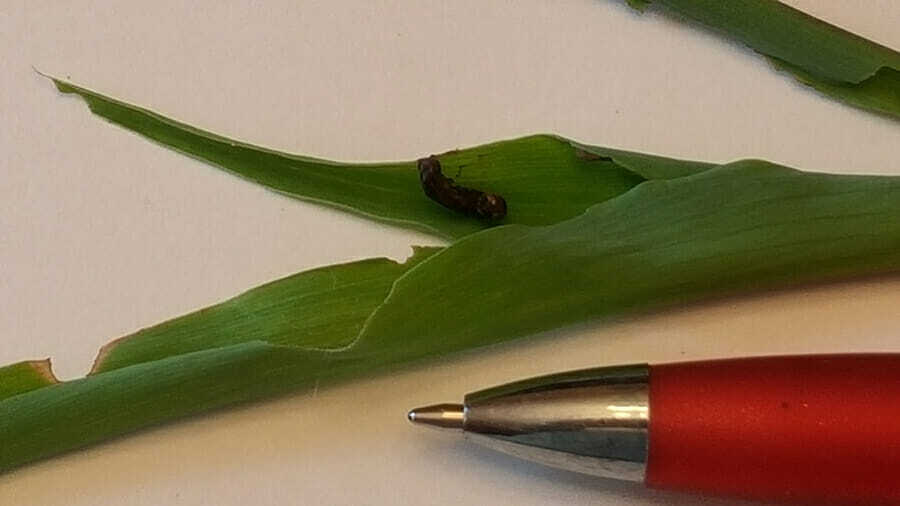
    Black cutworm moths have made their appearance across Latham Territory. Now is the time to scout your fields to determine if an insecticide application is the best economical decision for your particular circumstance.

    Black cutworm moths gravitate towards green vegetation for egg laying, so they will first appear in weedy fields and ones that are next to natural vegetation. Poorly drained, low laying fields also have a higher risk of black cutworm damage. Black cutworm moths travel in from southern states, laying eggs in the field, then producing black cutworm larvae.

    Damage from these insects usually begins above soil service. Newly hatched black cutworm larvae will leave small, irregular holes in the leaves. When walking fields, scout for feedings off the corn plant, which will become more substantial as the worms mature. Black cutworms can cut off young corn plants and reduce crop stands. It is advised to watch for signs of cutworm damage beginning when the corn emerges.

    The map below shows the predicted black cutworm cutting dates, provided by the Iowa State University Extension, based upon research performed throughout the state.

    IowaThis year, the pattern of the black cutworm moths has been irregular. This makes scouting even more essential.

    “With the recent cooler temperatures, emergence of both cutworms and army worms has been delayed,” said Jerry Broders, Latham® Regional Sales Manager for Eastern Iowa.

    The cutworm and armyworm are comparable in appearance with similar economic thresholds. The variance in eating patterns is where these insects differ. Black cutworms chew off more mature corn plants, whereas armyworms feed on the leaves.

    “My advice is to spray fields as soon you see these insects,” Broders said. “ I have seen cutworms take out a field overnight. They can do severe damage when seedlings are emerging.”

    Trait selection is no substitute for scouting, Broders said. He advises that farmers continually scout for insects, because it is going to be a dense year. Download the spreadsheet here to help with black cutworm management decision.

    Broders advises all farmers to continue scouting their fields and apply insecticide if necessary. Contact your Latham® Dealer or Regional Sales Manager to discuss the management decisions for your fields.

    Webspec Admin

    June 8, 2015
    Agronomics, Disease, General, Insects, Weed Control
  • Latham Hi‑Tech Seeds

    Calculating Stand Counts

    Photo May 04 9 11 50 AM1

    As crops emerge across Latham territory, the time has arrived to evaluate planting results. Here’s a quick how-to on taking stand counts in your fields.

    Webspec Admin

    May 28, 2015
    Agronomics, Corn, Crop, Emergence, General
  • Latham Hi‑Tech Seeds

    Uneven Corn Stands: The Why and How

    Stunted corn roots

    Lots of seed corn got planted early when temperatures were cool and moisture was abundant.  As a result, I’m hearing reports of uneven corn emergence. Some farmers are asking how to remedy the situation. Others are questioning whether they should replant portions of their fields.

    Let’s begin by explaining what causes uneven corn stands and then address whether or not anything should be done. Uneven corn stands most often are the result of these four circumstances:

    1. Improper equipment calibration/maintenance;
    2. Soil conditions at and after planting;
    3. Pests; and
    4. Poor management practices.

    At this point in the growing season, I’m going to focus on uneven stands that are a result of conditions at planting time including equipment calibration and soil conditions. Most farmers do a very good job and problems arising from equipment calibration or maintenance are few and far between.

    Problems are more often to arise when conditions for doing fieldwork and planting are good for an extended period of time.  Farmers tend to keep working until they get rained out, so they may not take time for regular equipment maintenance and calibrations if the sun shines for extended periods of time.

    Remember to check your equipment, especially your planter, before you head to the next field! Failure to maintain your planter can result in skips and doubles. University studies have found that skips are more limiting to overall yield in most situations but both can have a negative effect.

    In addition to having your equipment properly calibrated, it’s important to plant in fit soil conditions. Uneven emergence may result from soils that are either too wet or too dry. Soil moisture can differ because of varying soil types, topography and tillage practices. The difference can be seen across whole fields, in certain areas of a field, or even from one row to the next.

    Rainfall patterns leading up to planting are critical to emergence. Seeds placed in dry soil will not germinate without rainfall.  Rains that are spotty may cause uneven stands.

    Planting in soils that are too wet can cause lower germination, uneven emergence and growth, restricted root growth (as pictured), and stunted seedlings.
    Planting in soils that are too wet can cause lower germination, uneven emergence and growth, restricted root growth (as pictured), and stunted seedlings.

    On the other hand, working fields that are too wet also causes problems. Soil that is too wet will cause cloddy seedbeds, resulting in poor seed-to-soil contact and uneven emergence.

    Another concern, especially in continuous corn and no-till fields, is how residue from the previous crop will affect the current crop. Uneven distribution of residue can result in differing soil temperatures across the field, which causes plants to germinate irregularly.

    In addition, soil temperature may lead to uneven emergence. This spring a cold front caused soil temperatures to decrease after many acres of corn were planted. Look at planting when soil temps are consistently above 50° F and are expected to rise! The ideal soil temperature for planting corn is 60° F.

    To minimize the risk of uneven stands due to soil conditions, carefully monitor each field.  Check the moisture at different levels.  I like to see corn planted at 2 inches deep when conditions are optimal, but I have seen corn planted as deep as 3” without very many emergence problems. Keep in mind, the deeper you plant, the greater chance there is the seed “running out of gas” before it emerges, especially when there’s a heavy rainfall and the soil surface crusts over.

    There are many factors that can contribute to delayed emergence. So what should you do about uneven emergence? Assess if the problem really warrants remediation. Check with a trusted agronomist if you’d like another opinion.

    Rather than trying to fill in the gaps, it’s usually best to till up a field or a portion of a field prior before replanting. Click below for additional replanting resources:

    • Corn Replanting Decisions
    • Soybean Replanting Decisions


    Mark Grundmeier, Product Manager

    May 21, 2015
    Agronomics, Corn, Crop, Emergence, Season, Spring, Tech Tuesday
  • Latham Hi‑Tech Seeds

    Time to Begin Early Spring Crop Scouting

    Water hemp

    Most soil-borne pathogens strike as soon as the seed begins to take on water; others strike seedlings. Because seeds can germinate and emerge within 3 to 5 days, post-planting is an ideal time to begin scouting crops.

     Start taking field notes now on how well each particular hybrid number is emerging. Observe the uniformity of the stand across the field. There may be certain areas that show poor emergence, while the rest of the field will have a good stand.

    You may notice a difference in emergence and stands in early planted fields compared to later planted fields. Soils were warmer in early April than they were during the third week of the month. The magic temperature for corn to germinate is 50 degrees Fahrenheit. The ideal soil temperature for soybean germination is 77 degrees, but it’s usually late May or early June before soils reach those temperatures here. Instead we recommend that farmers wait until soil temperatures are about 60 degrees before planting soybeans.

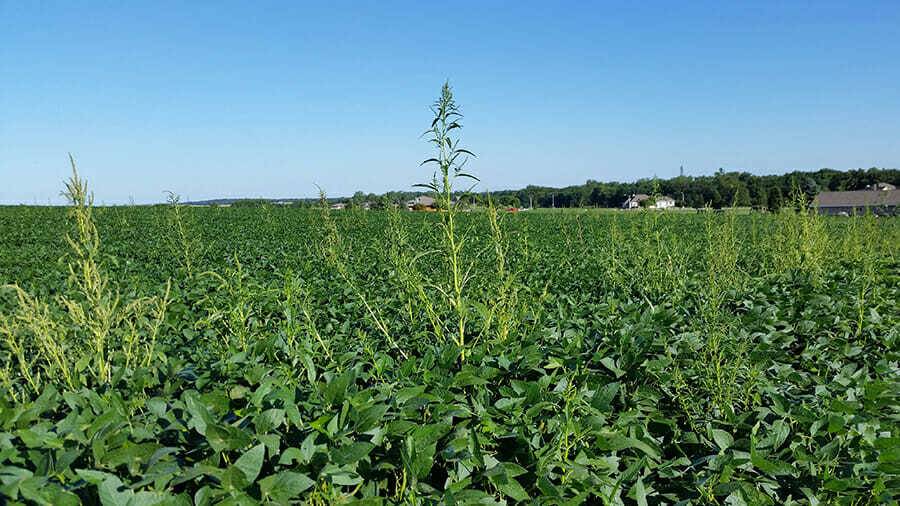
    The combination of warm temperatures with gentle rains that we have received in North Central Iowa this week are just what the seeds in the ground need. Of course, this also makes ideal growing conditions for weeds! 

    water hempShortly after emergence is a good time to start looking for weeds. Monitor fields weekly through the growing season for the most effective weed management. Dr. Mike Owen, Associate Chair of Iowa State University’s Agronomy Department and Extension Weed Specialist, recommends using a soil-applied residual herbicide on all acres. He advises farmers to know what herbicides they’re using, what those herbicides control – and do not control – plus the potential for crop injury.

    Diversity of tactics is key, says Dr. Owen. Rotating crops, rotating traits and rotating pesticides is the best way to slow down the very natural process whereby pests develop resistance to products that mankind uses to protect crops.

    Today’s seed technologies, such as Genuity® SmartStax®, allow you to rotate modes of action on corn ground. Latham soybean customers this spring planted a record number of LibertyLink soybeans. In fact, farmers like Mike Albertsen produced their best yields ever in 2014 using Latham soybeans with LibertyLink technology.

    Your 2016 crop plan begins with notes taken throughout the growing season. Then talk with your local Latham representative about designing a crop plan that controls weeds and addresses other challenges you see throughout the growing season like insects and disease. For more information, feel free to contact the Latham office at 1-877-GO-LATHAM (1-877-465-2842).


    Webspec Admin

    May 7, 2015
    Agronomics, General, Insects, Weed Control
  • Latham Hi‑Tech Seeds

    Set Up #Crop15 for Success

    Pic 2

    #Plant15 is in full swing across the Midwest. With a 7-day forecast calling for nothing but sunshine and temperatures in the 70s, there’s talk that many farmers will go straight from planting corn to soybeans. We’re well within the window for achieving optimal yields for both corn and soybeans.

    Research by Iowa State University shows the optimal planting dates for soybeans – if soil conditions are suitable – in the southern 2/3 of the state is the last week of April and the first week of May for the northern 1/3 of Iowa. Seventy-nine percent of the time planting in late April or early May resulted in higher yields than soybeans planted around May 20.

    Due to the shorter growing season in the Dakotas and Minnesota, it’s important to plant soybeans early to catch more daylight. Soybean maturity is based on the length of daylight hours, and we all know the number of daylight hours decreases after June 20. Farmers must weigh the need to optimize daylight hours with the need for warmer soils.

    Experience has shown us that good yields are made when farmers hold off planting soybeans until soil temperatures reach – and maintain – temperatures of 60. Soil temperature is more critical when planting soybeans than corn because corn can more readily germinate in a soil environment of about 55 degrees.

    If the air temperature after germination hits 28 degrees Fahrenheit or less, soybean seedlings can be killed since the growing point of the plant is right at emergence. That’s why it’s also important to look at the 10-day forecast to see what temperatures will likely be when the seedlings emerge.

    it pays to stop the planter periodically and check (1) seed-to-soil contact; (2) planting depth and (3) seed spacing.
    it pays to stop the planter periodically and check (1) seed-to-soil contact; (2) planting depth and (3) seed spacing.

    We certainly understand a farmer’s eagerness to get seed in the ground, but we also know that it pays to take a few precautions. Get out of the cab periodically and check (1) seed-to-soil contact; (2) planting depth and (3) seed spacing. Watch for skips and doubles. Missing plants will decrease yield relative to a uniform stand. Finding too many doubles is not only a waste of seed, it can also mean that your planting units are in need of adjustment or repair.

    Inadequate planter adjustments coupled with fast planter speeds results in seeding depth variability within a row. Variable seeding depth translates into variable emergence rates which results in reduced yields. Take your time and have a safe planting season!

    Team Latham

    April 30, 2015
    Agronomics, Emergence, General
  • Latham Hi‑Tech Seeds

    Battle Weed Resistance with Herbicides from Different Groups

    Weed resistance continues to be a topic of discussion during winter meetings with farmers and others in the ag industry. Many are anxiously awaiting full global approval of herbicide traits like Enlist™, Xtend™ and Balance GT,™ but remember, herbicides alone will not remedy weed resistance.

    “Diversity of tactics is key to consistent weed management and high crop yields,” said Iowa State Extension Weed Specialist Dr. Micheal Owen while presenting at Latham’s field day in September 2011. He pointed out that rotating crops, rotating traits and rotating pesticides is the best way to slow down the very natural process whereby pests develop resistance to products that mankind uses to protect crops.

    Herbicide products kill plants by binding to specific proteins and inhibiting the functions of those proteins. This is commonly referred to as the site (mode) of action. Check the numbering system, usually printed on the first page of the manufacturer’s label, to categorize each herbicide by its site of action.

    “Weeds will adapt, so you must know your herbicide action group,” Dr. Owen during a recent Crop Advantage Series jointly presented by Iowa State University and the Iowa Soybean Association.

    For example, say a farmer has been using Prowl® and FirstRate® pre-emergence on Roundup-Ready® Soybeans followed by Roundup® and FlexStar® post-emerge.  He wants to rotate chemicals for better weed management. Next year he’s planning to use Treflan® plus Raptor®, followed by Roundup and Resource®.  The problem? Prowl and Treflan are both classified as group 3 herbicides.  FlexStar and Resource are group 14, and Raptor and FirstRate are in group 2.  He might see some improved weed control simply because the herbicides have slightly different active ingredients, but his rotation will not help prevent weed resistance.

    A better plan would be to use Dual® (group 15) plus Sencor® (group 5) pre-emergence followed by Roundup plus Basagran® (group 6).  And the BEST plan would be to plant LibertyLink™ Soybeans instead of Roundup-Ready and then switch Liberty® herbicide (group 10) in that plan for the Roundup (group 9) and the Basagran!

    Using multiple products with different sites of action, however, is not enough.  Farmers must also make certain the herbicides are effective against the weeds they are trying to manage. Mechanical methods of weed control including cultivation even hand-weeding must be considered, as well as crop rotation and other cultural practices.

    More information on which herbicides belong to which site-of-action group is available at http://www.weeds.iastate.edu/HerbicideChart.pdf.  This website also gives information on many of the premix herbicide combinations and the groups to which they belong.

    Webspec Admin

    January 28, 2015
    Agronomics, Corn, Crop, General, Herbicide Technology, Industry News, Soybeans, Weed Control
  • Latham Hi‑Tech Seeds

    Watch for Sudden Death and Stink Bugs in 2015

    Each December researchers from across the Upper Midwest gather at Iowa State University in Ames for the Integrated Crop Management (ICM) conference where they present data and opinions on a wide variety of topics. Information, which I believe is most pertinent to the Midwest states in which we do business, is summarized below.

    SDS: Sudden Death Syndrome (SDS) was severe in many fields in 2014. Many Latham® Ironclad™ Soybeans were put to the test and did an excellent job of handling the disease! Understanding the extent of SDS infection in each field is key to effectively managing the disease. Future management tactics include: reducing soil compaction; planting fields with a history of SDS towards the end of a planting schedule when soils may be warmer and drier; and testing for the presence of Soybean Cyst Nematodes.

    However, the very nature of SDS makes it difficult to predict if and when an outbreak will occur. Dr. Daren Mueller, Iowa State University Extension Plant Pathologist, and his team shared years of extensive research on SDS including:

      • Glyphosate herbicide applications do not adversely affect or enhance the presence of SDS in soybean fields.
      • A side benefit of this study was a look at glyphosate applications versus manganese availability in plants. Fourteen field experiments were conducted in Iowa, Illinois, Indiana, Michigan, Wisconsin and Ontario, Canada. There were no interactions between glyphosate and the total manganese available in soybeans.
      • That same study did include a new treatment called ILeVO™ from Bayer CropScience. It showed significant effectiveness at reducing the severity of the disease, resulting in 2½ to 3 bushels of saved yield on average. Bayer expects full registration for this product soon.

    NEW, INVASIVE INSECT: The Brown Marmorated Stink Bug (BMSB) is a fairly new insect species that has the potential to cause serious crop injury. It is already considered a severe agricultural pest in New England and East Coast states. It was first noticed in Pennsylvania in 1998 and has rapidly spread to 41 states. It was first seen in Iowa in 2012; in 2014, BMSB was confirmed in eight Iowa counties. This particular species has the typical “shield-like” body of other stink bugs. However, BMSB also has rounded shoulders, white and dark bands along the edge of the body and along the antennae plus the marmorated (speckled) appearance on its back.

    This insect will feed on over 100 different species of plants, including many fruits, vegetables and field crops. In corn, BMSB feeds directly on developing kernels right through the husk causing aborted, shrunken and discolored seeds. Similarly, it will feed on soybeans directly through the pods and cause extensive damage to the seeds present. Control can be achieved with several insecticides but residual may not last long enough to prevent the insect from re-infesting the field.

    Webspec Admin

    January 15, 2015
    Agronomics, Crop, Disease, General, Insects, Soybeans
  • Latham Hi‑Tech Seeds

    Reach New Yield Levels in the New Year!

    TenWays SoybeanYield Blog

    This time of year the headlines are filled with tips to help consumers reach their New Year’s Resolutions for “getting healthier” and “losing weight while eating great.” As seed product manager, I confess that my New Year’s Resolutions have more to do with achieving more rather than doing with less!

    “Higher yield” tops my list for 2015. We’re encouraged by results from the 2014 F.I.R.S.T. Trials. Latham Hi‑Tech Seeds won 38 location or regional summaries with 19 different products! We had 77 Top 3 finishes, 127 Top 5 finishes and 275 Top 10 finishes!

    TenWays_SoybeanYield_BlogOne key to our success is working as a team to select products selected for local growing conditions. Our team approach includes working with Latham® dealers and customers in every region to conduct on-farm research. While we enjoy winning yield trials, we’re most interested in winning on your farm!

    Here’s my Top 10 List for how we can all achieve top soybean yields in 2015:

    1. Variety Selection: In my opinion, this is THE most important factor to achieving higher soybean yields. Farmers must manage a number of stress factors: disease, weeds, Soybean Cyst Nematodes, etc. Fortunately, many of these stress factors can be managed through careful variety selection. Many regions are experiencing weed resistance to glyphosate herbicides, so keep in mind that Latham has LibertyLink soybeans available.
    2. Seed-to-Soil®: Research shows correct product placement leads to a 3 to 7% yield improvement. Basing seed selection mostly on cost per bag and the size of the seed in the bag won’t add a single bushel to your overall yield. Understanding a particular product’s response to soil type or planting population, however, will! Get to know your local Latham® representative and work with him or her to develop a crop plan for success.
    3. Early planting: Soybeans are a light-sensitive crop, so it stands to reason that an earlier-planted crop has more potential for yield since it will have greater access to sunlight. However, there are risks associated with early planting. Protect early-planted soybeans from seedling diseases and insects by using seed treatments with either a fungicide or a fungicide-insecticide combination. Latham’s own SoyShield™ brand seed treatments are an excellent choice!
    4. Weed Management: Soybeans are very sensitive to early-season competition from grass and broadleaf weeds. Using a weed control program that includes a pre-emergence herbicide and a post-applied product reduces stress from weed pressure and allow for early canopy closure. An early complete canopy is important to intercept as much sunlight as possible throughout the growing season.
    5. Narrow Row Spacing: Based on the theory that enhanced yields are tied directly to the amount of light intercepted by the soybean crop, narrow row spacing can help close the canopy and allow for increased light interception. I strongly recommend that farmers take a look at row spacings in the 15- to 20-inch range. Over many years of field observations, this seems to be the range that affords the greatest amount of yield potential while also mitigating risks (such as White Mold) associated with drilled soybeans in the 7- to 10-inch range.
    6. Soil Fertility: When striving for higher yields, ensure adequate soil nutrients are available to achieve those yields or else all their careful planning and cultural practices will be for naught. Again, Latham’s Seed-2-Soil Nutrient Management program is invaluable to help farmers achieve these goals. Soil sampling, field mapping and nutrient recommendations are just three of the many benefits.
    7. Soybean Cyst Nematode: SCN is the number one pest of soybean fields in the United States. You really can’t even begin to think about raising 80 bushel per acre (bu/A) or even 60 bu/A soybeans until you know SCN populations are in each field. Nematodes tend to cause the most damage in drier years where soil moisture is lacking and plants are already under severe stress. 2012 was one of those years and we saw a significant amount of SCN damage that reduced overall yields. Here again, soil sampling and careful variety selection are critical.
    8. Crop Rotation: Many will argue this comment, but in my opinion, the corn-soybean crop rotation is still the most profitable practice for farmers over time. The long-term benefits of this rotation outweigh the short-term successes of corn-on-corn or even beans-on-beans.
    9. Scouting: Scouting your fields at least once a week is crucial. There will be times during the year when once a week isn’t often enough, and you might find yourself scouting fields every other day! Most land-grant universities support Extension programs in their respective states that give excellent advice on crop scouting.
    10. Inoculants: If soybeans haven’t been grown in a field for 4 or 5 years or if the soil is sandy, then inoculating the soybean seed should be seriously considered. Most fields in the Upper Midwest won’t require inoculants if they have been part of a corn-soybean rotation. Here again, scouting your fields, knowing your soils and digging up plants to assure proper nodulation is crucial for achieving top-end yields.

    Webspec Admin

    January 5, 2015
    Agronomics, General
  • Latham Hi‑Tech Seeds

    Don’t Pinch Pennies on Potassium!

    Graph SciMax

    PeterBixelby Peter Bixel, Seed-2-Soil

    With commodity prices lower, it’s certainly prudent for farmers to rethink each input expense. Crop inputs are certainly one big investment! I’m a farmer myself, so I understand the value in evaluating investments.

    Analyzing investments is really an exercise in managing expectations. We might settle for returns of 2 to 5% on our bank savings accounts and 401K, right? We don’t want to skimp on investments that will help us in the future. So why skimp on your Phosphorus (P) & Potassium (K) fertilizer investments? After all, an investment in P & K has the potential to return 100-700%!

    Phosphorus aids in healthy root growth, as well as flower and seed production. Potassium is responsible for improving overall health and disease.

    Local data is critical for analyzing where your fertilizer dollars are best spent. Our data shows that across 400,000 acres, phosphorous values continue to be in the High category of soil test values with an average of 28ppm. This is more than likely because of manure history, fertilizer application and soil types in our area. However, potassium levels continue to be an area that needs to be addressed in order for us to not mine what we have invested in building up. Potassium levels are in the medium category with an average of 160ppm, while we are trying to reach 200ppm and higher.

    Take a look at the Potassium Calibration Curve below. With low soil test K values, your potential for high yielding crops dramatically decreases. Take your 2013 Local Data, looking at Corn on Corn Yield to Soil Test K, as soil test levels go from Low to High categories, yield increased 20bu/ac. How do these returns look to you?

    Potassium plays an important role in the utilization and uptake of Nitrogen and in turn meaning improved N use and higher yields. Higher rates of K allow for efficient use of more N, which resulted in better early vegetative growth and higher yields. K fertility is another important piece of the puzzle for high yielding crops.

    With tighter margins moving into 2015 crop year, it is important to remember to use YOUR data to help make the best investment decisions and to make sure you don’t mine your soil fertility.

    Make sure you’re not losing a dollar by trying to save a penny!

    Graph-SciMax

    Team Latham

    October 16, 2014
    Agronomics, Corn, Crop, Fertility, General
  • Latham Hi‑Tech Seeds

    Late-Season Scouting Leads to Better Seed Decisions

    RootwormPressure
    RootwormPressure
    Rootworm pressure may be low, but it’s present. Latham Corn Specialist Nick Benson (@LathamCornGuy) saw evident this week in a continuous corn field.

    The effects of our wet, cold planting season continue to surface. As one drives the back roads now, you’ll see where Sudden Death Syndrome (SDS) is affecting many soybean fields. You also may notice soybean fields turning yellow, which is a common symptom of Iron Deficiency Chlorosis (IDC).  IDC is a function of the soil type, so it’s most common in poorly-drained soils with higher-than-normal pH values.

    Plants under stress get taken advantage of by pests like Soybean Cyst Nematode (SCN). Doing a “drive by” or even walking through the fields may not be enough to detect SCN. Visual symptoms, such as above-ground stunting and/or yellowing, may not be evident for years. That’s why it’s best to check fields for the presence of SCN during the growing season by digging roots. You can also sample this fall for SCN by gently removing soil from the roots. Look for the egg-filled, round, white SCN females on the roots.

    While your shovel is at the ready, also be sure to conduct a few root digs in your corn fields. Latham Corn Product Specialist Nick Benson dug roots Sept. 2 in Fayette County Iowa, where he found evidence of rootworm feeding. In addition to looking for corn rootworm damage, note signs of sidewall compaction and hard pans. Also look at leaves and ears for signs of disease.

    It’s important to identify late-season corn and soybean diseases, as well as insect damage, so you can better manage them in the future. One way to control corn rootworms, for example, is to rotate rootworm-resistance traits developed by Monsanto, Syngenta and Dow.

    As an independent seed company, Latham Hi‑Tech Seeds has access to traits and technologies from all the major providers. We can work with you to develop a diverse crop plan that include Latham’s GladiatorTM Hybrids, which combine the best genetics and traits available to help maximize yields from corn-on-corn acres.

    To help simplify your soybean seed selection process, our website lists Latham® IRONCLAD™ Soybeans that include exceptional genetics and industry-leading protective traits to battle against yield-robbing threats from pests and diseases. Each IRONCLAD soybean brand must be Soybean Cyst Nematode resistant and carry an Iron Deficiency Chlorosis rating of 2.2 or better.  IRONCLAD brands must protect against either White Mold or Sudden Death Syndrome with a rating of 2.2 or higher.

    White Mold and SDS have both been an issue this season in different parts of our territory, so farmers will want to plant IRONCLAD soybeans on affected acres in the future. Plus, IRONCLAD products have strong defensive ratings against Phytophthora Root Rot and Brown Stem Rot.

    For more information about selecting the right seed for your situation, visit with your local Latham® representative. Also feel free to contact me at 1-877-GO-LATHAM (1.877.465.2842).

    Webspec Admin

    September 4, 2014
    Agronomics, Corn, Crop, Disease, General, Insects, Soybeans, Weed Control
Previous Page
1 … 46 47 48 49 50 … 67
Next Page

Latham Hi‑Tech Seeds

131 180th Street | Alexander, IA 50420

(641) 692-3258

SIGNUP FOR OUR NEWSLETTER
  • Contact
  • Legal
  • Dealer Center
  • Seedware Login
  • Latham Gear

© 2025 Latham Hi‑Tech Seeds. All rights reserved. | Iowa Web Design by Webspec | Privacy Policy

Latham® Hi-Tech Seeds is a trademark of M.S. Technologies, L.L.C., 103 Avenue D, West Point, IA 52656.