Latham Hi-Tech Seeds

(641) 692-3258

  • Home
  • Performance
  • Products
    • Corn
    • Soybeans
    • Soybean Blends
    • Alfalfa
    • Corn Silage
    • Seed Guide
  • Find a Rep
  • Media
    • Blog
    • News
    • Videos
    • Podcasts
    • TECHTalk
  • About Us
    • Company History
    • Our Mission
    • Careers
    • Become a Rep
    • Sowing Seeds of Hope
  • Contact Us
  • Latham Hi‑Tech Seeds

    Day 8: Blin Uses Bling & Beef to Build Bridges

    Crystal Blin blogs about her life as a farm girl and everything that comes with it.  That means if the cattle must fed but she has a wedding to attend, she just might wear a dress and heels while doing chores.  After all, a girl’s gotta do what has to be done!

    “Cattle are my first love, and they still touch every part of my life,” says Crystal, who grew up raising purebred Simmental cattle in Breton, Alberta, Canada, with her parents and younger sister.  A livestock judging scholarship took her to Butler Community College in El Dorago, Kansas.  She later transferred to Kansas State University where she double-majored in Animal Science and Ag Communications. Upon graduation, Crystal became the assistant director of communications for the American Angus Association in St. Joseph, Missouri.

    “I started blogging to help eliminate some of the distance between me and my family,” explains Crystal, who launched her Crystal Cattle blog in 2009.  “I thought it would be a good way to stay in touch and give them a glimpse of my life here.”

    What she learned is that a blog gave her a platform to promote her passions.  The turning point came when Crystal posted a response on her blog to an article that the Kansas State campus newspaper had published, promoting vegetarianism, veganism and animal rights.

    “If that was happening on a campus where there is such an ag focus, I couldn’t imagine what was happening in less ag-focused areas,” says Crystal.  “I had to refute some of the claims being made.  When I got so many responses to that particular blog posts, I realized the impact my blog could have on helping others understand agriculture and farming practices.”

    Today Crystal continues to advocate from her home on a northeastern Iowa farm with her husband, Jon. They couple met in 2010 at the National Western Livestock Show in Denver.  Now they’re building their own herd of purebred Herefords, which is the breed Jon grew up raising and showing.  In addition to raising stock and heifers that become show prospects for junior members, Jon and Crystal sell freezer beef.

    Marrying an Iowa farmer meant Crystal had to relocate once again.  So how did this native Canadian feel about that?  “The transition to Iowa was easier because I was involved in agriculture,” says Crystal, who feels fortunate to be able to office from home doing a job she loves.  She’s responsible for the sales and marketing of a livestock vitamin and mineral supplement called VitaFerm, which keeps her on the road about one-third of the year.

    “Agriculture is really one big family no matter where you are.  The people you meet in ag always have their arms and homes open, so you never really feel like you’ve met a stranger.  Even if you’re with a new group of farmers, you’ll find something in common.”

    Crystal also seeks for common interests among non-farmers as a way to build relationships and bridge gaps.  That’s why she blogs about more than agriculture.

    “I love MAC makeup, clothes and interior design,” says Crystal.  “I’ve formed a lot of great online relationships with other non-farmers who share these interests.  As a result, these consumers have started to ask me questions about farming.  I’d rather have them ask me instead of Google for an answer.  Online engagement helps consumers understand that farmers are real people.  I want to help them get an accurate portrayal of farm life.”

    Turquoise Thursday and Watching Corn Grow are regular features on Crystla’s blog.  She also covers “tough subjects” like why they give cows antibiotics when they’re sick.  In addition, she promotes the livestock industry and beef production by sharing recipes on Hunk of Meat Mondays.  A little “consumer education” occurs with the recipes Crystal posts like this one for Flat Iron Steak with Green Peppers: “Flat Iron steak is one of the 29 lean cuts of beef.  It’s the second most tender cut of beef and is pretty reasonably priced. You could also use a flank steak or round steak for this recipe.”

    Today Crystal is sharing another one of her go-to recipes with us.  She shares my desire to make homemade, wholesome and delicious meals in a matter of minutes.  I’m looking forward to giving this recipe for Baked Tacos a try!  How about you? 

    Team Latham

    November 8, 2013
    Agriculture, General, Industry News
  • Latham Hi‑Tech Seeds

    Day 7: Throwback Thursday: Homegrown Values

    TBT2

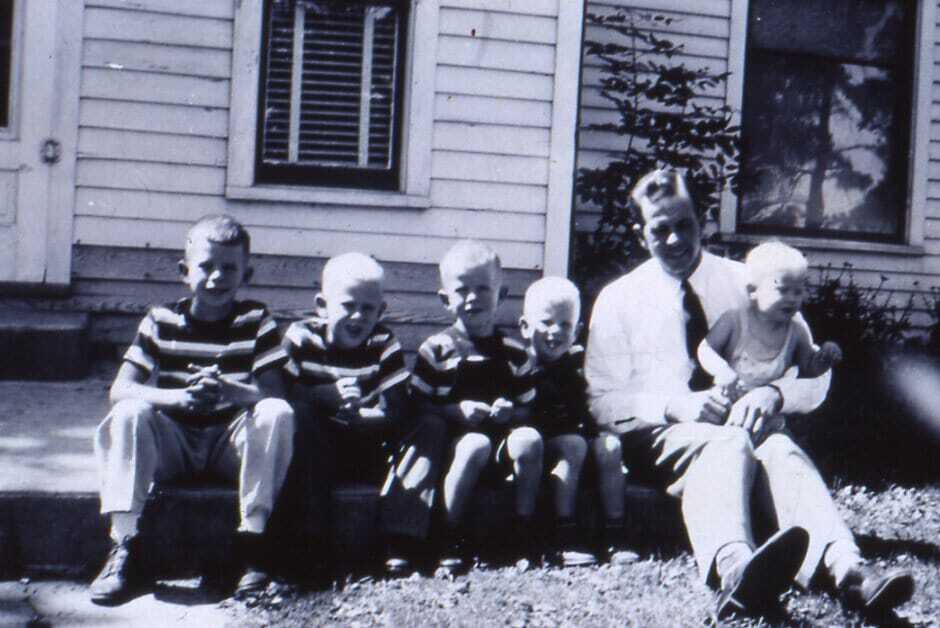
    Latham’s homegrown labor force worked to grow a family farm into a regional seed business

    img209

    Team Latham

    November 7, 2013
    Agriculture, General, Industry News
  • Latham Hi‑Tech Seeds

    Day 6: Wordless Wednesday

    Day6

    Soybeans are delivered straight from the growers’ fields to Latham headquarters where we then condition the soybeans and store the seed

    Day6

    Team Latham

    November 6, 2013
    Agriculture, General, Industry News
  • Latham Hi‑Tech Seeds

    Day 5: Farm Bill Needs “Palavering”

    MusingsHeader“Musings of a Pig Farmer” by Larry Sailer
    Since this is November and folks on social media platforms are sharing #thanks, I’d like to say how thankful I am to have a chance to share my thoughts weekly on TheFieldPosition.

    This past week I posted a comment on Facebook for the purpose of seeing how closely it would be read. I wrote: “Spending so much time in the fields this fall, I have given this a lot of thought, and decided I should say, something profound…”

    The placement of a comma can be overlooked so easily. I know many really were in suspense, waiting for what I had to say.  Others caught it right away!

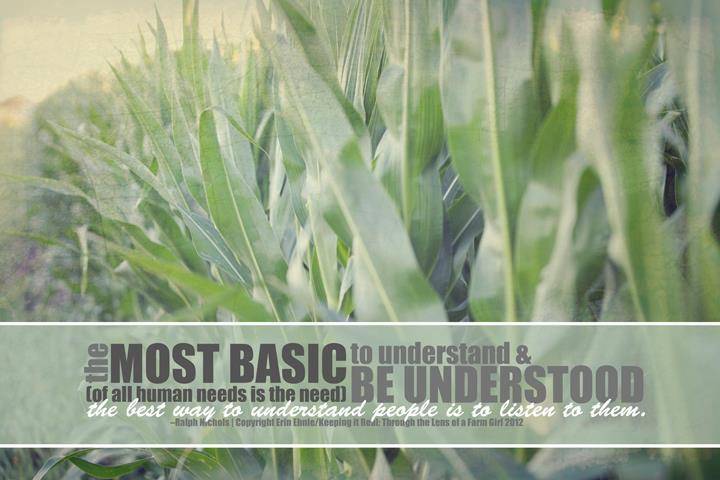
    This brings up a point I often make about how we must listen first before determining what another person is trying to say.  I made this statement in Michele Payn-Knoper’s book, No More Food Fight, “A conversation must include listening. I need to know the concerns of people and to learn how they view what I do. I don’t live on Old McDonald’s Farm anymore and my farm animals are not the same as the cartoon characters you see on TV.”

    The difficult part for me is that too many conversations are one sided.  For example, the anti-GMO crowd has what seems to be an unending list of talking point.  Emotion rules with talk of Agent Orange and fears that mutinational corporations are taking over our food supply.  The real clear and present Danger is opposing GMOs.  There have been so many good points made about GMOs that the debate should be over, but emotion rules!

    I learned a new word today, palaver, as in The Vatican Enters a GMO “Palaver.”   I’ll admit that I had no idea what this word meant before I read this Agri-Pulse headline.  I looked it up to find palaver means “a patient and thorough exploration of a major problem.”  The word I key in on here is “patient,” and I take this to mean to listen!

    Just think the progress that could be made if we had a palaver on the Farm Bill right now!  An article by Brigitte McMinn explains how regulations are paved with good intentions, but it questions what good our government regulations really accomplish and at what cost.  This article takes on the SNAP program and how it became connected to the Farm Bill.  It also digs in to a part of the bill pushed by HSUS to more regulate animal welfare.  There’s a really important call to action at the end, so please read it!

    I know getting involved takes time and effort, but keep in mind my new word for the week – palaver!  Tomorrow on #AgChat, there will be discussions on ag legislation and the Farm Bill.  Hopefully, you can join the conversation between 8-10 p.m. EST.  Remember, your voice can’t be heard if you don’t speak up for agriculture!

    Larry Sailer, Musings of a Pig Farmer

    November 5, 2013
    Agriculture, General, Industry News
  • Latham Hi‑Tech Seeds

    Day 4: Opposition to GMOs is Clear & Present Danger

    Fraley quote

    “Some people don’t understand the science behind the (GMO) technology, and what you don’t understand, you normally fear,” writes Suzie Wilde, who blogs at I Kissed a Farmer.

    I couldn’t agree more.  Fear causes people to make decisions and act in ways that defy common sense and common decency.  For example, vandals destroyed a “Golden Rice” trial on Aug. 8, 2013, in the Phillipines.  “Golden Rice” is a rice variety in which rice grains accumulate B-carotene.  This rice variety has been ready for use since the turn of the 21st century, yet it is still not available to farmers.

    Meanwhile, literally millions of people who live in poverty suffer from Vitamin A deficiency resulting in compromised immune systems.  Severe Vitamin A deficiency also results in blindness, and nearly 50% of the half-million children who are blinded by it die within a year.  From 1.9 to 2.8 million deaths could be prevented annually if Golden Rice were available in these poverty stricken areas!  We know these deaths could be prevented, yet we’re letting fear of the unknown prohibit us from helping these poor people.

    Fear of the unknown is also causing agriculture to come under attack on the Hawaiian Island of Kauai, known as the Garden Island.  Activists from the mainland are funding a campaign to remove four seed and technology companies from Kauai.  The anti-GMO groups are citing pesticides as the reason, but their real agenda is to advance their battle against all GMO crops.

    If seed companies are forced from the Hawaiian Islands, it will have a negative effect on our seeds in the Midwest.  It will slow-down the time new hybrids and varieties reach market as research facilities in Hawaii speed up hybrid development from 10 or 12 years to just 3 to 5 years.

    Why does this matter?  It matters because new corn hybrids are higher yielding than older hybrids.  The average “life” of a hybrid seed corn product today is less than three years because these hybrids are replaced by higher-yielding products or products that have the potential due partly to protection mechanisms they have against insects and disease.

    If Zambian farmers had access to seed with better defenses against weeds, pests and weather extremes, their living standards would rise considerably.  Kelvin Kamfwa says his parents, just like millions of subsistence farmers in Zambia, struggle to survive.  He knows firsthand that better seeds equal better life.

    Access to GM crops would provide youth with options and opportunity in a country where flushing toliets and education are considered luxury.  Activists say they’re protecting human health and the planet when they protest biotechnology and GMOs, but Kamfwa says protestors are really condemning millions to lifelong poverty.

    GM crops can help farmers worldwide rise above poverty through heartier, healthier plants and increased yields.  It’s a fact that seed technology advancements have allowed farmers to make significant yield increases in recent years.  In 1912, U.S. corn yields averaged just 20 bushels per acre (bu/A).  Iowa corn yields averaged nearly 200 bu/A in 2009.  This week I visited an Iowa farmer, who achieved whole-farm averages of 300+ bu/A; one of his test plots produced a yield of 414 bu/A.

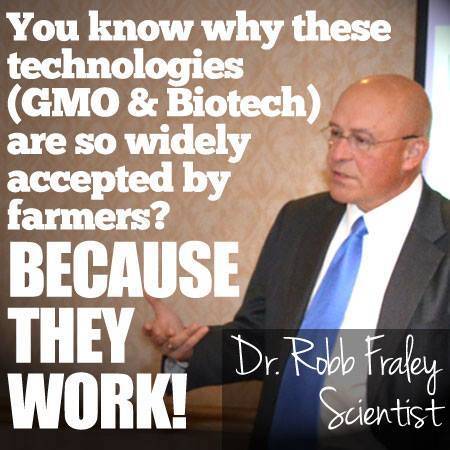
    Fraley quoteJust think how many more people can be fed with corn yielding 400 bu/A as compared to 20 bu/A!  As Dr. Robb Fraley, who’s often referred to as Father of Biotechnology says, “GM crops are the least size-sensitive of any crop. Small farmers, as well as large farmers, can use them.  They are just seeds, and any farmer knows what to do with a seed.”
    While not everyone will agree with my viewpoint, I feel “helping farmers feed and fuel the world” is a noble mission.  I can rest easier at night, knowing the seed technology and trait companies with which we work are helping advance agriculture around the globe.

    Please do your own research on the topic of GM crops.  Below are links to a few resources:

    • Why do farmers plant GMO Crops?
    • GMO Answers
    • Size Doesn’t Determine Worth
    • Squandered Golden Opportunity

    Team Latham

    November 4, 2013
    Agriculture, General, Industry News
  • Latham Hi‑Tech Seeds

    Day 3: Slow Food Sunday: Squash Bake

    Click Here for the full Blog

    Team Latham

    November 3, 2013
    Agriculture, General, Industry News
  • Latham Hi‑Tech Seeds

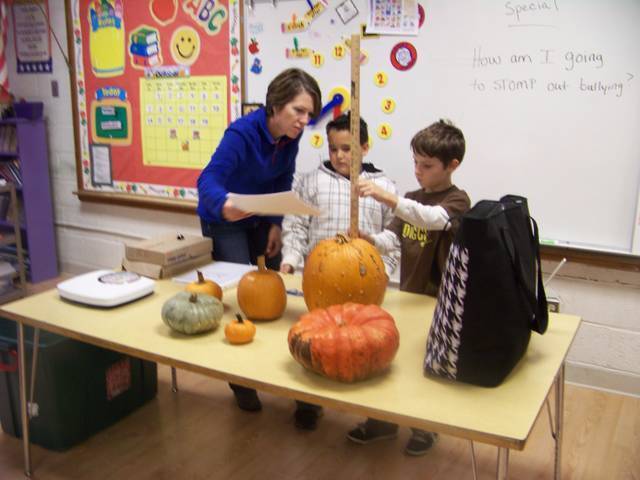
    Day 2: Best of the Blogs: Students Have a Field Day in the Pumpkin Patch

    Nov2Pumpkins in the classroom
    Supporting Ag-in-the-Classroom efforts is one way we #advocate. Kids need to learn where their food comes from.
    Supporting Ag-in-the-Classroom efforts is one way we #advocate. Kids need to learn where their food comes from.

    Click here or the image for the full blog.

    Team Latham

    November 2, 2013
    Agriculture, General, Industry News
  • Latham Hi‑Tech Seeds

    Day 1: Where Can a Website Take You?

    Today is Day 1 of a 30-day blogging series initiated by Holly Spangler of Wallaces Farmer / Farm Progress magazines to help create understanding between farmers and non-farmers.  Holly will be blogging about 30 Days of Five Things.  For example: Five Things an Honest Farmwife Admits. Five Things You Need to Know at the Grocery Story. Five Things to Tell Your Friends about GMOs. The list just goes on…

    Sounds like a blog worth reading, right?  I’m looking forward to it.  And I’ll admit, my own desire to create blog posts that people want to read every day is causing me a little anxiety.  I tried brainstorming a list of topics.  I’ve fretted about unique story ideas, but I finally decided that I’m simply going to write about 30 Days of Farming, Food & Family – because that’s what we do on TheFieldPosition.com.

    Each Tuesday we’ll continue to post Larry Sailer’s “Musings of a Pig Farmer.”  Now that harvest is wrapping up across Latham Country, we’ll replace our Wednesday Crop Report feature with an (Almost) Wordless Wednesday post to describe our soybean production process.  Throwback Thursdays will give you a look into the Latham archives as we show how our seed company, as well as farming in general, have changed over the past 65 years.  Each Friday we’ll continue to feature a farm family and a favorite recipe.

    IMG_1001

    Since it’s the first Friday of November, I’m pleased to feature one of the farming community’s leading bloggers.  Judi Graff, aka FARMnWIFE (@farmnwife on Twitter), describes herself as “a wife who farms in the middle of the Midwest. I love to show farmers and ag businesses how to make a website work for them. From simply telling your farm story to creating new business opportunities, it’s amazing where a website can take you.”

    Oh, the places Judi has gone!  She first launched a website in 2007 to show her three kids showing their cattle.  Since her children are homeschooled, many visitors to her Kids Cattle website were others whom homeschool their children but aren’t familiar with farming.  These “city moms” saw Judi’s posts about cattle shows and started asking questions about farming, which led Judi to start blogging in 2007.

    Judi Graff
    Judi Graff

    Then in 2009, Judi started the “Big Green Combine” blog about the purchase of a pre-owned John Deere combine after her family had harvested for 15 years with red ones.  That blog documented the harvest season, which turned out to be one of the most challenging seasons. Rains fell frequently that fall and harvest wasn’t complete until Dec. 13, after the ground had frozen, and they could reenter the fields.  The “Big Green Combine” blog became a written history of the Graff family farm and will provide insight into the family’s heritage for generations to come.

    A short time later, Judi started another site for her family’s farming operation.  Because it became extremely challenging to keep all blogs current, she joined them together.  Now all past and current posts may be viewed at Graff Land and Livestock.

    “My focus for blogging is really on telling our farming story and recording events for generations to come.  It’s our family’s heritage, and if we don’t record it, it will be lost,” says Judi.  “If I can do some advocating along the way, even better.  Blog on, baby!”

    Due to her experience with most blogging platforms, other farmers began asking Judi how they could get started.  That led her to create FARMnWIFE, where she helps farmers and ag business owners make their sites productive.  She also gives presentations to social media and ag organizations like #140conference and AgChat.  I had the pleasure of meeting Judi at one of these gatherings, and today I’m honored that she is sharing one of her family’s favorite recipes with us on TheFieldPosition.

    “This recipe is always requested at family gatherings. It’s so silly how easy it is, but everyone loves it!” says Judi.

    Simple and delicious…  That’s my mantra in the kitchen.  You can bet I’ll be whipping up this casserole for our family’s Thanksgiving potluck.  Thanks again for sharing, Judi!

    Larry Sailer, Musings of a Pig Farmer

    November 1, 2013
    Agriculture, General, Industry News
  • Latham Hi‑Tech Seeds

    Rising to the (Blogging) Challenge!

    Shannon

    “Two roads diverged in a wood, and I… I took the one less traveled by, and that has made all the difference.” – Robert Frost

    Shannon NibblesHow true! This quote has become somewhat of a mantra since my husband, John Latham, made it part of a presentation last year as part of our company’s 65th anniversary celebration.  John used the quote in reference to how our family-owned seed company takes the road less traveled by remaining independent and offering a variety of product and program options for our farmer-customers.

    This particular Frost quote also is relevant to the people side of our business.  Often times I meet some of the world’s nicest people while I’m visiting the smallest farming communities.  I hear the most interesting stories while sitting in the buddy seat of a combine or across the table from a farm couple.  These stories are what shape my blog, TheFieldPosition.com.

    For the past five years, I’ve blogged in support of America’s family farmers.  Often times I talk to industry experts and share their helpful agronomic tips. Other times I share recipes from meals I’ve enjoyed while visiting Midwest farmers.  And when ridiculous laws or rule changes like those concerning Child Labor and School Lunches threaten our way of life, then I do what I can to give agriculture a voice.

    I’ve never been known to walk away from a challenge, so that’s why I’m joining Holly Spangler’s 30-days of blogging. The objective is for agriculturists to share what they do to help promote understanding among our non-ag friends. Get ready to agvocate!

    During this 30-day challenge, I will feature farm families and their favorite recipes on Fridays.  I’m looking forward to “Slow Food Sundays” when I highlight recipes we’ve shared to bring families together for a healthy meal and a few hearty laughs. On Tuesdays, Larry Sailer will continue to post his “Musings of a Pig Farmer” blog. The rest of the days, I’ll address topics of interest to readers.

    Walk along the road less traveled with me!  As Janice Person wrote, “While I want to do this daily, I also want them to keep readers by making them good enough to be read!”  The best way to assure these topics are relevant and interesting is for you to send me your story ideas.

    Larry Sailer, Musings of a Pig Farmer

    October 31, 2013
    Agriculture, General, Industry News
  • Latham Hi‑Tech Seeds

    Size Doesn’t Determine Worth

    Fraley graphic1

    MusingsHeader“Musings of a Pig Farmer” by Larry Sailer

    #Harvest13 is winding down, but there’s still combing to be done on my North Central Iowa farm.  All this “windshield time” has given me so many things to think about, and so many ideas for today’s blog have come to mind.  Since this evening’s #AgChat discussion will focus on family vs. corporate farms, it made me reflect upon last week’s AgChat discussion about the size of farming and ranching operations.

    Ownership nor size determines a farm’s worth.  Farms, big or small, can be good or bad – or simply average.  Management makes the difference.

    GPS guidance, weather, computer, and more technology is available in many tractor cabs today.
    GPS guidance, weather, computer, and more technology is available in many tractor cabs today.

    When I was young, I grew my farming operation to about twice the average farm size in just under 10 years.  Growth can lead to problems in any business, and farming is no different.  Farming is extremely capital intensive.  Even in the 1970s, farming wasn’t a cheap business to expand.  The 1980s Farm Crisis with high interest rates took a toll on my operation.  Since then, my operation has been close to what is considered an average-size Iowa farm. Herein lies another problem…

    To use most of today’s farming technology, an operation must be large enough to spread out the cost.  I’m not a large farmer, so I don’t have large machinery.  That’s not a problem for me, but it is a problem for others in the industry who assume bigger is better.

    My point is that farmers come in all sizes and operations come in all types.  Each farmer must learn to adapt and do what works for him or her.  They may find that new equipment is the best fit for their operation, or they may scour the combine grave yards in search of replacement parts.  Perhaps a farmer may find his niche raising crops or livestock for a certain market.  In the past, I’ve grown seed stock for seed companies and breeding stock for suppliers of hog genetics.

    There is technology that can be used by all farmers of all sizes. At World Food Prize Tweet Up where I recently met Dr. Robb Fraley, he made a comment that has stayed with me: The technology he has helped develop is good for operations of all sizes. Seed technology is size neutral.

    fraley graphic

    There is a place for every size of farming operation. With only 28% of the world’s land mass suitable for growing crops, we’re going to need every farmer to help feed the growing world population.  I’m certainly looking to see how to make my farm better!  Sometimes adjustments must be made on any farm, regardless of its size.  Times change, and farming never stands still.

    Larry Sailer, Musings of a Pig Farmer

    October 29, 2013
    Agriculture, General, Industry News
Previous Page
1 … 45 46 47 48 49 … 85
Next Page

Latham Hi‑Tech Seeds

131 180th Street | Alexander, IA 50420

(641) 692-3258

SIGNUP FOR OUR NEWSLETTER
  • Contact
  • Legal
  • Dealer Center
  • Seedware Login
  • Latham Gear

© 2025 Latham Hi‑Tech Seeds. All rights reserved. | Iowa Web Design by Webspec | Privacy Policy

Latham® Hi-Tech Seeds is a trademark of M.S. Technologies, L.L.C., 103 Avenue D, West Point, IA 52656.