

Planting across Latham Country has moved along quickly, and it won’t be long before postemergence spraying begins. As applicators prepare to head to the field, familiar questions arise: When should I spray? What product should I use? Should I spray at all?
Of these, “when to spray” may be the most critical decision a grower makes. Injury or stress to a young plant can have lasting effects that aren’t always visible to the naked eye. Understanding crop growth stages—and how they align with product label requirements—is essential for making sound application decisions and protecting yield potential. Let’s start with corn.
Corn Growth Stages and Application Timing
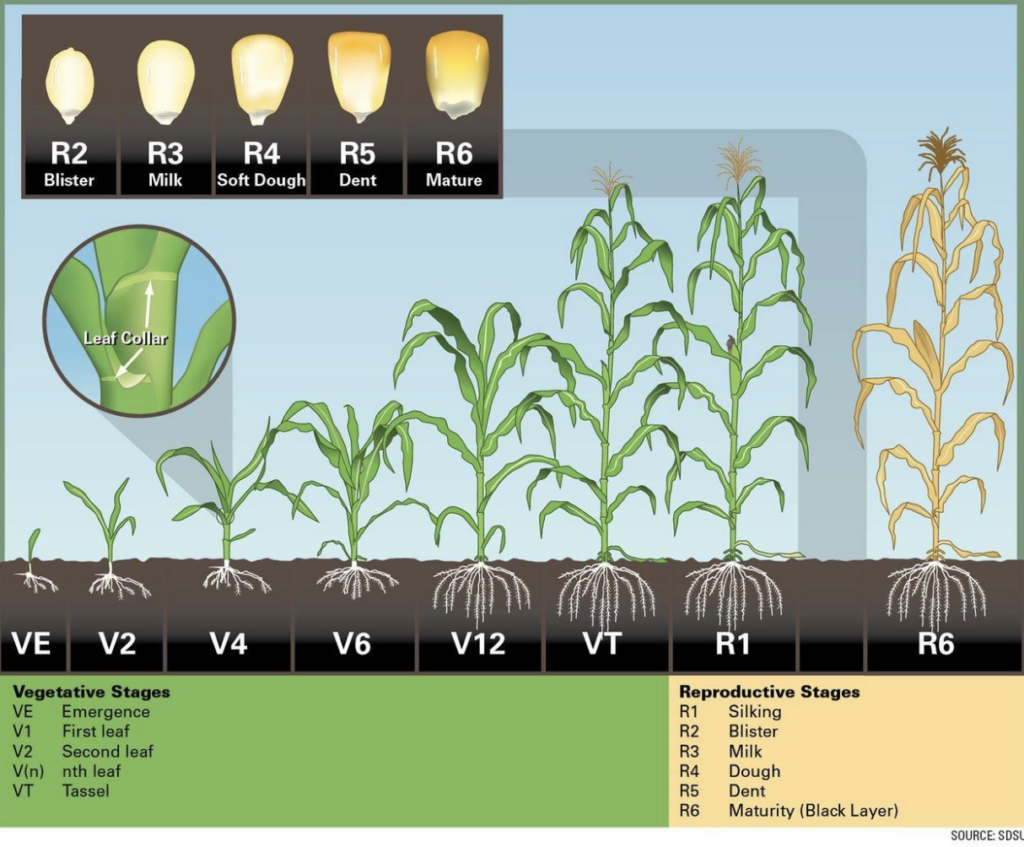
Herbicide and crop protection labels typically reference growth stages when outlining application timing. The corn growth stage chart is an excellent resource for understanding these stages.
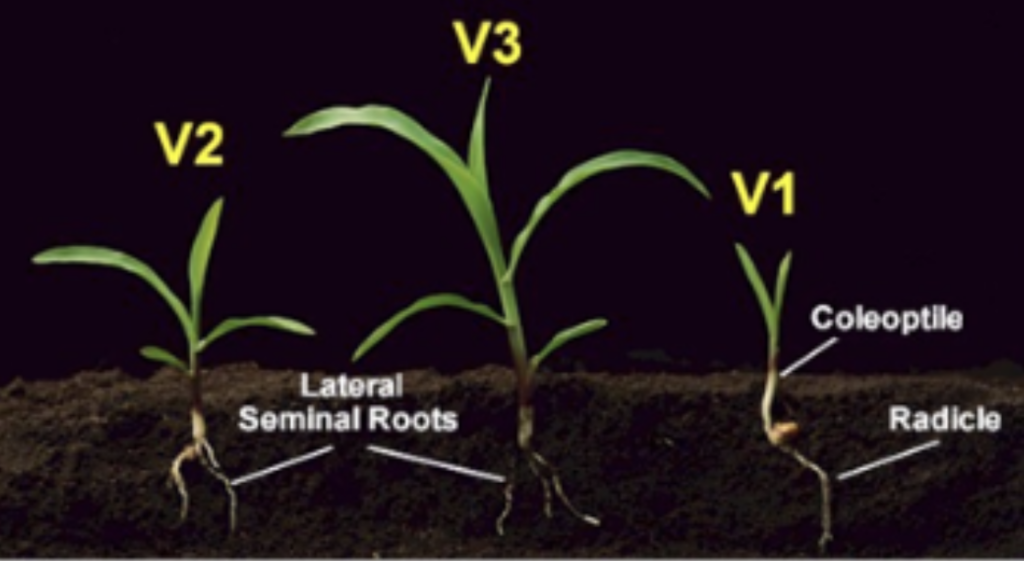
VE (Emergence) occurs when the coleoptile reaches and breaks through the soil surface. Corn generally requires about 100–200 growing degree units (GDUs) to emerge, which can take as little as four to five days after planting under warm, moist conditions. During this time, growth is also occurring below ground as the nodal root system begins to develop.
Emergence can be rapid in favorable soil conditions but may take three weeks or longer in cooler soils. Early in the season, a new leaf typically appears about every three days. As temperatures warm, leaf appearance can accelerate to one new leaf every one to two days. Full season hybrids grown in the central Corn Belt commonly produce 21–22 leaves, while earlier maturing hybrids produce fewer.
These numbers are important to keep in mind as you plan your spray program. Under favorable conditions, corn can move from planting to the V5–V7 stage within a month. Missing application windows can happen quickly if fields aren’t monitored closely.
Soybean Staging Considerations
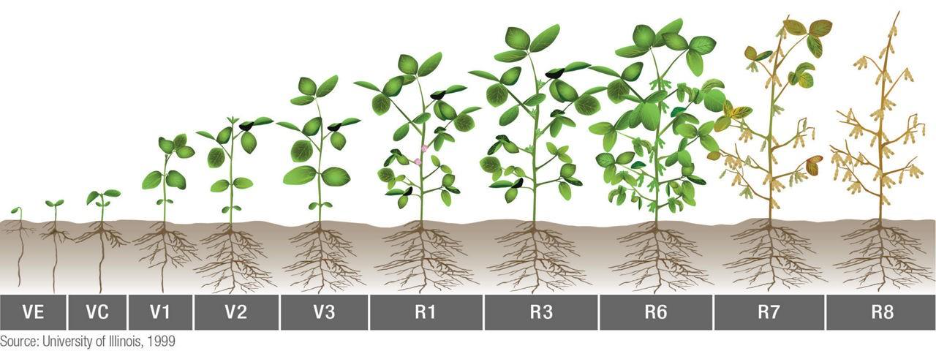
Soybeans add another layer of complexity, as plants within the same field rarely develop at the same pace. A soybean field is considered to be at a specific V or R stage when 50% or more of the plants are at or beyond that stage. Because of this variability, understanding soybean staging is critical when determining application timing. The soybean growth stage chart is a valuable reference when evaluating field conditions.
A general rule of thumb is to expect about five days between soybean growth stages, although weather can speed this up or slow it down. One of the most critical stages to be aware of is R1, defined as one open flower at any node on the main stem. Soybean flowers are highly sensitive, and herbicide applications should be avoided at this stage whenever possible.
R1 can begin before full canopy closure, which can tempt growers to make a final post emergence application. However, the risk at this stage often outweighs the reward. A strong pre-plant and early post program can greatly reduce the need for late season spraying, and a handful of late weed escapes is rarely worth the potential consequences of applying herbicides after flowering begins.